Invisible Windows, Invisible Heat Loss: The Metamaterial That Could Transform Buildings 🪟❄️ episode artwork

EPISODE · Dec 28, 2025 · 10 MIN

Invisible Windows, Invisible Heat Loss: The Metamaterial That Could Transform Buildings 🪟❄️

from The Deep Dive Lab: Unraveling Materials Science · host Son Hoang

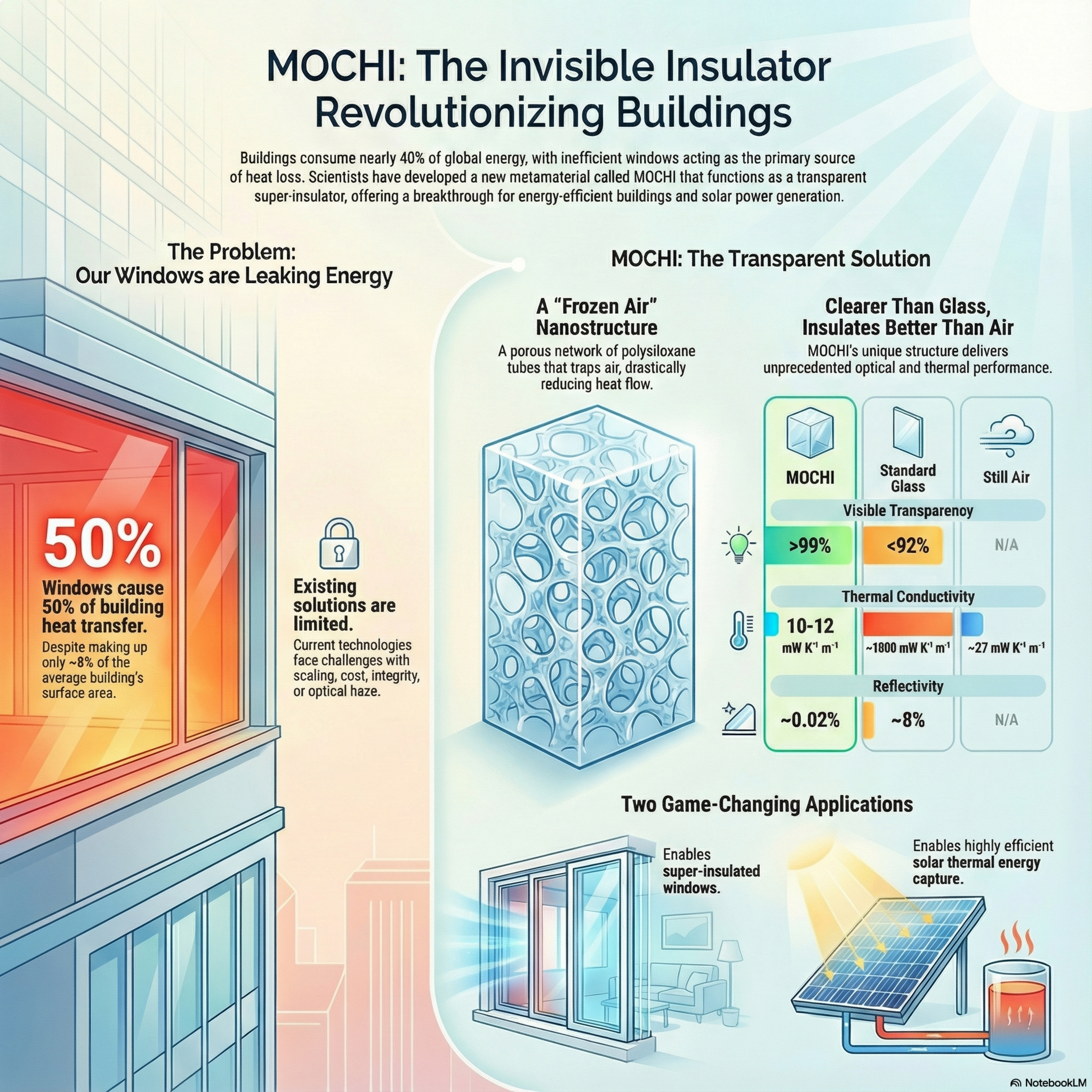
Buildings consume nearly 40% of global energy, and windows are their biggest weakness—responsible for up to 50% of heat loss despite covering only a small fraction of the surface area.In this episode, we explore a remarkable new metamaterial called MOCHI (Mesoporous Optically Clear Heat Insulator)—a transparent “frozen air” nanosponge that challenges everything we know about windows.With 99.7% visible light transmission, thermal insulation better than still air, and performance comparable to aerogels used in Mars rovers, MOCHI could make windows as insulating as walls—without sacrificing daylight or views. Even more surprisingly, it can trap solar heat, opening the door for buildings that don’t just save energy, but generate it.Could this be the material that finally erases the trade-off between transparency and thermal performance?🔬🧊🏙️Source:Mesoporous optically clear heat insulators for sustainable building envelopes. Science (2025), Vol. 390, Issue 6778, pp. 1171–1176.Hashtags:#SciencePodcast #MaterialsScience #Metamaterials #EnergyEfficiency #GreenBuildings #SustainableArchitecture #ClimateTech #FutureMaterials #WindowsOfTheFuture

Buildings consume nearly 40% of global energy, and windows are their biggest weakness—responsible for up to 50% of heat loss despite covering only a small fraction of the surface area.In this episode, we explore a remarkable new metamaterial called MOCHI (Mesoporous Optically Clear Heat Insulator)—a transparent “frozen air” nanosponge that challenges everything we know about windows.With 99.7% visible light transmission, thermal insulation better than still air, and performance comparable to aerogels used in Mars rovers, MOCHI could make windows as insulating as walls—without sacrificing daylight or views. Even more surprisingly, it can trap solar heat, opening the door for buildings that don’t just save energy, but generate it.Could this be the material that finally erases the trade-off between transparency and thermal performance?🔬🧊🏙️Source:Mesoporous optically clear heat insulators for sustainable building envelopes. Science (2025), Vol. 390, Issue 6778, pp. 1171–1176.Hashtags:#SciencePodcast #MaterialsScience #Metamaterials #EnergyEfficiency #GreenBuildings #SustainableArchitecture #ClimateTech #FutureMaterials #WindowsOfTheFuture

NOW PLAYING

Invisible Windows, Invisible Heat Loss: The Metamaterial That Could Transform Buildings 🪟❄️

0:00 10:46

No transcript for this episode yet

We transcribe on demand. Request one and we'll notify you when it's ready — usually under 10 minutes.

No similar episodes found.

No similar podcasts found.

Frequently Asked Questions

How long is this episode of The Deep Dive Lab: Unraveling Materials Science?

This episode is 10 minutes long.

When was this The Deep Dive Lab: Unraveling Materials Science episode published?

This episode was published on December 28, 2025.

What is this episode about?

Buildings consume nearly 40% of global energy, and windows are their biggest weakness—responsible for up to 50% of heat loss despite covering only a small fraction of the surface area.In this episode, we explore a remarkable new metamaterial called...

Can I download this The Deep Dive Lab: Unraveling Materials Science episode?

Yes, you can download this episode by clicking the download button on the episode player, or subscribe to the podcast in your preferred podcast app for automatic downloads.
URL copied to clipboard!