
EPISODE · Jan 21, 2026 · 18 MIN
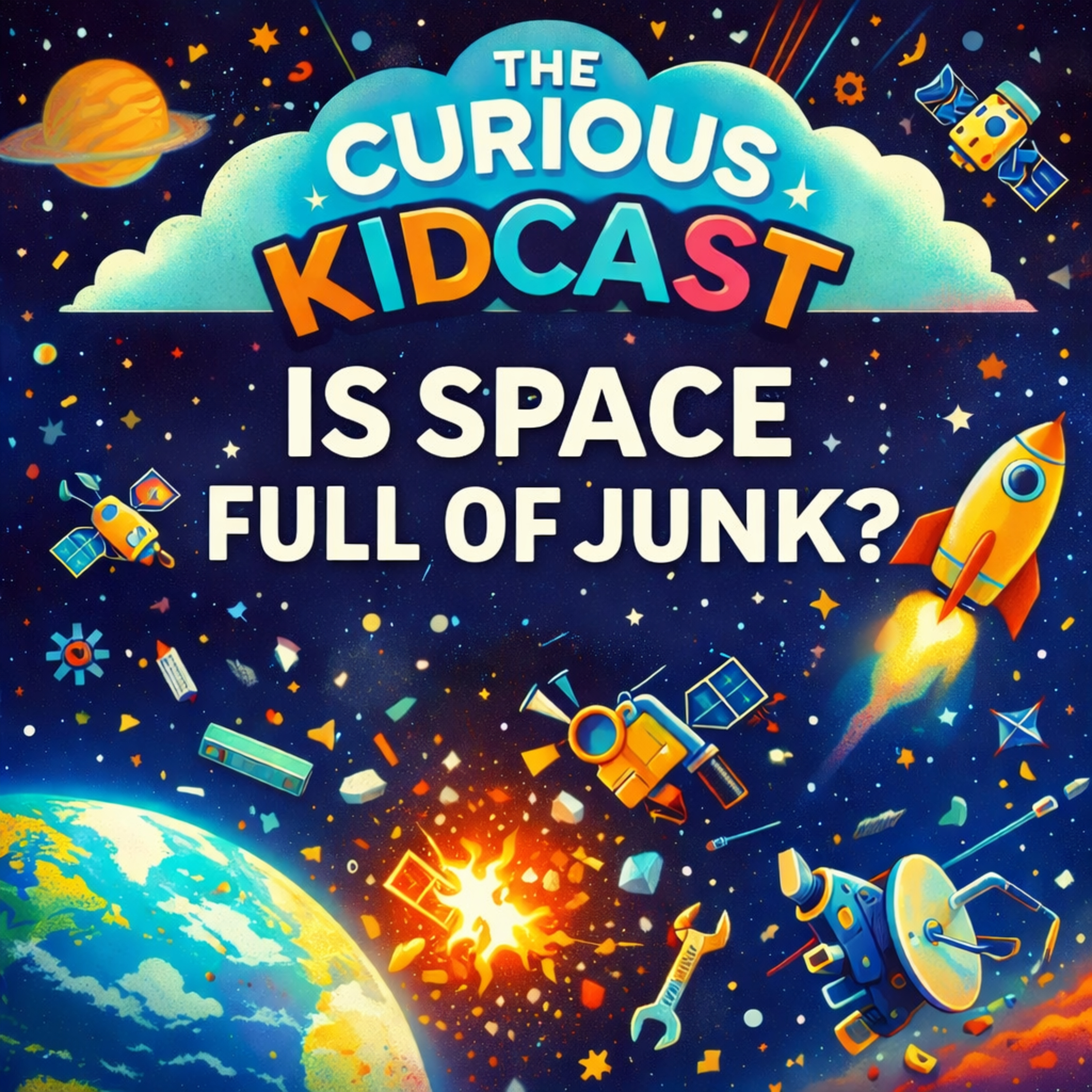
Is Space Full of Junk? | Amazing quesions for kids
from The Curious Kidcast · host Andy & Charlie
How Much Stuff Have We Put in Space? (And Do Things Ever Crash Up There?)Episode DescriptionJoin Charlie on The Curious Kidcast for an exciting space adventure that answers Liam from Texas's burning question: how much stuff have humans really put in space, and do things ever crash up there? This fun, educational science podcast for kids explores the fascinating world of satellites, space junk, and cosmic collisions in a way that makes learning an absolute blast!Perfect for curious kids, homeschooling families, and parents looking for engaging educational content, this episode transforms complex space science into an entertaining journey through Earth's orbit. Discover why space is busier than rush hour traffic, learn about astronauts who lost gloves in space, and find out if we'll ever need a giant cosmic vacuum cleaner!What Your Kids Will LearnThe history of space exploration, starting with Sputnik 1 in 1957How many satellites and objects are currently orbiting Earth (spoiler: way more than you think!)Why space debris travels at 28,000 kilometres per hour and what makes it so dangerousReal examples of space crashes and collisionsWhat Kessler Syndrome is and why scientists are worried about itHow space agencies track and avoid dangerous space junkAmazing facts about the International Space Station and its 16 daily sunrisesInnovative ideas for cleaning up space (including space harpoons!)Fun Science Facts Featured in This EpisodeThere are over 9,000 active satellites orbiting Earth right nowScientists track more than 20,000 large objects in space (bigger than a tennis ball)Millions of tiny fragments zoom around Earth at bullet speedA paint chip traveling at orbital speed can crack a spacecraft windowMost space junk burns up in the atmosphere and becomes shooting starsAstronauts have actually lost tools and gloves during spacewalksRockets drop parts along the way, leaving debris in orbitEducational Topics CoveredThis episode is perfect for homeschool science curriculum and family learning time, covering:Space Science: Orbital mechanics, satellites, and space technologyPhysics: Speed, velocity, and kinetic energyEnvironmental Science: Space pollution and debris managementHistory: The space race and human space explorationProblem-Solving: Engineering solutions for space cleanupCritical Thinking: Understanding cause and effect in space collisionsInteractive Quiz IncludedTest your family's knowledge with our fun three-question quiz.Why Parents and Educators Love The Curious KidcastAge-Appropriate Content: Designed specifically for kids ages 7-11Educational and Entertaining: Combines solid science facts with kid-friendly humorHomeschool-Friendly: Perfect supplement to science curriculumScreen-Free Learning: Great for car rides, quiet time, or family listeningSparks Curiosity: Encourages kids to ask more questions about the worldEpisode HighlightsIntriguing cold open about space junk zooming overhead at incredible speedsThe story of Sputnik 1, the first beeping beach ball in spaceMind-blowing statistics about how crowded space really isReal-life space crash stories, including the famous 2009 satellite collisionExplanation of intentional space crashes Fun analogies kids can relate to (cosmic bumper cars, the worst piñata party ever)Cool space cleanup ideas like giant nets and harpoonsInteractive quiz to test what kids learnedKeywordskids podcast, science for kids, space education, homeschool science, educational podcast for children, family learning, STEM for kids, fun facts, nature and science, parenting resources, space junk, satellites, astronomy for kids, educational entertainment, curious kids, learning podcast, age-appropriate science, homeschool resources, family-friendly podcast, children's education, science funThe Curious Kidcast - Where every question leads to an adventure in learning! Perfect for curious kids ages 7-11 and the families who love learning with them.
What this episode covers
How Much Stuff Have We Put in Space? (And Do Things Ever Crash Up There?)Episode DescriptionJoin Charlie on The Curious Kidcast for an exciting space adventure that answers Liam from Texas's burning question: how much stuff have humans really put in space, and do things ever crash up there? This fun, educational science podcast for kids explores the fascinating world of satellites, space junk, and cosmic collisions in a way that makes learning an absolute blast!Perfect for curious kids, homeschooling families, and parents looking for engaging educational content, this episode transforms complex space science into an entertaining journey through Earth's orbit. Discover why space is busier than rush hour traffic, learn about astronauts who lost gloves in space, and find out if we'll ever need a giant cosmic vacuum cleaner!What Your Kids Will LearnThe history of space exploration, starting with Sputnik 1 in 1957How many satellites and objects are currently orbiting Earth (spoiler: way more than you think!)Why space debris travels at 28,000 kilometres per hour and what makes it so dangerousReal examples of space crashes and collisionsWhat Kessler Syndrome is and why scientists are worried about itHow space agencies track and avoid dangerous space junkAmazing facts about the International Space Station and its 16 daily sunrisesInnovative ideas for cleaning up space (including space harpoons!)Fun Science Facts Featured in This EpisodeThere are over 9,000 active satellites orbiting Earth right nowScientists track more than 20,000 large objects in space (bigger than a tennis ball)Millions of tiny fragments zoom around Earth at bullet speedA paint chip traveling at orbital speed can crack a spacecraft windowMost space junk burns up in the atmosphere and becomes shooting starsAstronauts have actually lost tools and gloves during spacewalksRockets drop parts along the way, leaving debris in orbitEducational Topics CoveredThis episode is perfect for homeschool science curriculum and family learning time, covering:Space Science: Orbital mechanics, satellites, and space technologyPhysics: Speed, velocity, and kinetic energyEnvironmental Science: Space pollution and debris managementHistory: The space race and human space explorationProblem-Solving: Engineering solutions for space cleanupCritical Thinking: Understanding cause and effect in space collisionsInteractive Quiz IncludedTest your family's knowledge with our fun three-question quiz.Why Parents and Educators Love The Curious KidcastAge-Appropriate Content: Designed specifically for kids ages 7-11Educational and Entertaining: Combines solid science facts with kid-friendly humorHomeschool-Friendly: Perfect supplement to science curriculumScreen-Free Learning: Great for car rides, quiet time, or family listeningSparks Curiosity: Encourages kids to ask more questions about the worldEpisode HighlightsIntriguing cold open about space junk zooming overhead at incredible speedsThe story of Sputnik 1, the first beeping beach ball in spaceMind-blowing statistics about how crowded space really isReal-life space crash stories, including the famous 2009 satellite collisionExplanation of intentional space crashes Fun analogies kids can relate to (cosmic bumper cars, the worst piñata party ever)Cool space cleanup ideas like giant nets and harpoonsInteractive quiz to test what kids learnedKeywordskids podcast, science for kids, space education, homeschool science, educational podcast for children, family learning, STEM for kids, fun facts, nature and science, parenting resources, space junk, satellites, astronomy for kids, educational entertainment, curious kids, learning podcast, age-appropriate science, homeschool resources, family-friendly podcast, children's education, science funThe Curious Kidcast - Where every question leads to an adventure in learning! Perfect for curious kids ages 7-11 and the families who love learning with them.
NOW PLAYING
Is Space Full of Junk? | Amazing quesions for kids
No transcript for this episode yet
Similar Episodes
No similar episodes found.
Similar Podcasts
No similar podcasts found.