Is “TikTok Brain” real—or just moral panic? episode artwork

EPISODE · Dec 20, 2025 · 13 MIN

Is “TikTok Brain” real—or just moral panic?

from The Deep Dive Lab: Unraveling Materials Science · host Son Hoang

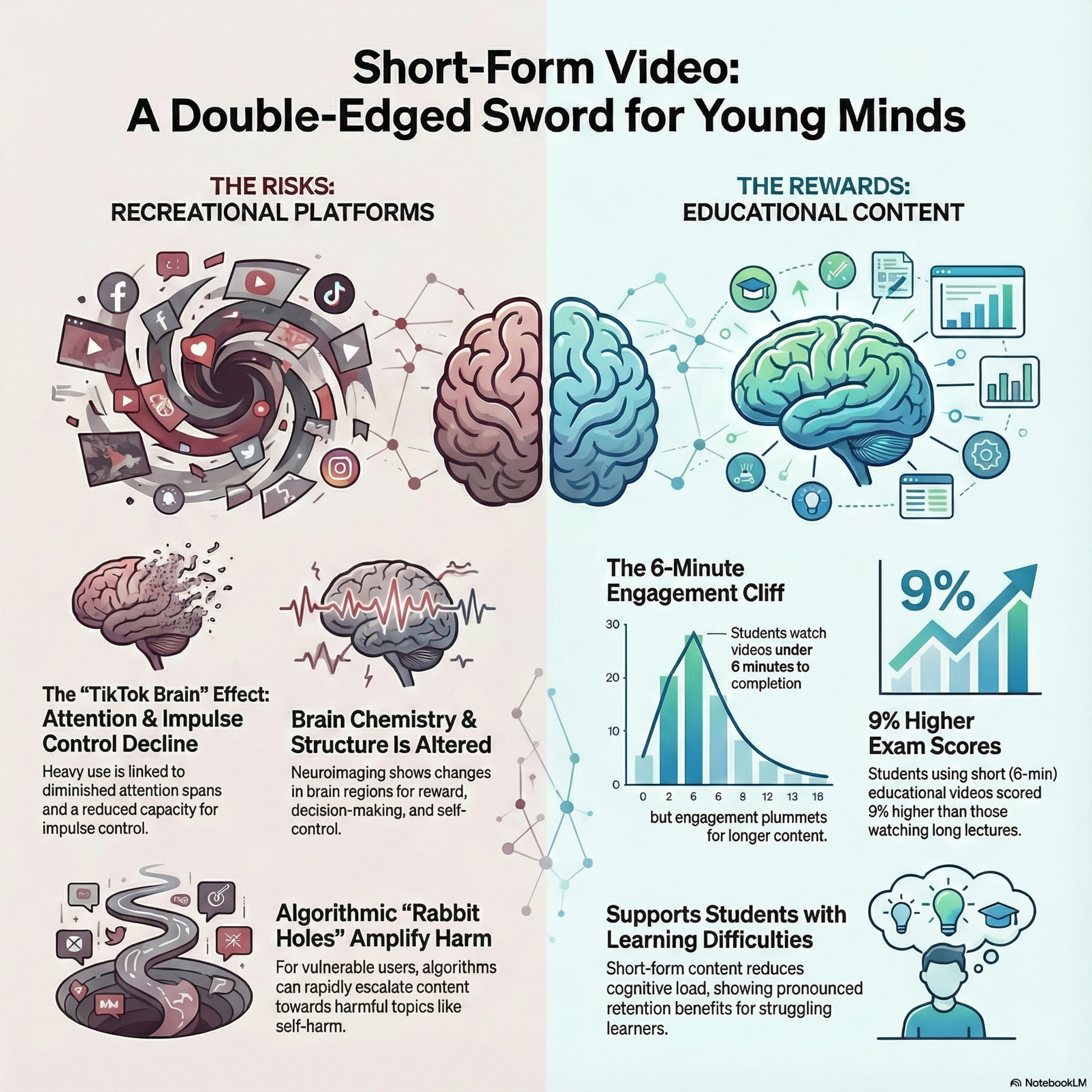
In this episode, we explore the neuroscience behind short-form videos and how endless scrolling is reshaping attention, memory, and self-control—especially in children and teenagers. Research shows that frequent exposure to rapid, high-stimulation content can alter dopamine reward systems, weaken executive control, and make slower, low-stimulus activities feel unbearable.We’ll also unpack how recommendation algorithms can create harmful content spirals, pulling vulnerable users deeper within minutes. But here’s the surprising twist: short videos themselves aren’t the villain.When intentionally designed for education, the same short-form format can boost engagement, improve learning outcomes, and increase course completion rates—often outperforming traditional long lectures.This episode looks at short-form video as a double-edged technology—one side trains the brain for distraction, the other has the potential to build knowledge and skills.🎙️ Listen now to understand what short videos are really doing to the brain.#TikTokBrain #Neuroscience #BrainScience #DigitalWellbeing #AttentionEconomy #Dopamine #YouthMentalHealth #Algorithm #EdTech #SciencePodcast

In this episode, we explore the neuroscience behind short-form videos and how endless scrolling is reshaping attention, memory, and self-control—especially in children and teenagers. Research shows that frequent exposure to rapid, high-stimulation content can alter dopamine reward systems, weaken executive control, and make slower, low-stimulus activities feel unbearable.We’ll also unpack how recommendation algorithms can create harmful content spirals, pulling vulnerable users deeper within minutes. But here’s the surprising twist: short videos themselves aren’t the villain.When intentionally designed for education, the same short-form format can boost engagement, improve learning outcomes, and increase course completion rates—often outperforming traditional long lectures.This episode looks at short-form video as a double-edged technology—one side trains the brain for distraction, the other has the potential to build knowledge and skills.🎙️ Listen now to understand what short videos are really doing to the brain.#TikTokBrain #Neuroscience #BrainScience #DigitalWellbeing #AttentionEconomy #Dopamine #YouthMentalHealth #Algorithm #EdTech #SciencePodcast

NOW PLAYING

Is “TikTok Brain” real—or just moral panic?

0:00 13:00

No transcript for this episode yet

We transcribe on demand. Request one and we'll notify you when it's ready — usually under 10 minutes.

No similar episodes found.

No similar podcasts found.

Frequently Asked Questions

How long is this episode of The Deep Dive Lab: Unraveling Materials Science?

This episode is 13 minutes long.

When was this The Deep Dive Lab: Unraveling Materials Science episode published?

This episode was published on December 20, 2025.

What is this episode about?

In this episode, we explore the neuroscience behind short-form videos and how endless scrolling is reshaping attention, memory, and self-control—especially in children and teenagers. Research shows that frequent exposure to rapid, high-stimulation...

Can I download this The Deep Dive Lab: Unraveling Materials Science episode?

Yes, you can download this episode by clicking the download button on the episode player, or subscribe to the podcast in your preferred podcast app for automatic downloads.
URL copied to clipboard!