
Hey, I'm Matthew Schell, comedian, writer, and floating head you may or may not have seen on your FYP. I'm starting a brand new podcast. Wait, don't swipe away. It's called That Sounds Like A Lot.
You know that feeling when you check your phone or read a few headlines and think, that sounds like a lot. I can't do this. Well, I can. I'm gonna get into it every Friday.
You can watch on YouTube or listen wherever you get your podcast. I'm gonna start by breaking down whatever insanity is happening in the world. And then I'll sit down with a comedian or actor or writer or, honestly, anyone who responds to my DMs. This is not the place to get the news, but it is a place to feel a little bit better about it.
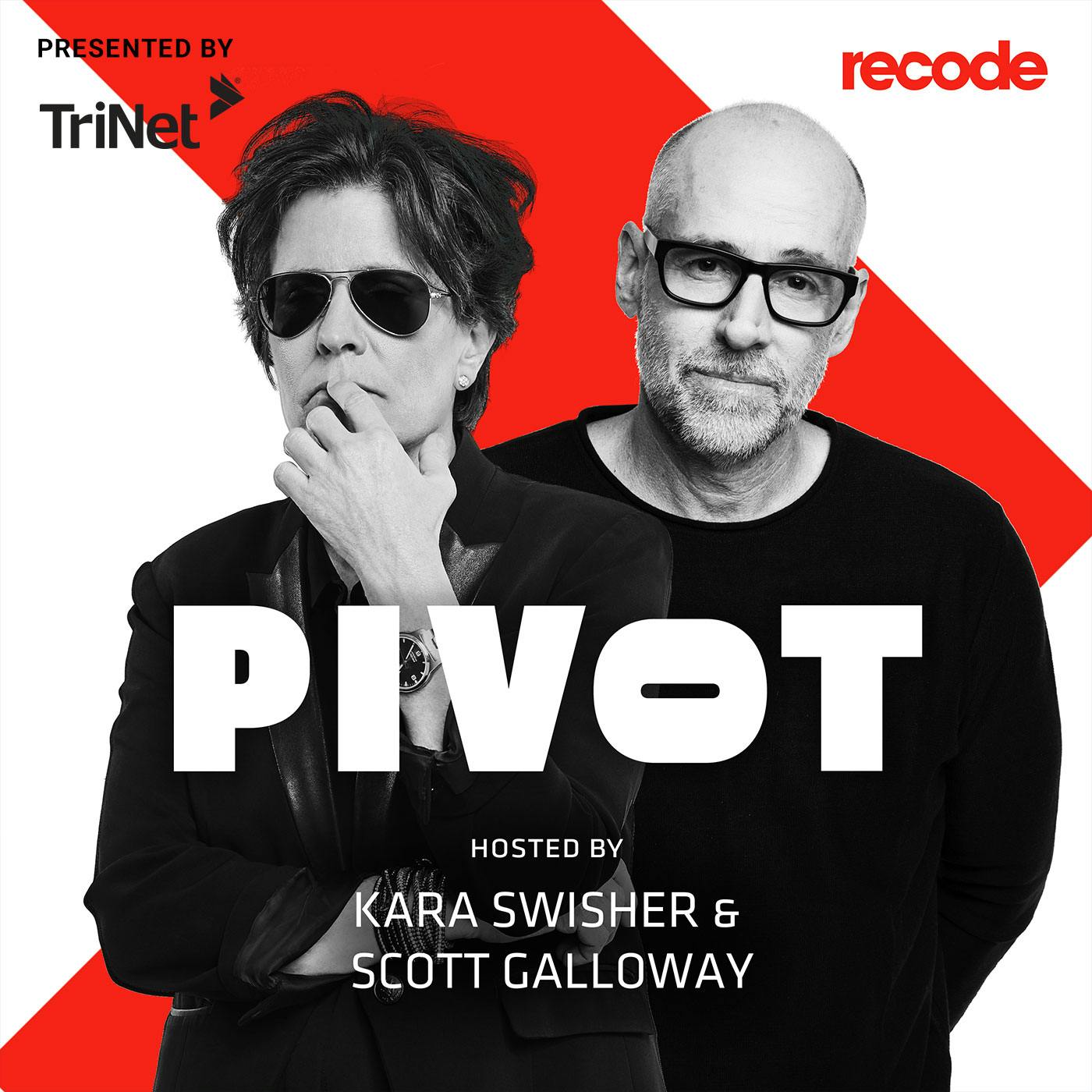
That sounds like a lot coming May 1st, part of the Vox Media Podcast Network. Hi, everyone. This is Pivot from the Vox Media Podcast Network. I'm Kara Swisher.
And this is Scott Galloway. Happy 50th episode, Scott. This is your number. You remember.
You remember. You remember. You didn't. You know, one is paper, 10 is copper, and 50 is sativa.
It's okay. It's get the hell out of here. Where's the copa? Where are you again?
You're again, not in New York where you work. Where are you? Where are you vacationing now? I'm in Florida.
I'm here for Never Forget Dorian. I had a plastic lawnshare blowover. So Florida strong, Florida strong. We're hanging in it.
All right. You know, Florida also known as Alabama, according to present. There you go. Oh, by the way, I did that.
You had no Dorian. I did that DNA North Carolina. You know, I swap my fecal matter for that DNA test that guy sent us. And I just got the results.
Really? Yeah. Well, I did that. I did the DNA test and according to this technology, according to technology, it predicts it.
Well, it predicts it tonight. I mean, I have fours of copper and coax vape and watch succession. So it's really amazing technology. Succession is not on tonight, Scott.
It's on the ace. That's my joke. That's my joke. Okay, that's a terrible joke.
It's a terrible joke. Talk about storms. It's hitting North. It's a heading to Carolinas right now, very seriously.
It was great that it avoided Florida. It was great that it avoided Florida. Were you scared at all? Were you nervous to be there?
Yeah, the west, for some reason, I'm not. I can tell I'm getting older because I'm fascinated by the weather, but I'm not really old and then I'm not scared of it yet. But no, it's. No, you should be scared.
The Bahamas got hit really hard. Really hard. It was terrible. It looks like the Carolinas are going to get hit.
This is going to be. It's bad. But you need to come back to New York City. I think it's time.
Well, it's nice to know you're here. Anyway, moving along, we have some in here today. We're trying a new thing. We're trying all kinds of things on pivots.
We usually do big story breakdown. But we have in the studio, Mike Isaac from the New York Times. I'm like, hi. How you doing?
Mike used to work for me. I'm really, really responsible for his entire career. But we're going to shift things up. We have big news stories.
But first, we're going to talk about this big story breakdown of his book on Uber, which came out as today. It's Tuesday. It's Tuesday. Okay.
So this week, Mike wrote a ton of amazing stories from New York Times about Uber. And we're going to talk about his book, SuperPump, The Battle for Uber. And it delves into all the drama of the ride share company in Silicon Valley, which is full of it. And we've got lots of questions.
Would you like to start questioning Mike Isaac about this book? Oh, you mean the guy where the student has become the master, the guy that's putting out a best book? Yeah. Okay, Mike.
So first of my congratulations, I've literally seen your name everywhere. And this book is, I don't know if it's any good, but it's going to sell a lot because your publicist has done their job, which I think is the key here. But it's a great book. So my question is the following.
It's there's a bunch of data coming out that if you actually do the math, that Uber partners or the four million people who drive for Uber are oftentimes making less and minimum wage. Was there always, and I've always felt this is sort of embodies the Lord's versus the surf mentality where you have the nice, you know, the nice mostly college educated, mostly white people at HQ, and then you have the mostly non-white, non-college educated people actually driving the business. And it goes to Senator Josh Holly, who by the way, I promoted to Wall Street Journalist last week, and I apologize for that. He's actually the junior senator from Missouri.
But anyways, did you find there was much of a focus or concern around the fact that there were a small group of people making millions of not billions and then this workforce that in fact was at certain times not even meeting minimum wage thresholds? Yeah, I mean, I feel like the biggest thing that Uber unlocks besides shareholder value for the early investors was this idea of a hybrid labor force that has, you know, the biggest proponents of labor rights now are saying that some of what Uber has done is really set back what that looks like for folks who are working now, right? So there's this battle in California right now over what worker protection should be, whether Uber drivers should be full-time employees or still like contract laborers. And for a long time, the thought was they would land on something kind of in between, like maybe slightly more protections than just a 1099 contract worker, but not completely full employees because it would just erode the business model.
First of all, is there a business model to start with? I mean, if you add on these, if you lard on these costs, which it is larding on, it's actually the people that are working there. Right. I'll never forget the comment that Travis made at the code comments when you were working on it.
Yeah, when I was there. Where he said, the problem we have with our business model is the guy sitting in the front seat, which I thought was encapsulated with God's talking about this idea that these are disposable beings. Yep. And they used, they called, they used to call them supply, not drivers, right?
Like, so it was like, it was just sort of a very cold way of looking at what was essentially a giant math problem for them. And so the way of eliminating that. And that's what I talk about a little bit in the book is this obsession with self-driving, which again, is problematic too, because there's costs that come with that that aren't really counted for. But it is really just sort of, you know, either you increase prices for riders or you decrease wages for drivers at the end of the day.
And I think for a long time, it was just pushing down on those drivers and what they get paid. Do you see this company? I mean, the promise around the expectation that justifies evaluation that's, you know, one point was greater than Ford Motor is that this at some point they'll hit a scale where they can find profitability. And it looks as if lately their scale, their costs are maintaining pace with their not hitting scale.
After spending so much time with the company, do you think this company does, in fact, get to a point where it's making profits? Or is this just a company that unless it can continue to sort of, you know, tell it, spin a big story that it might, it might, if I go to zero, is there a there there here? Where's it in Amazon? Because Amazon spun that straight for a long time and it turned out they found a business that was true.
Right. So, and that's there. That's their pitch right now is like, look, we are going to be this Amazon. We want to build this platform.
I think early on Travis Kalanik's proposition was. This was the original CEO. Yeah. The first CEO was like, we're going to build this huge war chest of cash going to out raise all of our competitors and, you know, we'll just spend them into the ground and then we're going to own the whole thing.
It's a winner take all thing. And that might work maybe five or 10 years ago, but the environment has totally changed, right? That soft banks of the world have come in and like they're very well funded competitors across multiple continents. So it's not just uber fighting lift in the United States.
It's uber fighting Ola in India and at one point DD in China and regional competitor in Brazil as well. So I think the landscape has shifted dramatically from what they thought the game was in the beginning. So now their whole thing is, well, we have, because of our scale and because of our core right hailing business, we can move into a bunch of different categories like food and trucking and yeah, exactly. And eventually if you hang with us long enough, we can get to a point of profitability there, but it's still, it's hard.
You know, I mean, that's, that takes a market that is less risk averse than I think we're in right now. I think like Wall Street is not, is looking at these losses and doesn't have the metal that it did maybe five years ago or whatever to hang with uber the way it today. It's also not an Amazon like business, right? I mean, or is it, I mean, the only thing they can do is raise prices to get Amazon.
I don't know about you Scott, but when using Amazon, you're not thinking of price. You're thinking of convenience, still quick delivery, which your time's actually had a great day about the cost of that to workers. Again, that you're doing it. I mean, Scott's main point is you're doing it the expensive workers until you can replace those workers, which is far away, or you can find another business that makes money.
And I don't know, Scott, do you think there's other businesses there that could suddenly become Amazon Web Services? Well, people talk about Uber Eats and it does have a great brand, but you know, it's not, we're talking about apples and oranges here. Amazon pretty early on could be, you know, was cash flow positive and they had a very legitimate argument that the only reason they weren't profitable despite having positive gross margins was the massive reinvestment of business. And Uber's made that massive reinvestment, but it doesn't have cash flow, it doesn't have gross margins.
There is no kind of, you know, Uber is no Amazon. Uber just loses more money as it gets bigger day. Unless they can find a business, and Mike, tell me if you disagree with this, it starts spinning off cash flow like in Uber Eats. This is a company that could in fact, I wouldn't say would go to zero because it has such a powerful brand and someone would want it, but it does look incredibly overvalued.
What does it, I think it's off something like 23 or 25% since the IPO and people are actually starting to check back and say, does this thing make sense as an ongoing business? So let me ask you, Mike, what do you think is the most exciting or most viable business other than ride-hailing? Because they're clearly searching. Is it Uber-fraid?
Is it Uber Eats? The sort of sleeping, I don't know if I would say sleeping giant, but this thing that they're kind of quietly working on right now is less sexy but interesting other payments infrastructure. They actually, in order to accept payments from riders all around the world, you have to build out a pretty robust payment system. And like they, I think that what they're doing is working on this version of think of like a Venmo-ish type thing inside of the Uber app where you can build up cash or whatever.
So imagine if you can save on the millions of transactions that they occur per day and like somehow, you know, eke out some sort of, I don't want to say profit, but like find room in those margins to eventually build a business with that cash and maybe funnel it into reach orders or different other parts of the app where you can spend money. That's something that they're trying. We wanted to get into payments to public transit systems where you put your phone down, use your Uber app to pay, but now public transit systems like New York just initiated its own. So I mean, that's going to be an enormously difficult business to get into.
Yeah, and add to that that they never really played well with cities in the first place, right? Like how are you? I don't know. It's very complicated.
I think a lot of the hype right now is around Uber Eats, but again, with food delivery, like there's so much money going into competition there right now. Like DoorDash is getting tons of money from SoftBank. Yeah, exactly. Amazon, what are they going to do?
Postmates are still like a player, even though they're kind of in trouble. You know, so it's, I feel like we are five years ago, where we were with right having five years ago, we are at food delivery now, just a ton of money being burnt just to get market share. So. And then what do you, you know, writing your book, obviously a lot of it has to do with the drama around Travis Kalanek and stuff, which, who ended up with billions of dollars anyway, the worst person in the world running a company and doing terrible things.
One of the things that I struck was like, you don't pay, you know, there's no payback for bad behavior in the end. I mean, that's, you know, it was sort of, at one point, someone was, was talking to me about him like, oh, he really got it. I'm like, really? Cause he just got yelled at by me and other and you, but ultimately, he was just fine.
I mean, he's, he's a billionaire five times over right now, right? He's cashed out. He's, um, he's doing this new startup, uh, doing like cloud kitchens, also in like food delivery, which is based atop of, uh, Uber and, uh, food and, uh, right. He's betting on the sector versus the individual.
Exactly. Yeah, exactly. And so, you know, that, that's sort of the, you know, when I get to the ending, like, what have we learned here, um, it's not like he's been ostracized from, you know, well-to-do company in Silicon Valley or anything. And I do wonder what the lesson is for folks walking away from this company, you know, cause everyone that was in early and everyone that was involved in the drama made out pretty all right.
So I don't know. I don't know if it's, if it's a cautionary tale or just like another, as the wheel turns in Silicon Valley or whatever. What's the worst thing he did from your perspective in your book? I, I mean, it just depends on worst in terms of like culturally or worst in terms of like a strategic mistake.
I think what, I think honestly, if he, if he was able to grow and change as a leader, like maybe there was a way that he could have still been there today, right? But I think his, the things that made him such a strong CEO from the beginning just did not scale when he became like on top of the world, right? And I think there's this mentality among startups that you know, is that you still think you're a scrappy small guy, even when you're huge, right? And you can still feel like, you know, the big taxi or governments are the bullies and you should be the one that's the underdog and can fight dirty or whatever when in reality, like you're, you're the dominant player at some point.
And I don't think he was able to see that. And I'm not, I'm not sure if he was, would be ever able to see that. You know, maybe that's a tragedy of his, his character. I don't see much tragedy there.
Scott, what do you think? Well, you've got an interesting point about secondary sales that he's already, that he's a billionaire. And I don't know how much of that was proceeds from the IPO. Did you do any analysis on secondary sales pre IPO?
In other words, who got, who got out early? Adam Newman's coming under a lot of scrutiny for selling $700 million before the IPO. Yeah. A lot of, so it's funny.
You know, in the Tinder offer, when SoftBank was buying in, everyone who was on the cap table from early, early investments from Google and benchmark on down sold at least some of their shares and made a ton of money, right? And that's a different valuation than we're here today. You know, since they got in public, the stock has taken beating and it's just been brutal. But I would say like everyone on the cap table from series, probably C or D or something is doing okay.
And even SoftBank, I think now is under water with their, with their initial investment, too. So if you got it early, you're probably feeling right, especially if you sold into that Tinder offer, but you know, everyone that came in late is kind of the story of the Valley, too, right? If you can't believe you came in. Sucker.
We don't have a sucker in the room. We're going to stand for the whole show. But when you think about this book, if you were writing the next chapter of this, like what Scott would say, would it be like my second AOL book was about the decline? You know what I mean?
They, they, they managed to figure everything out. And the second part was the disaster that was. What do you imagine is going to happen? They've got this decent CEO in there who's just, you know, I always think of Derek Osrshahi, like he must be opening a drawer in a dead body at a time for the first year.
Like, oh, this dead body. But what can he do? I mean, he's obviously not as charismatic as Travis. So he's not, you know, relatively honest person about the disaster.
You know, he's been that way. What's the verdict on Uber? What do you think the future of ride sharing holds? Or is it just a big subsidized event for, you know, that investors give to consumers that will eventually not be sustainable?
I think that the very difficult part of what's happening with Uber is the same thing for WeWork, which is where, you know, these businesses came up in a time where people had a better appetite for risk and losing money and like being willing to sort of see this vision in which we hit a platform or we hit a point where this tips and it actually becomes a real business because it's going to be ubiquitous. But I think we're in a different time now where like profitability is actually important to, to, to, to street into like normal investors and when it doesn't look like you can actually make a profit, it, it seems like not, not a super viable thing. So I think he has the unfortunate timing of coming into that. That's the climate of which we evaluate companies right now and I don't think that was always the case, you know, five or ten years ago.
So I don't think it's going to be positive. I think he's still going to sort of sell this story and be like, look, this is the drum beat, give us another year or two years or whatever and we can get there and we'll belt tighten, but it's going to be, I think it just seems like a very difficult time to do that. All right. We're going to take a quick break now.
We're going to stay here and talk about our other things or other news stories, but when we get to predictions, you need to make a prediction of who's going to buy Uber because they are really the reservation system. Right? So you have that part of it, the brand part of it. And so what you have to think about it, who's going to buy it because that's where I think it's going.
But you may not think that or disagree with me. We're going to take a quick break now. We get back. We're going to talk wins, fails, predictions and listen to some listeners now.
I'm a said Herndon. And this is America, actually. We're all talking to each other to see what do we do wrong? What do we not see?
I'm in Washington, DC this week to interview Ruben Gaiago. He's a Democratic senator from Arizona and he's been thinking openly about running for higher office, but he's recently running to some hot water because of his connection to Congress with Eric Swalwell. I have to learn from this and I will learn from this. But you know, for me, it's out of 2028 question.
It's about what it means to be a better first boss in my office and also a better center to my constituents. This week on America, actually, we asked Gaiago about predatory behavior in Washington. His plans for immigration reform and more. Welcome back to Pivot.
Okay, let's get in some wins and fails, shall we? Mr. Galloway, what are your wins and fails? So my win is Walmart.
I thought that they threatened you to really well around some of the concerns or the, obviously, a very important topic of around gun sales. And I think people, I think they would address it thoughtfully after the shooting at their store now pass out. And if you look at what they've done. A, they decided to stop carrying ammunition or once the current inventories are sold out of ammunition that typically is purchased for assault weapons.
And so they're going to take their share of ammunition sales in the U.S. down from 20% to somewhere between six and nine. They're going to stop selling handguns in Alaska, which was the last state that they sold them in. They previously had raised the age for purchase of guns from 18 to 21.
They do ground checks and they've offered to give that technology to, or lend that technology, that background check technology to other retailers. So I would argue that Walmart is actually where the majority of America is around guns. And if you go into the Twitter sphere, you hear the folks who won an outright ban of most or all guns. And then if you, you know, and then the other side is unfettered, you know, open carry everywhere.
And also Walmart has said, when I thought this was hilarious, it had to actually articulate this, that we prefer you not have open carry in our stores. And the funniest part of the, or saddest part of the press release said that if someone is engaging in open carry, which is mean you have a visible weapon walking into a public place in Walmart, an employee will, in a non-confrontational manner, address you and ask you to put your gun away, which I think is a good common sense and not be confrontational with someone who's carrying around a gun visibly. They have to get old ladies to do it. Yeah.
But if you think about it, there's a larger issue here and that is these corporate leaders. If Walmart is the largest private employer in the world, the largest retail in the world, more people go into a Walmart than any federal agency every week, then effectively Walmart, in many ways, has more impact on the U.S. citizenship than the government. And I would argue that Doug McMillan is kind of the president we want right now and that is he's making hard decisions and he's going where most of America is.
So I think that the Walmart handled this really well. What's your take on this, Cara? Well, I think there, you know, we'll see about if there's a fake backlash of like angry people, but I do think you're right. I think he's exactly aware.
I don't think he would do this if he didn't have some sense that he, his customers, were okay with this, right, of course, but at the same time, I do think he's, I've interviewed him. I like him a great deal. I find it to be a very thoughtful, interesting leader and I think, you know, you can't have an incident like this happen and not have something to say about your customers and keeping them safe. So I think it's a win.
I think it's a win. And we talked about this that he had to do something. There's a few digital people on that board. Where's the mayor is still on that board?
I think Enrique. And the woman from the CEO at Next Door at the Fair Fry. Yeah. There's a lot of, it's interesting.
I think it's an interesting way to deal with it. I think it's a smart way to move forward. We'll see if he gets a lot of pushback politically from the NRA and everywhere else, but it's, it's certainly a step in the right direction, for sure. Mike, what's your win?
I, this is going to sound funny. I think a win is probably going to be Facebook dating. They just, yeah. Oh, my God.
Yeah. Same. Same. Oh, my God.
No, look, I mean, it's a, if you own the largest network in the entire world and all these existing connections between people, I feel like slapping that on and sort of knifing IAC and match group is a, yeah, right. And with Tinder and all the dating properties they have is probably like a real, at least they have to show like different model, different records. We're just rolling out, Michael. It just happened in the US.
Oh. And it's connected to Instagram as well. And like, look, I think the kids. So I'm told find, find each other through Instagram and Twitter and that's.
Do they not? No, I have kids. No. I think it's just a name that is so deeply uncool to bet on Facebook.
I don't know. Yeah. I think the fact that it's tucked into Instagram as the network actually makes it a little bit. All right.
So I think this is the, the match.com or the E-Harmony or the one for like folks who are 40 and up and Instagram is the one that's like the Tinder-ish age. Yeah. Maybe that's a better corollary. But I think it might actually be a smart way of monetizing dating.
Yeah. Like what? It might just be a gangster. You know what?
That's actually a great one. We didn't bring it up. Facebook and Instagram are going after your buddy Diller. IAC is basically an online dating company.
And when you think about Instagram and Facebook, they could be huge in this. This is a big category. It went out of five marriages. Start online.
It's, it's still something people are willing to pay for. They're able to segment the marketplace with different, different niches. Their phone was so great. Their phone was so good.
Everything they do that's not necessarily related to what they basically do. It just steal your information. They suck at it. So actually, this is a lot of information.
So maybe they'll be good at it. But the idea of putting more information on Facebook about your sex life is like, no, thank you. I mean, maybe, maybe it's like, maybe the time right now people are just like, oh, now you're going to get into my business, who I sleep with or whatever. That's how I want to share it.
I mean, that's fair. You kind of do say that it's complicated. All that stupid stuff. I think Instagram is really the killer part of it.
I think like that's how the young's find each other. All right. What do we think Kevin's sister would think of this? That's, you know, I mean, it's Mark's company now, right?
Yeah. Yeah, that's true. He's an Instagram by Facebook. Oh, God.
What do you think of that, Mike? We didn't like that. I don't like it. I think you're ruining your brand for the sake of putting your Facebook stamp on it.
Just don't do it. He's trying to keep weight. All right. Fails, boys.
I'm not going to do any of this week because I'm giving Mike my win and fail slot. What's your fails? Scott Galloway. My fail is, again, we work.
They cut their evaluation in half in order to try and stay to the public markets. Now, check us out. We're now only going to cost you $20 to $25 billion in the public markets for our IPO, which I call policing feces to us for the unicorn zoo. I don't think this.
It's just ridiculous. And by the way, I'd like to think we played a role in this where the $6 million women man, Adam Newman announced he's giving the money back that he charged the company for the trademark to the term we, which he had adopted for his own personal asset management firm. So it's nice to see that, and also just along, I'm pinging around here, but Tristan Harris has clearly had an impact on legislation with what Josh Holly has proposed from Missouri. But my loss, or lose again, is this ridiculous, foisting on the public markets, this crap or this shit called the WeWork business model and the recognition today that they're in no way going to get the evaluation initially floated.
And I'll even break. I'll go to a prediction here. And then Michael, I want to hear your loss and your prediction. I don't think the WeWork, I think we have a firewall here that's holding, and I don't think WeWork gets public.
Mike, what do you think? I think you're right. No, I honestly, I was talking about this with someone yesterday. Even this morning, I think I saw something that said they're considering delaying it, but like it's so brutal.
I haven't even read most of the S1, but I just keep hearing how absurd the whole thing is. Scott Galloway is personally going to stop this IPO. He's going to get in the way. He's going to be like Gerald Butler in what was falling.
Angel has fallen. There you go. Gerard Butler. You're a Gerard Butler, Scott.
I get compared to him a lot, except never. But thank you for that. Never. Thank you.
It's like me and me and the Rock. Yeah. Anyway, are you going to stop this IPO with this last thing you do? Is that correct, Scott Galloway?
Well, at some point, we got to recognize that our economy has just turned into a basic giant inequality machine where the VCs and the founders figure out a way to foist all this crap on the public markets once they've taken their money out and got and created all the value for themselves. I think the market factors are the actual endowments and institutions and unions and pension funds that have been hyped up on the stock who, because so many people made so much money on Facebook and Google stock, I think the same thing is going to happen. So the venture industrial complex has decided to capture all those gains as long as they can foist this shit. It is shit.
On the marketplace, case in point, the company that microed that book about. I'm curious, Mike, I think Uber is literally going, is going to lose 80% of its value in the next 24 months. Your turn. Your turn.
Oh, my God. Comment. I don't know if I would say 80%. I do think that they're going to bear in for a hard time.
Look, they're daras come in and supposed to have this reputation of being the guy who's going to whip it into shape. And I think culturally he has. I think he's brought a lot of the internal dynamics around and that's a good thing for them. But I think financially it's a brutal business to be in and it's going to be a brutal business for the near future.
So I don't think it's hard for me to say that the bears are going to suddenly change their minds in the next year or so because it's- Saying as people do like it, they're being subsidized. Yeah. It's a product people. It may not be an economic product.
All right. So your sale, Mike? This last week before. But the Twitter Jack's account getting hacked?
We did a little bit. But go right. I just covered that. Well, please.
Here's the thing. Please. It was the reason it- I had down from it. So funny and sort of ironic is because they used a method from a company that they acquired to grow in low latency regions throughout the world.
So like if you just do some texting SMS texting- Yeah, that's what we used to do on Twitter. Totally. And that's so like imagine if you're going to push your product into developing regions and they don't have high speed connectivity or whatever. That was like an indispensable tool for their growth in a lot of ways and then it ended up becoming the thing that took the CEO out.
And now they just, I think yesterday, said that they had to actually disable the option because it's too dangerous for anyone to- Right. Like the president's account. Right. Because he uses his phone.
Although, honestly, what would be the difference? Out of them up. It was under siege. Like you really wouldn't know if it was different.
It would be like, oh, this is way too logical. At this point. Yeah. Sharpie gate.
I can't believe he didn't talk to Sharpie. I want to talk to the Sharpie people. I can't believe they made him special Sharpies. That's what I want to understand.
They did. He talked about it. He didn't like the color. So they made them all black with his signature on it.
Sharpie. You have a lot to answer for in terms of your Sharpie situation. All right. Those are very good ones.
So what do you think's going to happen there? It's a Twitter. I'm like, I'm really worried about them. They just seem like they're stuck in the same place and they have three years ago.
And I think Jack had this sort of, a lot of credit when you're a founder coming back to a company or being in a company, you just get credit of like, I'm the founder. And I think originally when he came back, he was supposed to be this mythical guy who can fix Twitter. And they haven't really done a lot. And I wonder if that's just his method or if that's just the product and what it is or whatever.
I didn't know. Yeah. Neither of us. They didn't invite us.
Did you see that? They had a meeting where you could go watch them debate healthy conversations. I think someone bit at the New York Times and I was like, really? We weren't invited.
Mike and Carol weren't invited. They're very cerebral in how they think through like policy, but it just doesn't seem to translate into action, which worries me. Good point. All right.
Those are very good wins and fails. And obviously the Brexit thing. We'll talk about that next week. Because it looks like it's down and now be with bad haircuts.
Anyway, let's dig into some listener mail before we get to predictions. Hi, Carrot and Scott. This is Eric Ryback in Red Hook, New York. A clothing rental company I've never heard of is buying Lord and Taylor.
So I'm interested to know more about the clothing rental business. I assume there are some things people will rent, but other things people would still want to buy. I'm not talking about underwear, but for instance, everyday dresses you would still buy, but special dresses you might rent. Do I have that right?
And how does that then integrate with owning a department store? Thank you. Scott, our listeners are smarter than us. Do you understand that?
Are you getting that stance? You mean they're smart. Okay. You take this one.
These rental companies. I think it's a really big trend. A lot of millennials I know are renting everything, not just special occasion dresses and wedding stuff. I think it's a big trend.
And we're about to interview a lot of different people at Code Commerce about this, one of the topics. What do you think of these fashion rental companies? I think people are willing to do this. Yeah.
I think it's a fascinating space and it's arguably going to be one of the most disruptive forces in retail because if you think about department stores, you know, they've just gotten the crap kicked out of them. They're sort of in the eighth inning of their life, whether it's Macy's, Nordstrom, Kohl's, they're all off somewhere between 20 and 70% of you loop in JCPenney's. The bottom line, no millennial will take an escalator to shop to shop. You can do a strategic strike into a Sephora and get your LaRoshbo say in three to seven minutes.
Anytime you step into a Sears or no more Sears, but every time you step into a JCPenney's or Nordstrom, you're there for 30 minutes. It's just not how America wants to shop any longer. And then you combine that with sustainability. You combine that with young people, don't mind wearing other people's clothes.
You combine that with the fact that a 30-year-old for the first time isn't making as much money as his or her parents were at 30, meaning they need to buy more with less. And you're looking and then, and then it looks as if projections are that rental or resale is going to be a bigger business and fast fashion. So all you need to think about is the type of wealth that was created for fast fashion families in Europe, the second and third wealthiest families in Europe. And you think about the kind of wealth that's going to be created in resale.
And you're looking at massive disruption. Now, what people are missing around this is it's too late. Departments have already been disrupted. They're already dead.
Maybe they don't know yet. But they're pretty much already dead who is really going to disrupt especially retail. Because if you have a huge explosion in the amount of clothes being getting a useful new life or being recycled, it's going to put huge pressure on the initial of the first time sales organization. And the majority of specialty retail apparel is from specialty retail and the number of the number of leases held by the least space of the square footage space in malls from specialty retailers in apparel is collapsing as evidence of that.
So, great question, but disruption is on its way at the hands of resale, but the big losers are going to be specialty retail. They're about to get their turn at the woodshed. I agree with you. I think young people are very willing, they're willing to do Uber in cars and hotels and Air B&Bs.
And they're able to rent almost anything. I think actually my column in New York Times this week is again about the fact that I don't own a car as an update. Did you get rid of your car? Yeah, I ran my car.
So I think people are willing to think about renting everything like in terms of stuff that they don't need beyond just a dress or a wedding or a prom or a tuxedo or anything else. But the people are very willing and obviously Eric from Red Hook, not underwear, I think that is always going to be- No, it's all right, Mike. Now, you've spent too much time with Scott Galloway that you're making dirty underwear. Can't come dark.
That's wrong. No, I can have two of you listening to me. I don't want to get canceled. I don't want to get canceled.
All right. Last section, predictions. Predictions, boys. I'm not going to make a prediction this week.
Again, I'm giving it over to Mike. Your prediction. We already made Mr. Galloway for Professor Galloway, which was- Yeah, I think the firewall is going to- I think the immunities are kicking in.
I think the markets are prone to fits of sanity and rationality or rational thinking is starting to seep in and I don't think we work is going to get public. I think it's the markets finally saying enough, so my prediction is we work despite cutting the valuation in half today doesn't get out. I have a question before Mike gets to his prediction, Mike, do you take Uber? So it's funny I got into this in the book a little bit, but I stopped in Uber, not even for ethical reasons, but for just like my sources wouldn't meet me if I used it or had it on my phone because they knew how deeply they were able to track location and things like that.
So I did stop for about two years. I should tell you about that. It's all my stuff. But now I would say I rely primarily on public transportation, but I do use Uber, Lyft, and flywheel, and you know if I'm in New York sort of equitably.
But I would say, yeah, like I try to stick to Beauty and Beauty and Bart in the subway when I can. Interesting. Interesting. Alright, prediction.
So this is going to be kind of nerdy, but I think Dropbox is going to have a very big product revamp and the straw that broke the camel's back was Chrissy Teigen tweeting how much she hated Dropbox as new products because it was bloated and gnarly. And if you use Dropbox, it's definitely gotten a lot more difficult to use as just a product that's very future heavy. I never understood the first place. And that's the thing, like I think that these cloud services are supposed to be very simple from the outset.
And once you sort of lard it up with a bunch of new features and stuff, it gets gnarly. And then your core, like normal, simple user gets angry and then you have Chrissy Teigen tweeting angry things about your company online. So they're freaking out. They're having a four-long fire over there.
And I think they're going to have a big revamp in the next few weeks. Sort of like Snapchat. Remember Snapchat? We did it.
Yeah. Everyone freaked out about the redesign or whatever. I think that just like, yeah, I don't know if it was a Jenner or someone that complained, but once you get. Louis, switch your mind and I forwarded it to Evan Speedman.
And that's it. That's what they're saying. That's what they're saying. I think that actually drives the companies into the ocean.
Good one. Scott. See how creative Mike Isaac is? That was a good one.
I'm starting to feel a little bit threatened. Starting to feel a little bit threatened. You know, Mike, every generation. I have backups to backups for you, my friend.
I have backups to backups. Scary moochies on the list. Isaac is on the list. There's a lot.
So, but every generation has kind of a seminal moment, whether it was JFK or the Vietnam War or Reagan saying, you know, Mr. Gorbachev, bring down this wall as a kind of a tell for this generation. The seminal moments are Chrissy Teigen saying she doesn't like Dropbox and also Jeremy Renner closing down his app. Oh my God.
That is my favorite story. Isn't that the best or like-minded fans could come talk about Jeremy and buy stars and it was weaponized. The platform was weaponized and decided the best thing for the polity and society was for him to shut it down. And I thought this is perfect if it had been signed by Mark Zuckerberg.
That's really good. All right. We're going to finish up. Mike, who do you think of his prediction?
Just really? What do you think of the prediction that we were going? Not that we were going. But he was talking about Uber the same thing that it's going to be enough.
Is that going to be enough for Uber? Make a prediction. I don't know. I'm having a really hard time thinking that they're going to come out of this soon.
And I don't think that they're going to get any leeway in the near term. I think it's going to be a lot of pain over the next few years, over the next two years, at least. Excellent. I so nice having you here, Mike.
Thank you. I'm so nice to have you back. Listen to me. What's the name of the book?
The book is super pumped. The battle for Uber in stores right now. In stores right now. And also it was excerpt in the New York Times.
And as Scott said, your PR people do great stuff. It's a great read. It's a really, if you like Bad Blood or Miss John Kerry's book, it's that kind of book. And it's great.
And it's great. Having written a lot about Uber. We also broke a lot of stories and stuff like that. Which is great.
And yes, the student has surpassed the... No, you haven't. But good try. He's an amazing reporter.
And he does a coverage Facebook and stuff like that. And maybe we'll have you on talk about when you write your Facebook book. Anyway, Scott, we're going to be together in New York. Remember?
Yes, I'm excited about it. I'm sending you some... Scott, don't get canceled. Don't get canceled.
I'm sending you some literature. And so we're going to be writing first. You're going to be in your best behavior. Yes.
Oh, no. Let me explain to you. Let me explain to you. There are very people that are just...
You don't want to cross this militia of the rich. I'm just telling you. You're talking at the annual Lesbians who text Summit in New York. It's actually just one in New York that just wanted San Francisco to do the New York one.
And he's going to be in his best behavior. And these are really talented, diverse women and non-binary women in the field of technology. It's going to be an honor to be there. Sure.
Hey, congratulations. And well done. I think it sounds like the book's after a great start. And both of us care and not know how difficult and what a labor of sort of love these things are.
So well done and congratulations on the book. Well done, Mike Isaac. You're the best. He's also sweetheart.
Anyway, today's show was produced by Rebecca Sonones and Eric Johnson. Eric Anderson is pivots executive producer. Thanks also to Rebecca Castro, Drew Burrows and Nishat Kerwa. Thanks again to Mike Isaac for joining us.
How do they find you, Mike? You can go to Twitter and find me at Mike Isaac. He's kind of crazy on Twitter. Anyway, make sure you subscribe to the show on Apple Podcast.
If you like this week's episode, leave us a review. Thanks for listening to Pivot from Vox Media. We'll be back next week for another breakdown of all things tech and business.