It’s Not Just a Sad Song: The Neuroscience of One-Sided Love 💔🧠 episode artwork

EPISODE · Feb 12, 2026 · 15 MIN

It’s Not Just a Sad Song: The Neuroscience of One-Sided Love 💔🧠

from The Deep Dive Lab: Unraveling Materials Science · host Son Hoang

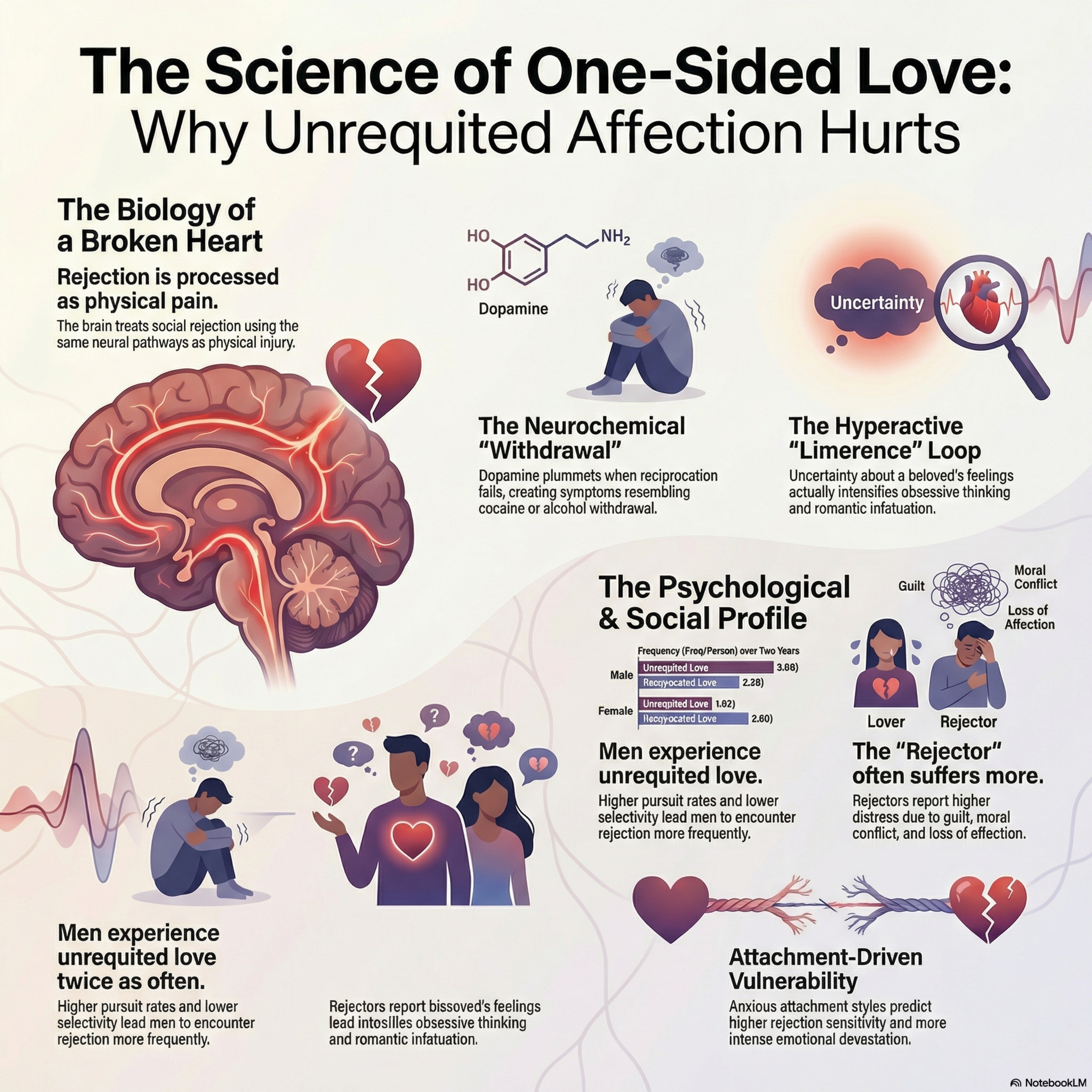
We’ve all been there. The text left on “seen.” The “You’re such a good friend.” The emotional damage playlist on repeat. 🎧💀But unrequited love isn’t just rom-com material or a Taylor Swift bridge—it’s a full-blown neurobiological event. Brain scans show rejection activates the same region as physical pain. Yes, your heart didn’t just feel broken—your brain literally processed it like a wound. 🧠⚡In this episode, we unpack:• Why men statistically experience one-sided love nearly twice as often (hello, Love Gap 👀)• Why the person saying “no” might secretly suffer more• Why uncertainty (“maybe they like me?”) is psychological gasoline 🔥• How dopamine withdrawal after rejection resembles addiction• Why your attachment style determines whether you “bounce back” or spiralPlus: parasocial heartbreak, celebrity crush meltdowns, and whether science might one day prescribe something for heartbreak. (Yes, oxytocin nasal spray is being studied 👃💊)This isn’t just emotional drama. It’s biology, evolution, and psychology colliding on the one-way street of romance.Because sometimes the pain is real—not poetic.#UnrequitedLove #Neuroscience #HeartbreakScience #LoveGap #PsychologyPodcast #BrainOnLove #Dopamine #AttachmentTheory #deepdivelab

We’ve all been there. The text left on “seen.” The “You’re such a good friend.” The emotional damage playlist on repeat. 🎧💀But unrequited love isn’t just rom-com material or a Taylor Swift bridge—it’s a full-blown neurobiological event. Brain scans show rejection activates the same region as physical pain. Yes, your heart didn’t just feel broken—your brain literally processed it like a wound. 🧠⚡In this episode, we unpack:• Why men statistically experience one-sided love nearly twice as often (hello, Love Gap 👀)• Why the person saying “no” might secretly suffer more• Why uncertainty (“maybe they like me?”) is psychological gasoline 🔥• How dopamine withdrawal after rejection resembles addiction• Why your attachment style determines whether you “bounce back” or spiralPlus: parasocial heartbreak, celebrity crush meltdowns, and whether science might one day prescribe something for heartbreak. (Yes, oxytocin nasal spray is being studied 👃💊)This isn’t just emotional drama. It’s biology, evolution, and psychology colliding on the one-way street of romance.Because sometimes the pain is real—not poetic.#UnrequitedLove #Neuroscience #HeartbreakScience #LoveGap #PsychologyPodcast #BrainOnLove #Dopamine #AttachmentTheory #deepdivelab

NOW PLAYING

It’s Not Just a Sad Song: The Neuroscience of One-Sided Love 💔🧠

0:00 15:18

No transcript for this episode yet

We transcribe on demand. Request one and we'll notify you when it's ready — usually under 10 minutes.

No similar episodes found.

No similar podcasts found.

Frequently Asked Questions

How long is this episode of The Deep Dive Lab: Unraveling Materials Science?

This episode is 15 minutes long.

When was this The Deep Dive Lab: Unraveling Materials Science episode published?

This episode was published on February 12, 2026.

What is this episode about?

We’ve all been there. The text left on “seen.” The “You’re such a good friend.” The emotional damage playlist on repeat. 🎧💀But unrequited love isn’t just rom-com material or a Taylor Swift bridge—it’s a full-blown neurobiological event. Brain...

Can I download this The Deep Dive Lab: Unraveling Materials Science episode?

Yes, you can download this episode by clicking the download button on the episode player, or subscribe to the podcast in your preferred podcast app for automatic downloads.
URL copied to clipboard!