
EPISODE · Oct 30, 2024 · 8 MIN
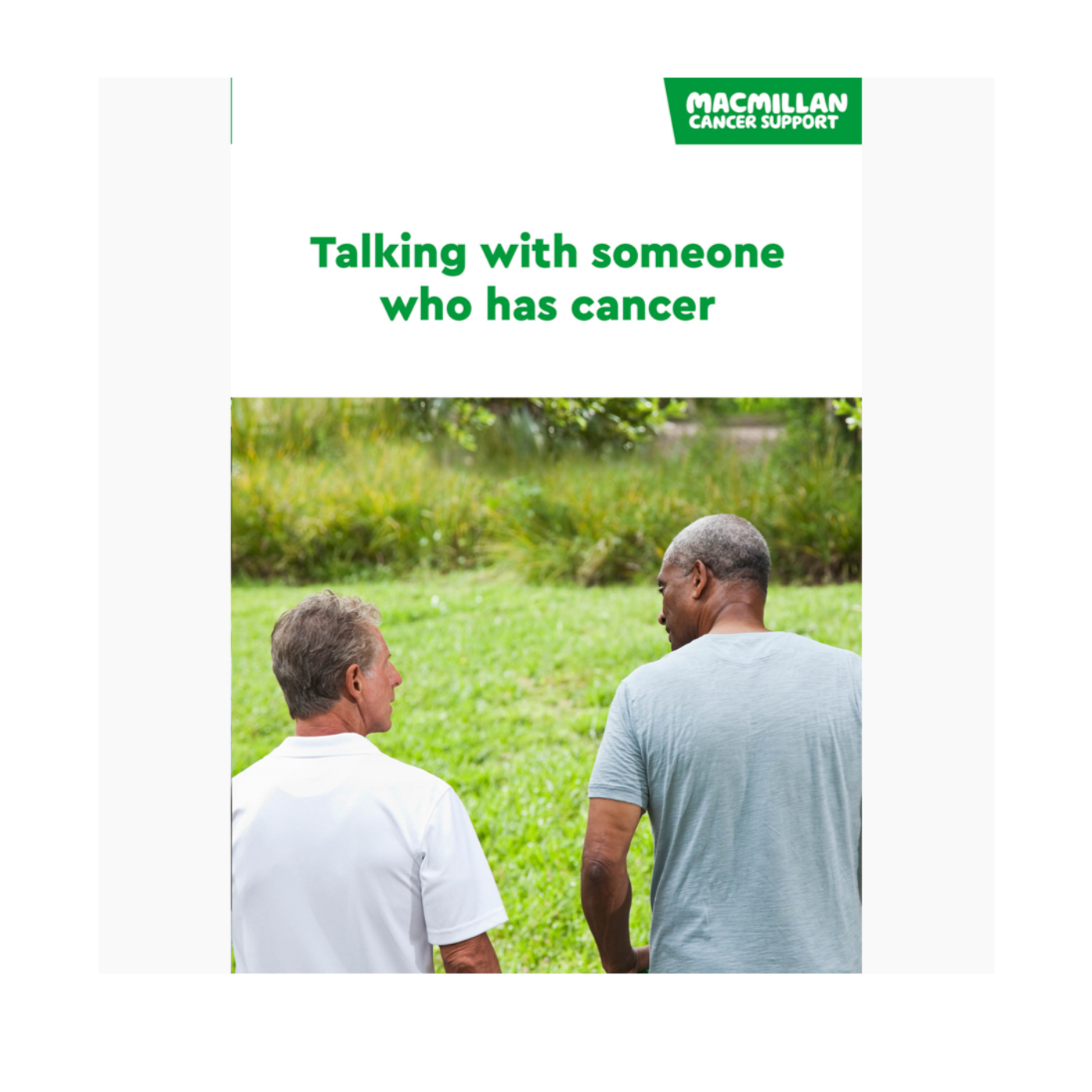
It's OK to talk about Cancer
from Cancer Podcast to Help you navigate the Journey.
Key Ideas and Facts:For Supporting Someone with Cancer:Active Listening: "When the person with cancer is talking, pay attention to what they are saying. Try to listen instead of thinking about what you are going to say next."Empathy over Positivity: "Try not to say that everything will be fine or encourage them to be positive. It is better to let people speak honestly about their feelings."Focus on Feelings: "Showing empathy is helpful. If they start to cry as they talk, you could say something like, ‘I can see how upsetting this is for you’. Or you could simply sit with them and hold their hand."Respect Boundaries: "There may be times when you want to talk but the other person does not. When this happens, talking to family members or friends may help you feel supported."Seek Support: "Macmillan is also here to support you. If you want to talk, you can call the Macmillan Support Line for free on 0808 808 00 00."For Individuals Diagnosed with Cancer:Benefits of Talking: "Talking about a cancer diagnosis can help you get the support you need at home, at work and from your healthcare team. It can also help you to make decisions that are right for you."Identifying Support Networks: "Think about who you usually talk with about important issues or difficult problems. This is probably the best person to talk to."Various Support Options: The sources list several avenues for support, including support groups, helplines, counselling, and online communities like Macmillan's Online Community.Dealing with Difficult Reactions: "People have different reactions when you tell them you have cancer. This may be because of experiences they have had, but it can also be about how they cope with change."Talking to Children: "If you can talk to [children] in a way they can understand, they may cope better."Rights at Work: "If you have cancer, the law considers this a disability. This means you cannot be treated differently because you have cancer. That would be discrimination."Quotes:Importance of Open Communication: "We didn’t treat it as a secret, as we wanted all of us to be able to discuss our concerns openly." - Sean, diagnosed with bowel cancer.Value of Support Groups: "My Macmillan nurse encouraged me to join a support group. [...] But after I started going, I wanted to find a support group for Africans, to meet people in my position." - Della, diagnosed with breast cancer.Acknowledging Cultural Barriers: "I was reluctant to talk about it. In India, it’s not something people talk about freely. Everything is kept very hush hush." - Susmita, diagnosed with breast cancer.Impact on Relationships: "My relationship with my wife suffered after the diagnosis. We slowly moved further and further apart, as we buried our fears. Psychological support really helped bring us back together." - Ashley, diagnosed with mouth cancer.
NOW PLAYING
It's OK to talk about Cancer
No transcript for this episode yet
Similar Episodes
Mar 26, 2026 ·1m
Mar 19, 2026 ·34m
Feb 18, 2026 ·11m
Feb 11, 2026 ·45m