
EPISODE · Jun 30, 2026 · 5 MIN
June 30: First Martyrs of the Church of Rome
from Catholic Saints & Feasts · host Fr. Michael Black
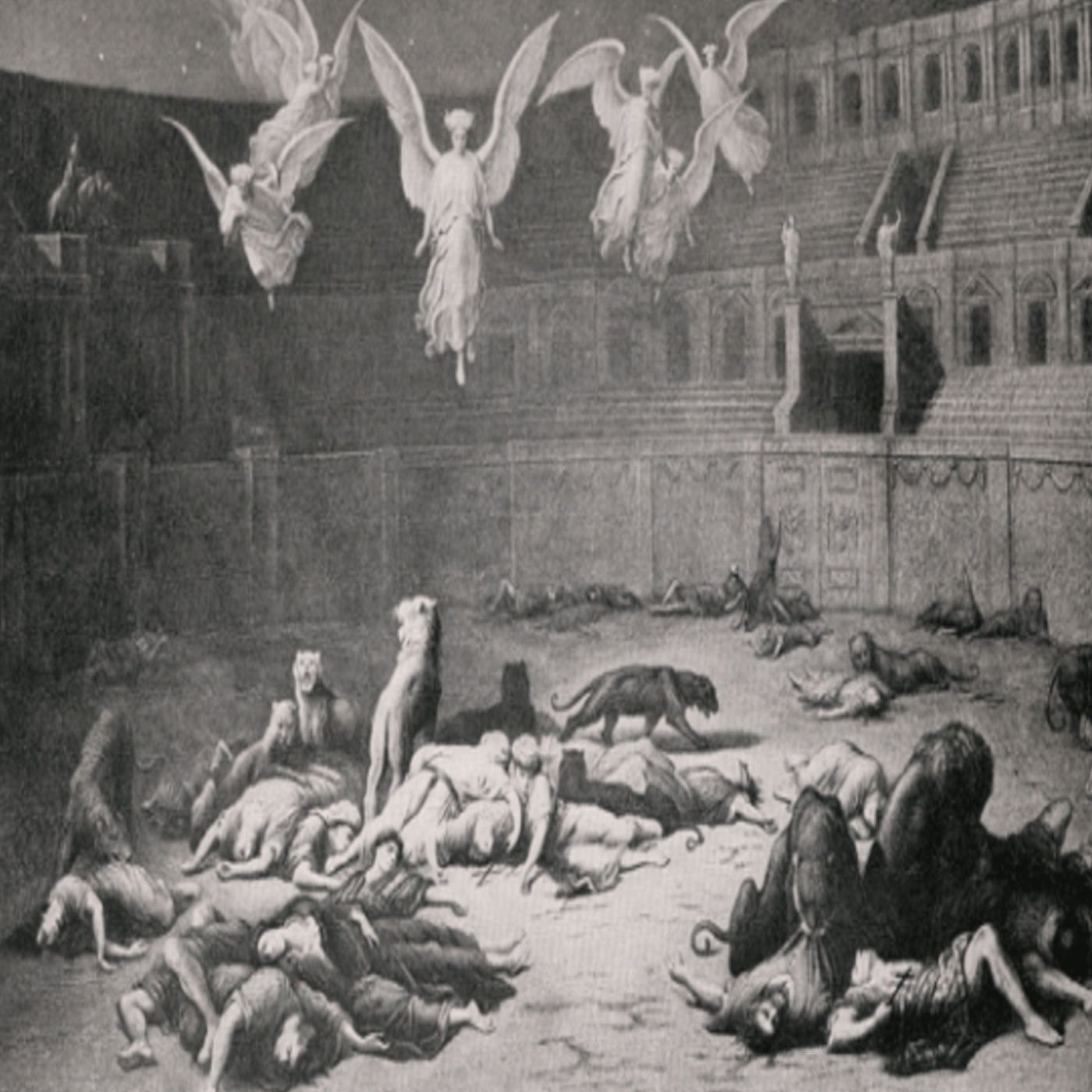
June 30: First Martyrs of the Church of Rome 64 Optional Memorial; Liturgical Color: Red or White A madman burns Christians like human torches Wave after wave of huge British and American bombers, pregnant with ordnance, opened their bays over Dresden, Germany, on February 13 and 14, 1945. Fire joined fire until the city itself was a raging, screaming bonfire. A tornado of flames hungered for oxygen, sucked all air from the atmosphere, and suffocated to death anyone caught in its vortex. The center of Dresden melted. Only some stone walls remained erect. Human skeletons were mixed into the rubble of a skeletal city. In the old town of Dresden today, a modest memorial marks a mass grave, the location where an unknown number of civilians’ scant remains were cremated shortly after the fire. It’s easy to walk by without noticing it. Any number of countries have similar memorials marking the mass graves of the victims of plane crashes, sunken ships, war atrocities, or natural disasters. Many countries also have a memorial to an unknown soldier. That unknown fighter represents all those drowned at sea, lost in the jungle canopy, eviscerated by enemy fire, or simply never recovered in the heat and sweat of battle. On civic feast days, presidents, governors, and mayors lay wreaths and flowers at the graves of the unknown. In honoring him, they honor all. A nation’s official remembering—in stone, statue, speech, or ceremony—preserves the past. A nation’s common memory is preserved by its government, which guards against national forgetting through official acts of national remembering. The Church’s liturgical calendar is a continual, public remembering of saints, feasts, and theology, by mankind’s most ancient source and carrier of institutional memory—the Catholic Church. Today’s feast day commemorating the First Martyrs of the Church of Rome did not exist prior to the liturgical reforms of the Second Vatican Council. Instead, the sanctoral calendar was crowded with various feast days to particular martyrs from this early Roman persecution. Apart from their centuries on the calendar, however, little else supported these particular martyrs’ existence. Today’s feast is a liturgical expression of the wreath-laying ceremony at the Tomb of the Unknown Soldier or the flowers left at a mass grave marker. This feast commemorates those unknown and unnamed men and women who were cruelly tortured and executed in the city of Rome in 64 A.D. But instead of meeting in a park to sing a patriotic hymn and to see an official lay a wreath, we do what Christians do to remember these martyrs. We meet as the faithful in a church, in front of an altar, to participate in the sacrifice of the Mass and to remember our remote ancestors in the faith who died so that the true faith would not. In 64 A.D. a huge fire of suspicious origins consumed large sections of Rome. A deranged emperor named The Black (Nero) blamed Christians for the conflagration and executed large numbers of them in retribution for their supposed treachery. A vivid description of the persecution survives from a Roman historian named Tacitus, who relates that some Christians were sewn into the skins of animals to be attacked and consumed by beasts. Other Christians were slathered with wax, tied to posts, and then burned alive, human torches whose glow illuminated Nero’s garden parties. Still others were crucified. This was not the barbarous hacking off of limbs and splitting of skulls later suffered by missionaries in the forests of Northern Europe. Nero’s madness was highly refined evil. Today, we commemorate these Christians in the same fashion in which they would have commemorated the Lord’s own death—by prayer and sacrifice. We are separated from 64 A.D. by many centuries, but we are united to 64 A.D. by our common faith. We remember because the Church remembers. Anonymous first martyrs of Rome, your blood is still wet, and your sufferings still felt, in the same Church of Christ to which you belonged through baptism. Through your intercession, help the baptized of today be as courageous as you in all things.
What this episode covers
June 30: First Martyrs of the Church of Rome 64 Optional Memorial; Liturgical Color: Red or White A madman burns Christians like human torches Wave after wave of huge British and American bombers, pregnant with ordnance, opened their bays over Dresden, Germany, on February 13 and 14, 1945. Fire joined fire until the city itself was a raging, screaming bonfire. A tornado of flames hungered for oxygen, sucked all air from the atmosphere, and suffocated to death anyone caught in its vortex. The center of Dresden melted. Only some stone walls remained erect. Human skeletons were mixed into the rubble of a skeletal city. In the old town of Dresden today, a modest memorial marks a mass grave, the location where an unknown number of civilians’ scant remains were cremated shortly after the fire. It’s easy to walk by without noticing it. Any number of countries have similar memorials marking the mass graves of the victims of plane crashes, sunken ships, war atrocities, or natural disasters. Many countries also have a memorial to an unknown soldier. That unknown fighter represents all those drowned at sea, lost in the jungle canopy, eviscerated by enemy fire, or simply never recovered in the heat and sweat of battle. On civic feast days, presidents, governors, and mayors lay wreaths and flowers at the graves of the unknown. In honoring him, they honor all. A nation’s official remembering—in stone, statue, speech, or ceremony—preserves the past. A nation’s common memory is preserved by its government, which guards against national forgetting through official acts of national remembering. The Church’s liturgical calendar is a continual, public remembering of saints, feasts, and theology, by mankind’s most ancient source and carrier of institutional memory—the Catholic Church. Today’s feast day commemorating the First Martyrs of the Church of Rome did not exist prior to the liturgical reforms of the Second Vatican Council. Instead, the sanctoral calendar was crowded with various feast days to particular martyrs from this early Roman persecution. Apart from their centuries on the calendar, however, little else supported these particular martyrs’ existence. Today’s feast is a liturgical expression of the wreath-laying ceremony at the Tomb of the Unknown Soldier or the flowers left at a mass grave marker. This feast commemorates those unknown and unnamed men and women who were cruelly tortured and executed in the city of Rome in 64 A.D. But instead of meeting in a park to sing a patriotic hymn and to see an official lay a wreath, we do what Christians do to remember these martyrs. We meet as the faithful in a church, in front of an altar, to participate in the sacrifice of the Mass and to remember our remote ancestors in the faith who died so that the true faith would not. In 64 A.D. a huge fire of suspicious origins consumed large sections of Rome. A deranged emperor named The Black (Nero) blamed Christians for the conflagration and executed large numbers of them in retribution for their supposed treachery. A vivid description of the persecution survives from a Roman historian named Tacitus, who relates that some Christians were sewn into the skins of animals to be attacked and consumed by beasts. Other Christians were slathered with wax, tied to posts, and then burned alive, human torches whose glow illuminated Nero’s garden parties. Still others were crucified. This was not the barbarous hacking off of limbs and splitting of skulls later suffered by missionaries in the forests of Northern Europe. Nero’s madness was highly refined evil. Today, we commemorate these Christians in the same fashion in which they would have commemorated the Lord’s own death—by prayer and sacrifice. We are separated from 64 A.D. by many centuries, but we are united to 64 A.D. by our common faith. We remember because the Church remembers. Anonymous first martyrs of...
NOW PLAYING
June 30: First Martyrs of the Church of Rome
No transcript for this episode yet
Similar Episodes
Feb 13, 2026 ·70m
Nov 14, 2025 ·52m
Oct 3, 2025 ·47m
Sep 12, 2025 ·46m
Aug 1, 2025 ·36m