
EPISODE · Feb 8, 2024 · 3 MIN
“Key Characteristics & Treatment for the Calcifying Epithelial Odontogenic Tumor (CEOT)”
from Dr. Gallagher's Podcast · host Brendan Gallagher, DDS
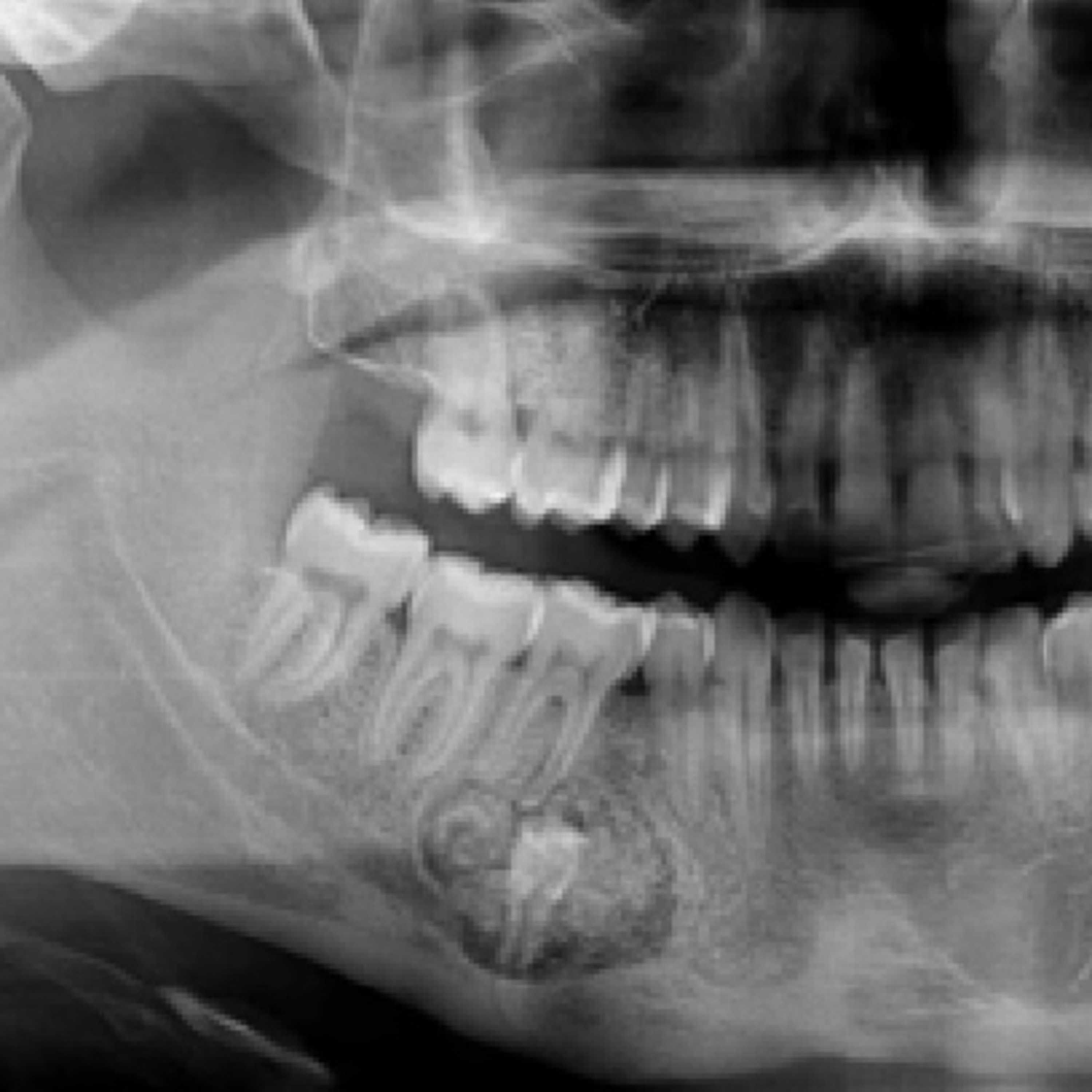
Full Title: “What are the Key Characteristics & Treatment for the Calcifying Epithelial Odontogenic Tumor (CEOT)?” - 2.8.24 Quick Review #104 - #pathology #oralpathology #doctorgallagher #oralsurgery #oralsurgeon #dentist #dentistry #dental Calcifying Epithelial Odontogenic Tumors (CEOTs), also known as Pindborg tumors, have several key characteristics: 1. Histological Appearance: They are characterized by the presence of polyhedral epithelial cells with clear, eosinophilic cytoplasm and distinct intercellular bridges. The cells are arranged in sheets and islands within a fibrous stroma. 2. Calcification: CEOTs often contain calcifying structures, including concentric calcified rings known as Liesegang rings, as well as homogenous acellular masses that may resemble enamel matrix. 3. Amyloid Deposits: A unique feature of CEOTs is the presence of amyloid-like material, which stains positively with Congo red and exhibits apple-green birefringence under polarized light. 4. Radiographic Features: On radiographs, these tumors may show a mixed radiolucent-radiopaque pattern due to the presence of calcified material. They can present as unilocular or multilocular lesions with well-defined or irregular borders. 5. Clinical Presentation: Patients with CEOT usually present with a slow-growing, painless mass in the jaw, which may cause expansion of the bone. Teeth displacement and root resorption can also occur. 6. Location Preference: While CEOTs can occur in both the mandible and maxilla, they are more commonly found in the mandible, particularly in the premolar and molar regions. 7. Potential for Recurrence: CEOTs are generally benign but can exhibit aggressive behavior, with a propensity for local invasion and recurrence after surgical removal. 8. Treatment: Complete surgical excision with 1.0-1.5 cm margins is the treatment of choice. In cases of aggressive or recurrent tumors, a more radical surgical approach may be necessary. 9. Prognosis: The overall prognosis for CEOT is good, but due to the potential for recurrence, long-term follow-up is recommended. CEOTs are considered rare among odontogenic tumors and are distinct due to their histopathological features, potential for calcification, and the presence of amyloid deposits. References: 1. Akay, M. C., Tetik, A., & Zeytinoğlu, M. (2014). The Calcifying Epithelial Odontogenic Tumor (Pindborg Tumor): A Case Report. Open Access Library Journal. https://doi.org/10.4236/OALIB.1101036 2. Neville, B. W., Damm, D. D., Allen, C. M., & Chi, A. C. (2015). Oral and Maxillofacial Pathology (4th ed.). Saunders. 3. Abubaker, A.O., Lam, D., & Benson, K. (2016). OMFS Secrets (3rd ed.). Elsevier. 4. Miloro, M., Ghali, G. E., Larsen, P. E., & Waite, P. (Eds.). (2022). Peterson’s Principles of Oral and Maxillofacial Surgery (4th ed.). Springer. 5. ChatGPT. 2024.
What this episode covers
Full Title: “What are the Key Characteristics & Treatment for the Calcifying Epithelial Odontogenic Tumor (CEOT)?” - 2.8.24 Quick Review #104 - #pathology #oralpathology #doctorgallagher #oralsurgery #oralsurgeon #dentist #dentistry #dental Calcifying Epithelial Odontogenic Tumors (CEOTs), also known as Pindborg tumors, have several key characteristics: 1. Histological Appearance: They are characterized by the presence of polyhedral epithelial cells with clear, eosinophilic cytoplasm and distinct intercellular bridges. The cells are arranged in sheets and islands within a fibrous stroma. 2. Calcification: CEOTs often contain calcifying structures, including concentric calcified rings known as Liesegang rings, as well as homogenous acellular masses that may resemble enamel matrix. 3. Amyloid Deposits: A unique feature of CEOTs is the presence of amyloid-like material, which stains positively with Congo red and exhibits apple-green birefringence under polarized light. 4. Radiographic Features: On radiographs, these tumors may show a mixed radiolucent-radiopaque pattern due to the presence of calcified material. They can present as unilocular or multilocular lesions with well-defined or irregular borders. 5. Clinical Presentation: Patients with CEOT usually present with a slow-growing, painless mass in the jaw, which may cause expansion of the bone. Teeth displacement and root resorption can also occur. 6. Location Preference: While CEOTs can occur in both the mandible and maxilla, they are more commonly found in the mandible, particularly in the premolar and molar regions. 7. Potential for Recurrence: CEOTs are generally benign but can exhibit aggressive behavior, with a propensity for local invasion and recurrence after surgical removal. 8. Treatment: Complete surgical excision with 1.0-1.5 cm margins is the treatment of choice. In cases of aggressive or recurrent tumors, a more radical surgical approach may be necessary. 9. Prognosis: The overall prognosis for CEOT is good, but due to the potential for recurrence, long-term follow-up is recommended. CEOTs are considered rare among odontogenic tumors and are distinct due to their histopathological features, potential for calcification, and the presence of amyloid deposits. References: 1. Akay, M. C., Tetik, A., & Zeytinoğlu, M. (2014). The Calcifying Epithelial Odontogenic Tumor (Pindborg Tumor): A Case Report. Open Access Library Journal. https://doi.org/10.4236/OALIB.1101036 2. Neville, B. W., Damm, D. D., Allen, C. M., & Chi, A. C. (2015). Oral and Maxillofacial Pathology (4th ed.). Saunders. 3. Abubaker, A.O., Lam, D., & Benson, K. (2016). OMFS Secrets (3rd ed.). Elsevier. 4. Miloro, M., Ghali, G. E., Larsen, P. E., & Waite, P. (Eds.). (2022). Peterson’s Principles of Oral and Maxillofacial Surgery (4th ed.). Springer. 5. ChatGPT. 2024.
NOW PLAYING
“Key Characteristics & Treatment for the Calcifying Epithelial Odontogenic Tumor (CEOT)”
No transcript for this episode yet
Similar Episodes
Dec 5, 2025 ·50m
Oct 9, 2025 ·33m
Oct 3, 2025 ·40m
Sep 11, 2025 ·31m
Aug 27, 2025 ·39m
Aug 18, 2025 ·54m