
EPISODE · Jan 25, 2026 · 13 MIN
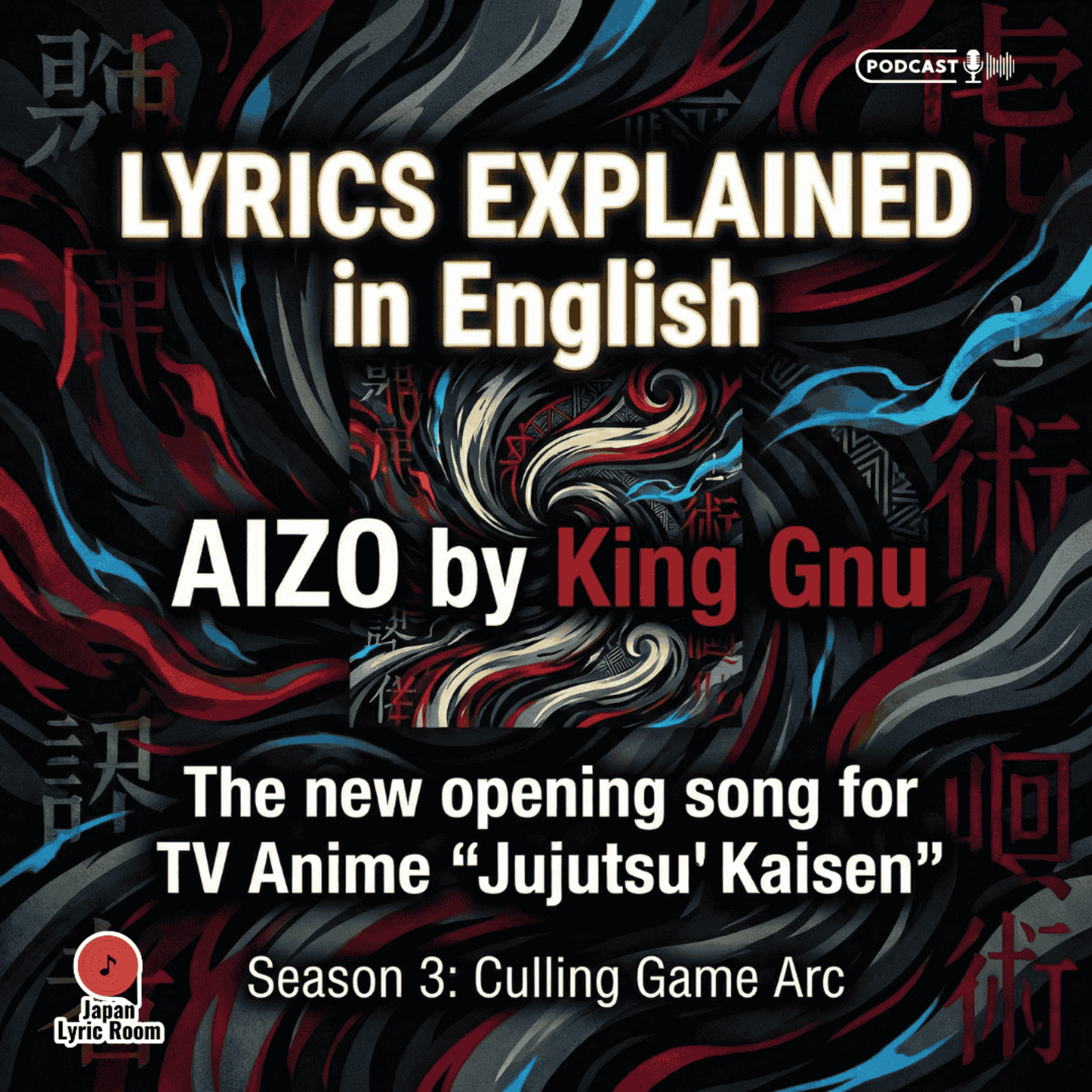
King Gnu - AIZO Lyrics Meaning & Analysis | Jujutsu Kaisen Season 3 (Culling Game Arc)
from Japan Lyric Room · host Japan Lyric Room
King Gnu’s “AIZO (愛憎)” doesn’t treat love and hate as opposites—it fuses them into a single force, a vortex emotion that spins faster the more you resist it. Set against a “Greater Tokyo frenzy,” the song turns the city into a living arena: polished on the surface, but underneath, a whirlpool of attachment, resentment, and survival instinct. One of the song’s most haunting images is being “drenched in the disgrace of living.” It’s not just shame—it’s saturation, like the self can’t find a dry place to stand. In the Culling Game’s moral collapse, dignity becomes a luxury; the voice chooses endurance, even if it means walking forward soaked in humiliation. The track also frames modern connection as an ugly kind of music: “a dissonance of lies and truth.” Harmony is no longer the goal—reality is. This is love as static, truth as noise, and intimacy as the willingness to keep listening anyway. And when the lyric asks forgiveness for a “flawed love,” it isn’t self-pity; it’s a brutal kind of honesty—accepting that what survives in chaos won’t be pure, only real. Finally, “AIZO” arrives at its sharpest demand: a heart stripped raw, even if it’s smeared with the grime of mixed feelings. In a world where sanity can’t stay intact, the song suggests a darker courage—to turn even hatred into fuel, and still choose to meet again. 📝 Full written analysis: https://www.japanlyricroom.com/songs/aizo⏳ Chapters0:00 Intro: The Meaning of "AIZO" & Jujutsu Kaisen Context2:35 "Mad Clamor": Analyzing the Chaos of Tokyo in the Lyrics4:11 "Living Shame" (Ikihaji): A Survival Story of the Damned5:27 Dissonance of Truth & Lies: Breaking Down the "Fukyon" Metaphor6:46 Accepting "Flawed Love": The Deep Nuance of "Dekisokonai"7:52 Losing Sanity (Shoki): Navigating through Modern Chaos9:08 Parallel Lines: The Symbolism of Tragic Separation10:18 "Exposed Heart" (Mukidashi): Raw Emotions & Vulnerability11:16 Outro: Summary — Finding Beauty within the Chaos💡 Frequently Asked QuestionsQ: 🌙 What does the title "AIZO" signify in this Jujutsu Kaisen theme? A: 🖋️ The title is a clever double entendre. While "Aizo (愛憎)" means a mixture of Love and Hate, it also sounds like "Aizo (合図)," meaning a Sign or Signal. This perfectly reflects the complex relationship between the characters in the Culling Game Arc.Q: 🏙️ Why is the "Mad Clamor of Tokyo" so prominent in the lyrics? A: 🖋️ King Gnu uses Tokyo’s urban chaos as a metaphor for the inner turmoil of the characters. It represents a world where reality and curses collide, making "survival" the only truth left in the city.Q: 💔 What is the meaning of "Living Shame" (Ikihaji) mentioned in the song? A: 🖋️ "Ikihaji" refers to the disgrace of living when one feels they should have died. In the context of the lyrics, it suggests a raw, anti-heroic honesty—choosing to keep struggling through the chaos even when scarred by guilt and flaws.☕ Support the show (Buy Me a Coffee): https://buymeacoffee.com/japanlyricroom
Embed this episode
NOW PLAYING
King Gnu - AIZO Lyrics Meaning & Analysis | Jujutsu Kaisen Season 3 (Culling Game Arc)
No transcript for this episode yet
Similar Episodes
No similar episodes found.
Similar Podcasts
No similar podcasts found.