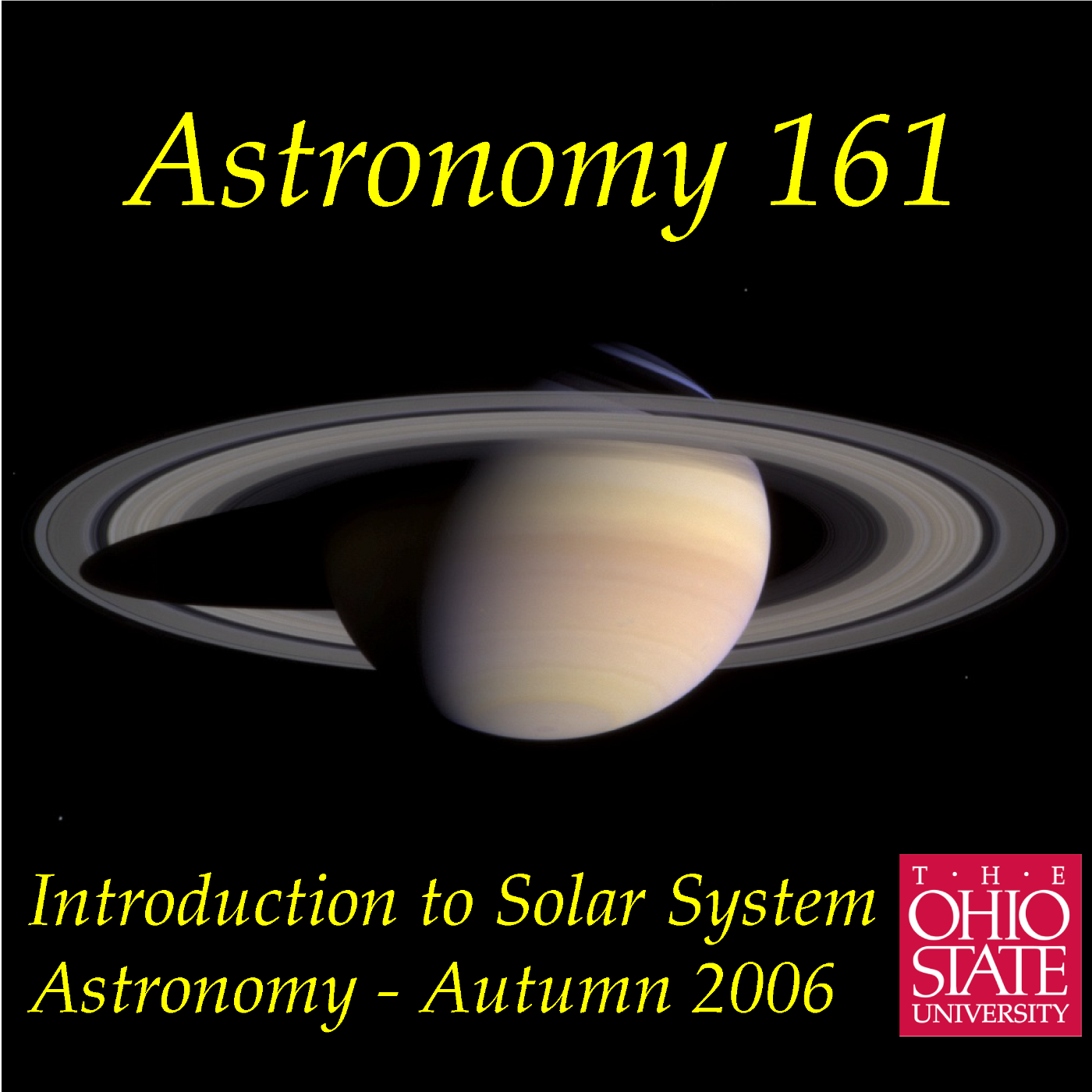
Lecture 12: The Wanderers - Planetary Motions episode artwork

EPISODE · Oct 5, 2006

Lecture 12: The Wanderers - Planetary Motions

from Astronomy 161 - Introduction to Solar System Astronomy · host Richard Pogge

How do the planets move across the sky? This lecture will review planetary motions, specifically the apparent motions of the five classical planets (Mercury, Venus, Mars, Jupiter, and Saturn) as seen from the Earth. We will discuss the classical division of the naked-eye planets into inferior (Mercury and Venus) and superior (Mars, Jupiter, and Saturn) planets, and describe their main configurations in the sky: conjunction, opposition, maximum elongation, and quadrature. We will then discuss retrograde motion, the apparent westward reversal of motion seen at opposition in the superior planets and inferior conjunction in inferior planets. The quest to describe the very complex motions of the planets marks the birth of science, and will be the central theme of next week's lectures. Recorded 2006 Oct 5 in 100 Stillman Hall on the Columbus campus of The Ohio State University.

How do the planets move across the sky? This lecture will review planetary motions, specifically the apparent motions of the five classical planets (Mercury, Venus, Mars, Jupiter, and Saturn) as seen from the Earth. We will discuss the classical division of the naked-eye planets into inferior (Mercury and Venus) and superior (Mars, Jupiter, and Saturn) planets, and describe their main configurations in the sky: conjunction, opposition, maximum elongation, and quadrature. We will then discuss retrograde motion, the apparent westward reversal of motion seen at opposition in the superior planets and inferior conjunction in inferior planets. The quest to describe the very complex motions of the planets marks the birth of science, and will be the central theme of next week's lectures. Recorded 2006 Oct 5 in 100 Stillman Hall on the Columbus campus of The Ohio State University.

NOW PLAYING

Lecture 12: The Wanderers - Planetary Motions

0:00 0:00

No transcript for this episode yet

We transcribe on demand. Request one and we'll notify you when it's ready — usually under 10 minutes.

Frequently Asked Questions

How long is this episode of Astronomy 161 - Introduction to Solar System Astronomy?

Episode duration information is not available.

When was this Astronomy 161 - Introduction to Solar System Astronomy episode published?

This episode was published on October 5, 2006.

What is this episode about?

How do the planets move across the sky? This lecture will review planetary motions, specifically the apparent motions of the five classical planets (Mercury, Venus, Mars, Jupiter, and Saturn) as seen from the Earth. We will discuss the classical...

Can I download this Astronomy 161 - Introduction to Solar System Astronomy episode?

Yes, you can download this episode by clicking the download button on the episode player, or subscribe to the podcast in your preferred podcast app for automatic downloads.
URL copied to clipboard!