Libya: Continuities and Discontinuities of Political Order After 2011 episode artwork

EPISODE · May 6, 2021 · 27 MIN

Libya: Continuities and Discontinuities of Political Order After 2011

from Maghrib in Past & Present | Podcasts · host themaghribpodcast.com

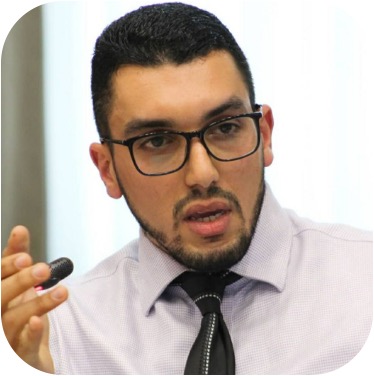
Episode 121: Libya: Continuities and Discontinuities of Political Order After 2011   To what extent is the political instability witnessed in Libya since 2011 an inheritance of the ousted regime of Mu'ammar al-Gaddafi, which ruled the country for over four decades? In his new article in Middle East Law and Governance, "Of Conflict and Collapse: Rethinking State Formation in Post-Gaddafi Libya," Emadeddin Badi of the Atlantic Council and Global Initiative Against Transnational Organized Crime discusses these connections.  Using this article as the basis of their conversation, Professor Jacob Mundy of Colgate University and Badi attempt to contextualize much of what is seen coming out of Libya today in terms of historical forces present within the Libyan polity and the powerful contingencies that have produced significant ruptures within the socio-economic orders that long governed day-to-day realities in Libya under its unique blend of an increasingly centralized security states and a post-populist corporatist regime from 1969 to 2011. Above all, Badi focuses our attention on the external shock of repeated outside interventions that have generated new dynamics within Libya, occasioning new political forms and horizons while ossifying and reinforcing others.   Emadeddin Badi is a Libyan researcher and consultant that specializes in governance, post-conflict stabilization, hybrid security and peacebuilding. He currently works as Senior Analyst at the Global Initiative Against Transnational Organized Crime and as Advisor for Libya at the Geneva Centre for Security Sector Governance (DCAF). He is also Non-resident Senior Fellow with the Middle East Program at the Atlantic Council, where he focuses primarily on U.S. and European policies towards Libya. Previously, he was a Non-resident Scholar at the Countering Terrorism and Extremism Program at the Middle East Institute and a Policy Fellow at the European University Institute. Badi holds a Bachelors degree in Business and Economics from the University of Essex, a bachelors in French language from the https://uot.edu.ly/ in Libya, as well as a Masters degree in Violence, Conflict and Development from the School of Oriental and African Studies. He is fluent in English, French and Arabic.   Jacob Mundy, Associate Professor of Peace and Conflict Studies at Colgate University, conducted this interview on March 11, 2021. This podcast is part of the "Supporting Critical Research and Strengthening Scholarly Capacity in Algeria, Libya, and Tunisia" project organized by the Centre d'Études Maghrébines à Tunis (CEMAT) and the Centre d'Études Maghrébines en Algérie (CEMA), and funded by the Carnegie Corporation of New York. Prof. Mundy heads the contemporary Libya studies research unit, of which Badi is a member.   Posted by: Hayet Lansari, Librarian, Outreach Coordinator, Content Curator (CEMA).

To what extent is the political instability witnessed in Libya since 2011 an inheritance of the ousted regime of Mu'ammar al-Gaddafi, which ruled the country for over four decades? In his new article in Middle East Law and Governance, "Of Conflict and Collapse: Rethinking State Formation in Post-Gaddafi Libya," Emadeddin Badi of the Atlantic Council and Global Initiative Against Transnational Organized Crime discusses these connections.  Using this article as the basis of their conversation, Professor Jacob Mundy of Colgate University and Badi attempt to contextualize much of what is seen coming out of Libya today in terms of historical forces present within the Libyan polity and the powerful contingencies that have produced significant ruptures within the socio-economic orders that long governed day-to-day realities in Libya under its unique blend of an increasingly centralized security states and a post-populist corporatist regime from 1969 to 2011. Above all, Badi focuses our attention on the external shock of repeated outside interventions that have generated new dynamics within Libya, occasioning new political forms and horizons while ossifying and reinforcing others. Emadeddin Badi is a Libyan researcher and consultant that specializes in governance, post-conflict stabilization, hybrid security and peacebuilding. He currently works as Senior Analyst at the Global Initiative Against Transnational Organized Crime and as Advisor for Libya at the Geneva Centre for Security Sector Governance (DCAF). He is also Non-resident Senior Fellow with the Middle East Program at the Atlantic Council, where he focuses primarily on U.S. and European policies towards Libya. Previously, he was a Non-resident Scholar at the Countering Terrorism and Extremism Program at the Middle East Institute and a Policy Fellow at the European University Institute. Badi holds a Bachelors degree in Business and Economics from the University of Essex, a bachelors in French language from the https://uot.edu.ly/ in Libya, as well as a Masters degree in Violence, Conflict and Development from the School of Oriental and African Studies. He is fluent in English, French and Arabic. Jacob Mundy, Associate Professor of Peace and Conflict Studies at Colgate University, conducted this interview on March 11, 2021. This podcast is part of the "Supporting Critical Research and Strengthening Scholarly Capacity in Algeria, Libya, and Tunisia" project organized by the Centre d'Études Maghrébines à Tunis (CEMAT) and the Centre d'Études Maghrébines en Algérie (CEMA), and funded by the Carnegie Corporation of New York. Prof. Mundy heads the contemporary Libya studies research unit, of which Badi is a member. Posted by: Hayet Lansari, Librarian, Outreach Coordinator, Content Curator (CEMA).

NOW PLAYING

Libya: Continuities and Discontinuities of Political Order After 2011

0:00 27:28

No transcript for this episode yet

We transcribe on demand. Request one and we'll notify you when it's ready — usually under 10 minutes.

MG Show MG Show The MG Show, hosted by Jeffrey Pedersen and Shannon Townsend, is a leading alternative media platform dedicated to uncovering the truth behind today’s most pressing political issues. Launched in 2019, the show has grown exponentially, offering unfiltered insights, comprehensive research, and real-time analysis. With a commitment to independent journalism and factual integrity, the MG Show empowers its audience with knowledge and encourages active participation in the political discourse. Eat to Live Jenna Fuhrman, Dr. Fuhrman Our health is our most precious gift and smart nutrition can change your life. Each month, join Dr. Fuhrman and his daughter, Jenna Fuhrman as they discuss important topics in the world of nutrition. Eat to Live will change the way you eat and think about food. French Your Way Jessica: Native French teacher founder of French Your Way Boost your French listening skills and test your comprehension with this one of a kind series of podcasts. Get the chance to listen to a real conversation between native speakers talking at normal speed AND customise your learning experience through carefully designed sets of questions (2 levels of difficulty) available for download at www.frenchvoicespodcast.com. All interviews also come with the transcript. French teacher Jessica interviews native speakers of French from around the world who share a bit of their life and passion. Where else would you meet in one same place a French yoga teacher based in Melbourne, a soap manufacturer from Provence, or a couple cycling around the world? XXX Tech by SOVRYN Dr. Brian Sovryn The crossroads between technology, sensuality, and metaphysics - and the longest running anarchist podcast in the world! Brought to you by Dr. Brian Sovryn.

Frequently Asked Questions

How long is this episode of Maghrib in Past & Present | Podcasts?

This episode is 27 minutes long.

When was this Maghrib in Past & Present | Podcasts episode published?

This episode was published on May 6, 2021.

What is this episode about?

Episode 121: Libya: Continuities and Discontinuities of Political Order After 2011   To what extent is the political instability witnessed in Libya since 2011 an inheritance of the ousted regime of Mu'ammar al-Gaddafi, which ruled the country for...

Can I download this Maghrib in Past & Present | Podcasts episode?

Yes, you can download this episode by clicking the download button on the episode player, or subscribe to the podcast in your preferred podcast app for automatic downloads.
URL copied to clipboard!