
EPISODE · Jun 7, 2026 · 25 MIN
Life is a Process, Don't Be Afraid
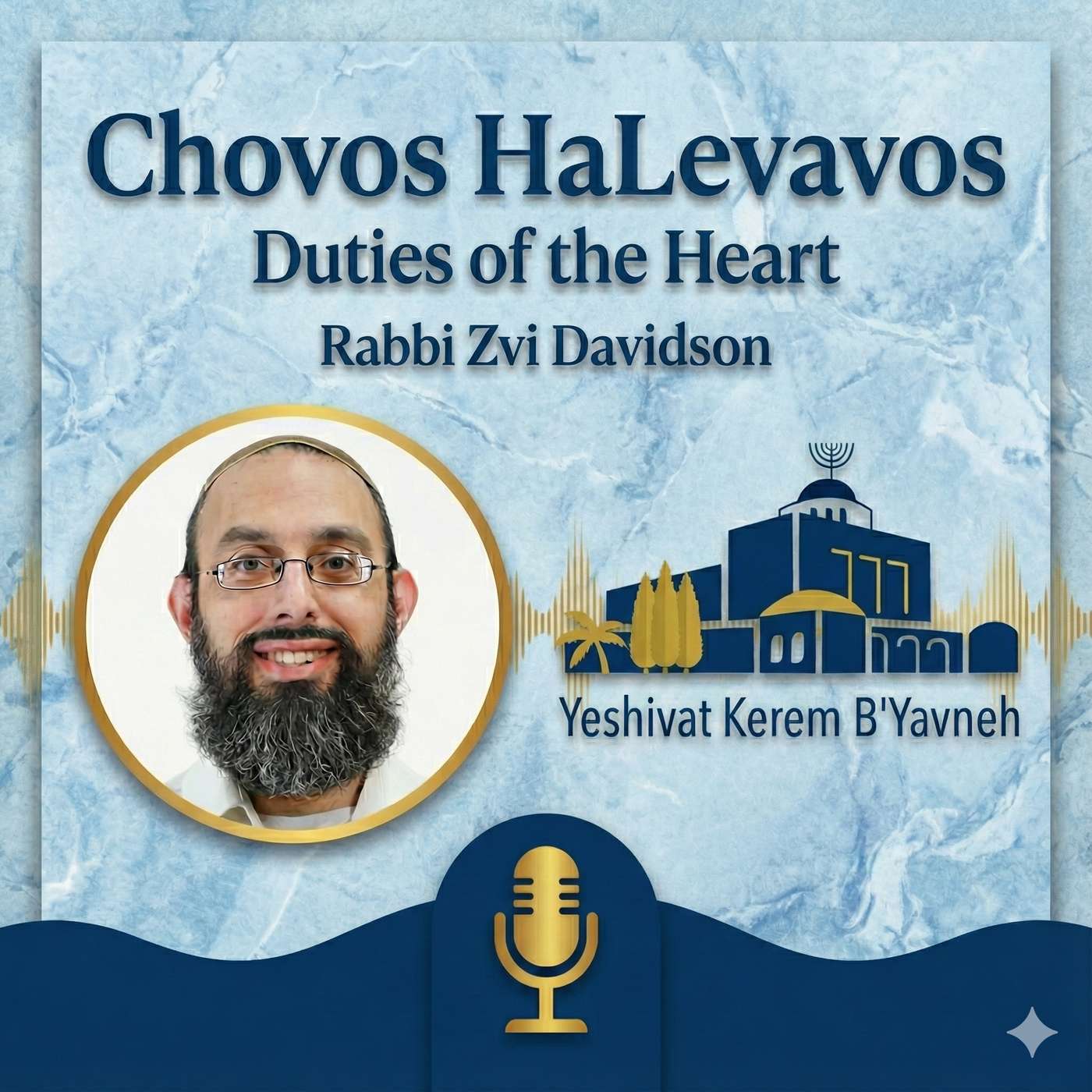
from Chovos HaLevavos | Rabbi Zvi Davidson (Yeshivat Kerem B'Yavneh) · host Yeshivat Kerem B'Yavneh
AI-Generated Summary (AI can be inaccurate. Check important information): 1. Dual causality — Every event in the world results from two factors: the Divine decree and the natural means (emtza'im) sent to execute it. 2. Hidden Divine will — We often only recognize hashgacha pratis (Divine providence) when things go our way, but true faith recognizes that even when plans fail, it is "what Hashem wants." 3. Levels of causality — Divine tools range from direct "first causes" (gorem rishon) to complex, multi-stage processes involving many intermediate factors (beinayim). 4. Plan B is also God's will — Using the example of the Nuns in the Torah, we see that when "Plan A" (direct entry to the land) failed, the forty-year desert trek was no less a part of the Divine plan. 5. From One to Seventy — Moshe Rabbeinu's struggle with the seventy elders represents the shift from seeing Hashem's oneness directly to seeing His light filtered through a complex process (hishtalshelut). 6. The World of Process — We live in a reality where needs are met through many steps (like the 39 melachot of food), which tests whether we can still see Hashem behind the complexity. 7. The Goal of Testing — Hashem made man needy not as a "bug" in the system, but as a deliberate "feature" to test our loyalty through the struggle for parnassa. 8. Internalizing the Test — A test (mivchan) is not just to prove knowledge to Hashem, but to build internal strength and achieve kirvat Hashem (closeness to God). 9. Bitachon vs. Circumstance — True bitachon (trust) is proven in poverty or failure, as seen in the story of Moshe Reichman, who viewed losing his fortune as a chance to grow. 10. Sanctity within the process — The test of the world is whether we pursue our needs while remaining loyal to the halacha, such as observing Shabbat despite financial pressure.
What this episode covers
AI-Generated Summary (AI can be inaccurate. Check important information): 1. Dual causality — Every event in the world results from two factors: the Divine decree and the natural means (emtza'im) sent to execute it. 2. Hidden Divine will — We often only recognize hashgacha pratis (Divine providence) when things go our way, but true faith recognizes that even when plans fail, it is "what Hashem wants." 3. Levels of causality — Divine tools range from direct "first causes" (gorem rishon) to complex, multi-stage processes involving many intermediate factors (beinayim). 4. Plan B is also God's will — Using the example of the Nuns in the Torah, we see that when "Plan A" (direct entry to the land) failed, the forty-year desert trek was no less a part of the Divine plan. 5. From One to Seventy — Moshe Rabbeinu's struggle with the seventy elders represents the shift from seeing Hashem's oneness directly to seeing His light filtered through a complex process (hishtalshelut). 6. The World of Process — We live in a reality where needs are met through many steps (like the 39 melachot of food), which tests whether we can still see Hashem behind the complexity. 7. The Goal of Testing — Hashem made man needy not as a "bug" in the system, but as a deliberate "feature" to test our loyalty through the struggle for parnassa. 8. Internalizing the Test — A test (mivchan) is not just to prove knowledge to Hashem, but to build internal strength and achieve kirvat Hashem (closeness to God). 9. Bitachon vs. Circumstance — True bitachon (trust) is proven in poverty or failure, as seen in the story of Moshe Reichman, who viewed losing his fortune as a chance to grow. 10. Sanctity within the process — The test of the world is whether we pursue our needs while remaining loyal to the halacha, such as observing Shabbat despite financial pressure.
NOW PLAYING
Life is a Process, Don't Be Afraid
No transcript for this episode yet