
EPISODE · Mar 9, 2026 · 12 MIN
Lights ... camera ... power
from The choreography of power · host Rob Dalton PhD
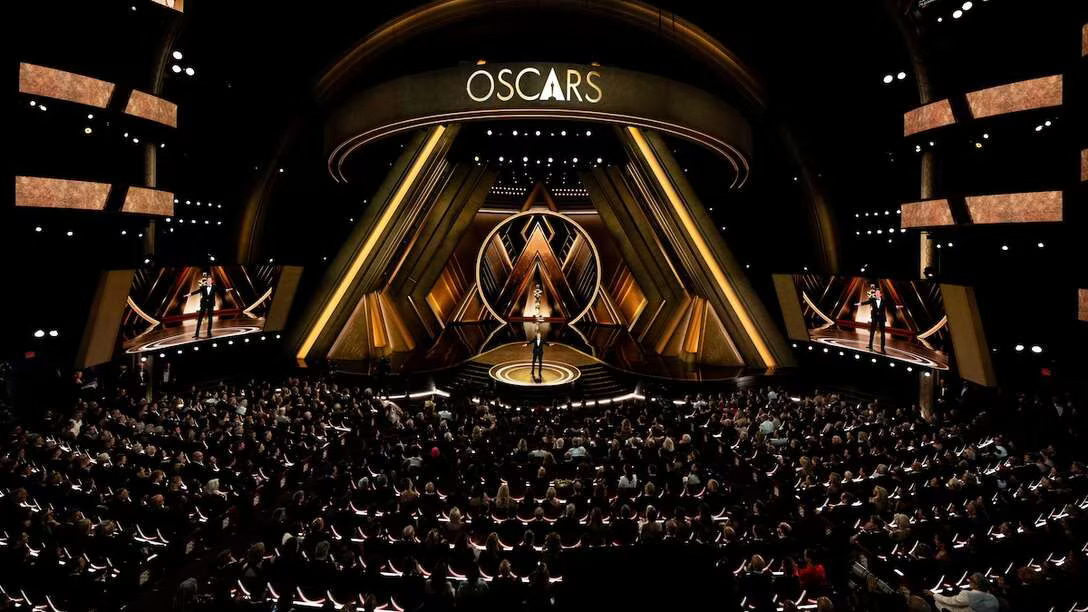
The ‘Oscars’ is usually a fabulous evening. Actors, directors and movies are nominated and judged, winners announced and careers transformed. What could be easier or more joyous?Yet, beneath this simplicity lies a remarkably dense accumulation of power, working its plots, finding its heroes and villains and marvelling in its special effects. The Oscars don’t simply reward cinematic achievement. They help reproduce cinema as a valued social reality.They determine which films are visible, which are remembered and which are endowed with lasting cultural legitimacy. They show that power operates not through coercion but via an ability to confer legitimacy, organise attention and stabilise belief (Weber, 1978; Foucault, 1980; Bourdieu, 1991).Why the Oscars are ‘the final word’Centre stage here lies a peculiar form of authority. The Academy of Motion Picture Arts and Sciences possesses no legal power. It can’t compel audiences to watch particular films nor can it force its judgements on us.Yet, its decisions are accepted globally as, more or less, definitive. When a film is declared ‘Best Picture’, it’s rarely treated as an arbitrary or subjective assessment. It’s more than a claim, it becomes a cultural fact, at least in that moment.Somehow, ‘Moonlight’ becomes more worthy than ‘La La Land’ and ‘How Green is my Valley’ a finer technical achievement than ‘Citizen Kane.’ It’s not certain if these claims still hold water or were ever true in the first place.All this reflects a form of legitimacy grounded not in coercion but in collective recognition (Weber, 1978). The Academy’s power lies not in force or even reason and critical logic but in our social acceptance of its role. Nothing more.Its decisions transform opinion into recognition and recognition into a form of cultural reality. The award doesn’t simply describe excellence. It defines it, solidifies and constitutes it (Berger and Luckmann, 1966).Economic and structural powerThe resources needed to secure this cultural reality aren’t distributed evenly. Major studios, including the Walt Disney Company, Universal Pictures and streaming platforms such as Netflix, possess the means to promote their films in ways that suffocate the efforts of smaller companies.Their marketing activities work to shape the field of visibility within which Oscar judgements occur. Films that are heavily promoted become familiar, familiar films become discussable and discussable films become more plausible winners.In this way, economic capital transfers into symbolic opportunity (Marx, 1867; Bourdieu, 1986). Structural and economic power operates here not by dictating outcomes directly but by organising the conditions under which outcomes can become possible (Lukes, 2005).The Oscars don’t somehow stand objectively outside of the industry they judge. They participate in its reproduction. Successful studios accumulate further prestige, enhancing their ability to attract talent, finance projects and secure better recognition. Power circulates and stabilises itself through this type of effect (Bourdieu, 1993).The power to create valueThe abstract and intangible is perhaps the most profound form of power exercised by the Oscars. Winning an award doesn’t only reward success, it transforms the meaning of the film, the capacity of its actors or the skills of its creators. They become more adept, better skilled, because they are allowed to take home a piece of gold plated bronze.A film that wins ‘Best Picture’ acquires a different ontological status. In other words, it represents a more definitive form of truth about what constitutes good film making. This is about more than the here and now. It affects the standing of those that came before and guides the potential of those movies yet to be made.The label ‘Oscar winner’ allows content to claim a piece of cinematic history. It enters educational curricula, critical discourse and cultural memory. This transformation demonstrates that a film’s value can’t be just intrinsic or even known by a rational assessment of its many parts. It’s something institutionally negotiated and conferred (Bourdieu, 1991).The Oscars function as a mechanism of social ‘consecration’. They elevate particular works above others, establishing hierarchies of cultural significance (Bourdieu, 1993), assigning preferences for ‘lost works’, manipulating retrospectives, killing careers or breathing new life into them.Ritual and beliefThe Oscars derive much of their influence from ritual. We might welcome a different host every few years but the ceremony remains highly structured, predictable and repeated in much the same way annually. This repetition stabilises belief in the legitimacy of the system (Durkheim, 1912/1995).The ritual also transforms what are institutional choices into a more collective experience, something we feel part of. This sharing of emotions reinforces belief in the institution’s authority and legitimacy (Collins, 2004). The ceremony doesn’t merely announce value every 12 months. It performs and stabilises it and makes us part of this.Through this ritual, power becomes naturalised. The hierarchy of winners appears meaningful and legitimate rather than dependent on very temporary circumstances (Durkheim, 1912/1995) or the uncertain and shifting sands of cultural and symbolic meaning.Networks and platformsIn recent years, the structure of cinematic power has undergone significant transformation. Streaming platforms such as Netflix and Amazon have challenged traditional models of distribution.These platforms possess unprecedented control over cinematic visibility. Their recommendations and content preferences shape audience attention through algorithmic selection systems.Power operates via these ‘network’ positions, this juxtaposition of such things as content, platform choice, scheduling, price, availability and affordability, and through the control of data predicting viewing habits and preferences (Castells, 2009).The Academy is keen to be part of this complex cultural cauldron. It recognises content to support its own visibility, encouraging more interest in its decisions and legitimacy. Cultural authority emerges here via a love affair between institutional and technological systems (Couldry and Hepp, 2017) allowing us to think outcomes are organic and natural rather than highly regulated and fabricated.Memory and timeFinally, the Oscars exercise power over time itself. Winning films are preserved, revisited and integrated into cultural history. Films that do not receive recognition often fade from collective memory.Institutions shape not only present recognition but our remembrance of it (Assmann, 2011). Power can then operate across time by restructuring this cultural memory, a reminiscence constantly in a state of reordering itself, reshaping our reflections of previous cultural choices and effecting the value we now place on them.The Oscars as a power-mediumThe Oscars reveal that power operates through legitimacy, visibility and belief. The ceremony converts institutional authority, economic resources and cultural alignment into a merged, sometimes untidy but, nevertheless, highly potent regime of truth (Foucault, 1980; Bourdieu, 1991).The ceremony shows us that power in modern cultural life operates not through coercion or ownership but through an institutional capacity to confer legitimacy, organise visibility and stabilise a shared belief in something we interpret as meaningful.By concentrating symbolic authority, economic influence and affective attention into a single moment, a ritual we return to every year, the Academy Awards function as ‘power-medium’, one that converts industrial position, narrative alignment and network visibility into cultural truth.This shapes not only which films succeed but what we understand cinema itself to be.ReferencesAssmann, J. 2011. Cultural memory and early civilization: Writing, remembrance, and political imagination. Cambridge: Cambridge University Press.Berger, P.L. and Luckmann, T. 1966. The social construction of reality: A treatise in the sociology of knowledge. London: Penguin.Bourdieu, P. 1984. Distinction: A social critique of the judgement of taste. Cambridge, MA: Harvard University Press.Bourdieu, P. 1986. ‘The forms of capital’, in Richardson, J. (ed.. Handbook of theory and research for the sociology of education. New York: Greenwood, pp. 241–258.Bourdieu, P. 1991. Language and symbolic power. Cambridge: Polity Press.Bourdieu, P. 1993. The field of cultural production. Cambridge: Polity Press.Castells, M. 2009. Communication power. Oxford: Oxford University Press.Collins, R. 2004. Interaction ritual chains. Princeton: Princeton University Press.Couldry, N. and Hepp, A. 2017. The mediated construction of reality. Cambridge: Polity Press.Durkheim, E. 1995. The elementary forms of religious life. Translated by K. Fields. New York: Free Press. Original work published 1912.Foucault, M. 1977. Discipline and punish: The birth of the prison. London: Penguin.Foucault, M. 1980. Power/knowledge: Selected interviews and other writings. New York: Pantheon.Gramsci, A. 1971. Selections from the prison notebooks. London: Lawrence and Wishart.Lukes, S. 2005. Power: A radical view. 2nd edn. Basingstoke: Palgrave Macmillan.Marx, K. 1867. Capital: A critique of political economy, Volume I. London: Penguin.Thussu, D.K. 2007. International communication: Continuity and change. London: Hodder Arnold.Weber, M. 1978. Economy and society. Berkeley: University of California Press.Image: Oscars.orgThanks for reading The choreography of power! Subscribe for free to receive new posts and support my work. This is a public episode. If you would like to discuss this with other subscribers or get access to bonus episodes, visit drrobdalton.substack.com
Embed this episode
Ready to play
Lights ... camera ... power
No transcript for this episode yet
Similar Episodes
No similar episodes found.
Similar Podcasts
No similar podcasts found.