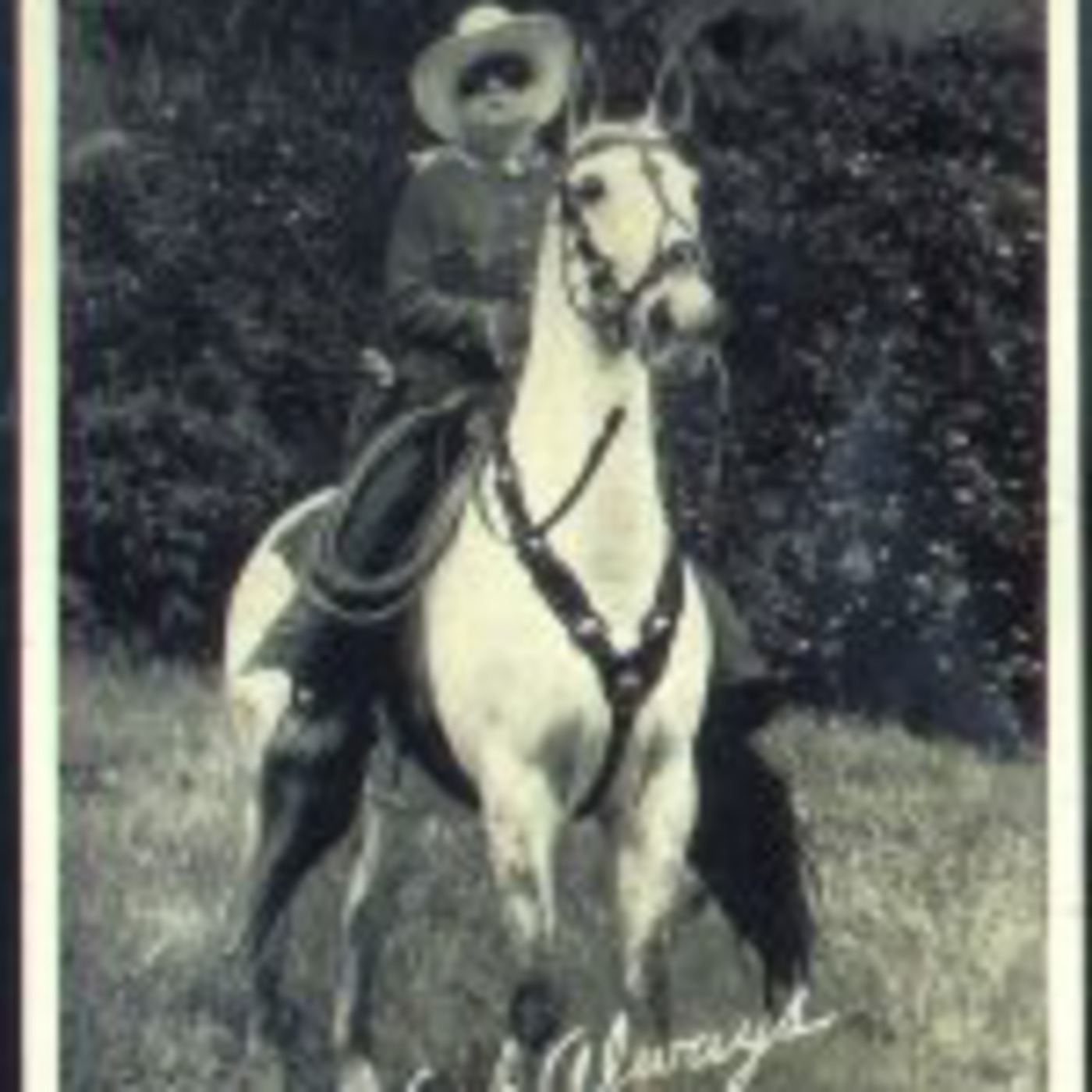
Lone Ranger - Snake in the grass -55-01-03 episode artwork

EPISODE · Oct 1, 2006 · 24 MIN

Lone Ranger - Snake in the grass -55-01-03

from Radio America · host Radioamerica

clickhere Visit the Radio America Store web site.Buy your 50 mp3 for &5.00 This was the longest running children's show on radio from 1933 to 1956. Sponsor of the following shows was General Mills (Cheerios, Wheaties and Kix cereals) although few of the shows actually contain the commercials. onto greets the Lone Ranger with the expression "kemosabe", which has also been written "Kemo Sabe" or "Kemo Sabhay". The origin of this expression is somewhat unclear, but James Jewell, an early director of the radio series, said the name comes from a boy's camp located on Mullett Lake, Michigan that his father-in-law had run from 1911 to 1941. The translation was said to mean "trusty scout". Fran Striker, the writer of the Lone Ranger scripts, said the actual expression was Ta-i ke-mo sah-bee, which he said meant "greetings trusty scout". In the pilot of the Clayton Moore TV series, "Enter the Lone Ranger", Tonto explicitly states that "Kemosabe" means "trusty scout". There has been a discussion about the origins of the word in The Straight Dope suggesting the word may be of either Ojibwe or Potawatomi origin. Link to straight dope.com However, the phrase "faithful friend" has also been associated with the term Kemo Sabe. One such instance was in the 20th anniversary broadcast of the radio show, which recapped the Ranger's origin. In the scene where the wounded Ranger awakens and recognizes Tonto, he says, "years ago, you called me Kemo Sabe". Tonto replies, "That right, and you still Kemo Sabe. It mean, 'faithful friend'". Various investigators have found other sources for this saying, some of them humorous and usually centering around the idea that "Kemo Sabe" is actually an insult or vulgarity. For instance, a Far Side comic strip has the long-since retired Lone Ranger discovering (in an Indian dictionary) that "Kemo Sabe" is an Apache expression for a "horse's rear end".

clickhere Visit the Radio America Store web site.Buy your 50 mp3 for &5.00 This was the longest running children's show on radio from 1933 to 1956. Sponsor of the following shows was General Mills (Cheerios, Wheaties and Kix cereals) although few of the shows actually contain the commercials. onto greets the Lone Ranger with the expression "kemosabe", which has also been written "Kemo Sabe" or "Kemo Sabhay". The origin of this expression is somewhat unclear, but James Jewell, an early director of the radio series, said the name comes from a boy's camp located on Mullett Lake, Michigan that his father-in-law had run from 1911 to 1941. The translation was said to mean "trusty scout". Fran Striker, the writer of the Lone Ranger scripts, said the actual expression was Ta-i ke-mo sah-bee, which he said meant "greetings trusty scout". In the pilot of the Clayton Moore TV series, "Enter the Lone Ranger", Tonto explicitly states that "Kemosabe" means "trusty scout". There has been a discussion about the origins of the word in The Straight Dope suggesting the word may be of either Ojibwe or Potawatomi origin. Link to straight dope.com However, the phrase "faithful friend" has also been associated with the term Kemo Sabe. One such instance was in the 20th anniversary broadcast of the radio show, which recapped the Ranger's origin. In the scene where the wounded Ranger awakens and recognizes Tonto, he says, "years ago, you called me Kemo Sabe". Tonto replies, "That right, and you still Kemo Sabe. It mean, 'faithful friend'". Various investigators have found other sources for this saying, some of them humorous and usually centering around the idea that "Kemo Sabe" is actually an insult or vulgarity. For instance, a Far Side comic strip has the long-since retired Lone Ranger discovering (in an Indian dictionary) that "Kemo Sabe" is an Apache expression for a "horse's rear end".

NOW PLAYING

Lone Ranger - Snake in the grass -55-01-03

0:00 24:17

No transcript for this episode yet

We transcribe on demand. Request one and we'll notify you when it's ready — usually under 10 minutes.

No similar episodes found.

Frequently Asked Questions

How long is this episode of Radio America?

This episode is 24 minutes long.

When was this Radio America episode published?

This episode was published on October 1, 2006.

What is this episode about?

clickhere Visit the Radio America Store web site.Buy your 50 mp3 for &5.00 This was the longest running children's show on radio from 1933 to 1956. Sponsor of the following shows was General Mills (Cheerios, Wheaties and Kix cereals) although...

Can I download this Radio America episode?

Yes, you can download this episode by clicking the download button on the episode player, or subscribe to the podcast in your preferred podcast app for automatic downloads.
URL copied to clipboard!