PodParley PodParley

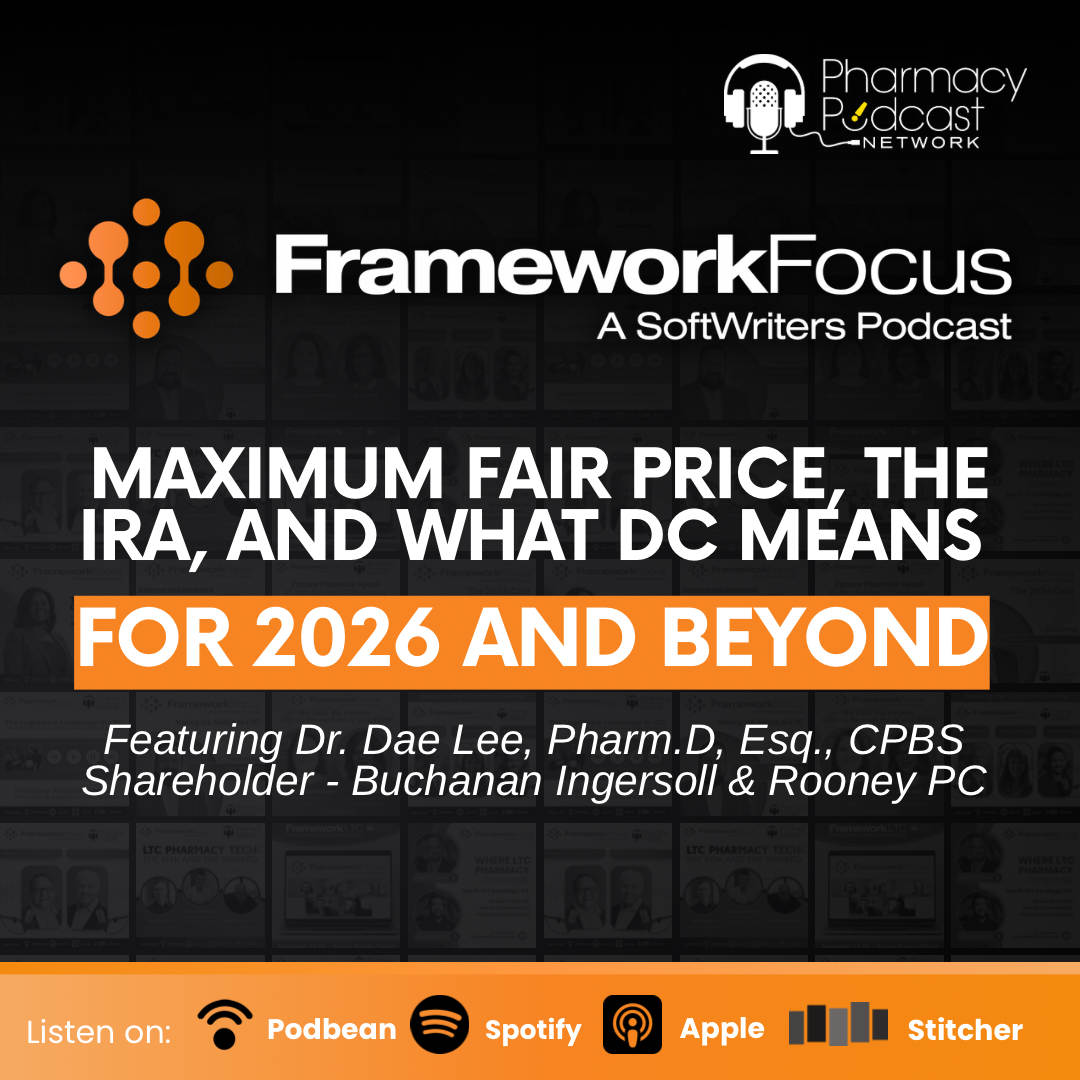
LTC Pharmacy at a Crossroads: Maximum Fair Price, the IRA, and What DC Means for 2026 and Beyond

Episode 2460 of the Pharmacy Podcast Network podcast, hosted by Pharmacy Podcast Network, titled "LTC Pharmacy at a Crossroads: Maximum Fair Price, the IRA, and What DC Means for 2026 and Beyond" was published on March 2, 2026 and runs 22 minutes.

March 2, 2026 ·22m · Pharmacy Podcast Network

0:00 / 0:00

In this episode of Framework Focus, Dr. Dae Lee breaks down the regulatory and reimbursement shifts reshaping long-term care (LTC) pharmacy. With the Inflation Reduction Act (IRA) moving from policy theory to operational reality, Medicare’s Maximum Fair Price (MFP) program, Part D redesign, and inflation rebate enforcement are now active forces that LTC operators must navigate. This conversation moves beyond headlines and into real-world implications: cash flow risk, administrative burden, contracting exposure, and strategic readiness for closed-door and combo LTC pharmacies. Key Discussion Points Medicare Drug Price Negotiation Is Now Operational The IRA authorizes Medicare to negotiate prices for certain high-spend Part D drugs, with the first 10 Maximum Fair Prices (MFPs) effective January 1, 2026. This marks a structural shift in federal drug pricing and directly impacts LTC dispensing economics. Maximum Fair Price and LTC Reimbursement Compression MFP caps reimbursement on selected drugs, creating potential margin compression if acquisition costs and payment timing are misaligned. For LTC pharmacies operating on tight spreads and high-volume chronic utilization, even small deltas can materially affect profitability. Medicare Transaction Facilitator (MTF) and Payment Timing Risk The MTF system introduces new payment mechanics between manufacturers, plans, and pharmacies. LTC pharmacies must understand how effectuation and reconciliation work, particularly if payment timing differs from traditional Part D adjudication flows. Cash flow modeling becomes essential. Administrative Complexity and Claims Reconciliation Identifying which NDCs are subject to MFP, managing claim reversals, handling price disputes, and monitoring plan-level compliance will increase administrative workload. LTC pharmacies will need structured internal workflows to prevent reimbursement leakage. Dispensing Fees and the LTC Service Intensity Problem Unlike retail, LTC pharmacy includes compliance packaging, emergency kits, cycle fills, consultant pharmacist oversight, and regulatory documentation. Current IRA implementation does not automatically adjust dispensing or supply fees to reflect this complexity, raising sustainability concerns. Congressional Efforts to Stabilize LTC Pharmacy Legislative proposals such as the Preserving Patient Access to LTC Pharmacies Act aim to create supply fee protections tied to MFP drugs. The episode explores whether policy corrections are likely — and how quickly DC can realistically respond. Expansion of Negotiated Drug Lists The initial 10 negotiated drugs are only the beginning. Additional rounds of negotiation are underway, expanding exposure across more therapeutic classes. LTC pharmacies must treat MFP as a growing structural feature — not a limited pilot. Part D Redesign and the $2,100 Out-of-Pocket Cap Beginning in 2026, the redesigned Part D benefit changes liability distribution among plans, manufacturers, and CMS. The new out-of-pocket cap alters plan incentives and may lead to tighter utilization management, formulary shifts, and network recalibration — all of which LTC pharmacies must monitor closely. Inflation Rebates and Market Distortion The IRA’s inflation rebate provisions penalize manufacturers for price increases above inflation benchmarks. While not directly adjudicated at the pharmacy counter, these provisions influence manufacturer pricing strategy, launch pricing behavior, and downstream PBM negotiations — indirectly affecting LTC acquisition costs. Strategic Readiness as a Competitive Advantage The episode concludes with practical recommendations: • Conduct an MFP exposure audit across top-dispensed NDCs • Reassess PBM contracts and network participation clauses • Model cash flow under delayed reimbursement scenarios • Educate facility partners on regulatory changes • Build internal compliance tracking specific to negotiated drugs Why This Matters NowFor LTC pharmacies, this is not

In this episode of Framework Focus, Dr. Dae Lee breaks down the regulatory and reimbursement shifts reshaping long-term care (LTC) pharmacy. With the Inflation Reduction Act (IRA) moving from policy theory to operational reality, Medicare’s Maximum Fair Price (MFP) program, Part D redesign, and inflation rebate enforcement are now active forces that LTC operators must navigate. This conversation moves beyond headlines and into real-world implications: cash flow risk, administrative burden, contracting exposure, and strategic readiness for closed-door and combo LTC pharmacies. Key Discussion Points
  1. Medicare Drug Price Negotiation Is Now Operational  The IRA authorizes Medicare to negotiate prices for certain high-spend Part D drugs, with the first 10 Maximum Fair Prices (MFPs) effective January 1, 2026. This marks a structural shift in federal drug pricing and directly impacts LTC dispensing economics.
  2. Maximum Fair Price and LTC Reimbursement Compression  MFP caps reimbursement on selected drugs, creating potential margin compression if acquisition costs and payment timing are misaligned. For LTC pharmacies operating on tight spreads and high-volume chronic utilization, even small deltas can materially affect profitability.
  3. Medicare Transaction Facilitator (MTF) and Payment Timing Risk  The MTF system introduces new payment mechanics between manufacturers, plans, and pharmacies. LTC pharmacies must understand how effectuation and reconciliation work, particularly if payment timing differs from traditional Part D adjudication flows. Cash flow modeling becomes essential.
  4. Administrative Complexity and Claims Reconciliation  Identifying which NDCs are subject to MFP, managing claim reversals, handling price disputes, and monitoring plan-level compliance will increase administrative workload. LTC pharmacies will need structured internal workflows to prevent reimbursement leakage.
  5. Dispensing Fees and the LTC Service Intensity Problem  Unlike retail, LTC pharmacy includes compliance packaging, emergency kits, cycle fills, consultant pharmacist oversight, and regulatory documentation. Current IRA implementation does not automatically adjust dispensing or supply fees to reflect this complexity, raising sustainability concerns.
  6. Congressional Efforts to Stabilize LTC Pharmacy  Legislative proposals such as the Preserving Patient Access to LTC Pharmacies Act aim to create supply fee protections tied to MFP drugs. The episode explores whether policy corrections are likely — and how quickly DC can realistically respond.
  7. Expansion of Negotiated Drug Lists  The initial 10 negotiated drugs are only the beginning. Additional rounds of negotiation are underway, expanding exposure across more therapeutic classes. LTC pharmacies must treat MFP as a growing structural feature — not a limited pilot.
  8. Part D Redesign and the $2,100 Out-of-Pocket Cap  Beginning in 2026, the redesigned Part D benefit changes liability distribution among plans, manufacturers, and CMS. The new out-of-pocket cap alters plan incentives and may lead to tighter utilization management, formulary shifts, and network recalibration — all of which LTC pharmacies must monitor closely.
  9. Inflation Rebates and Market Distortion  The IRA’s inflation rebate provisions penalize manufacturers for price increases above inflation benchmarks. While not directly adjudicated at the pharmacy counter, these provisions influence manufacturer pricing strategy, launch pricing behavior, and downstream PBM negotiations — indirectly affecting LTC acquisition costs.
  10. Strategic Readiness as a Competitive Advantage  The episode concludes with practical recommendations:  • Conduct an MFP exposure audit across top-dispensed NDCs  • Reassess PBM contracts and network participation clauses  • Model cash flow under delayed reimbursement scenarios  • Educate facility partners on regulatory changes  • Build internal compliance tracking specific to negotiated drugs
Why This Matters Now For LTC pharmacies, this is not simply a policy conversation — it is a structural shift in reimbursement architecture. As federal oversight expands and pricing authority evolves, operational precision and legal literacy will define which organizations adapt successfully. About our guest:  Dr. Dae Lee, Pharm.D, Esq., CPBS  Shareholder - Buchanan Ingersoll & Rooney PC  Email: [email protected]  Dae Y. Lee is a pharmacist-attorney and Certified Pharmacy Benefits Specialist™ (CPBS™) who represents pharmacies, healthcare stakeholders, and plan sponsors in high-stakes disputes and regulatory matters involving Pharmacy Benefit Managers (PBMs) and government payors. Drawing on his dual training as a pharmacist and attorney, Dae focuses his practice on defending clients in audits, investigations, enforcement actions and complex reimbursement and compliance matters. Dae routinely represents pharmacies nationwide in PBM and payor audits, including Fraud, Waste and Abuse (FWA) investigations, extrapolation disputes, overpayment recoupments, credentialing denials, network suspensions and terminations. He advises pharmacies on compliance with applicable state pharmacy fair audit laws, PBM provider manuals, and reimbursement standards, with the goal of minimizing financial exposure while preserving network participation and business continuity.
Hometown Pharmacy's Podcast Emily Sunflower Hi!! I am Emily Sunflower. I live in the USA and a blogger by profession. I am currently associated with Hometown Pharmacy. Hometown Pharmacy is a health sector. The health site contains with several health issues and tips discussed to allow in making to live a better life. Being a blogger and related to health sector, I would recommend you to follow up in taking a look into the site to learn more about health. Since life goes around in facing up with different phases at different time, choosing better health can let to go for better life. To know more, visiting the site will help in learning more. http://hometownpharmacyonline.com/ Pharmacy show Akash Narula In this podcast we tell about only pharmacy , scope of pharmacy , medicine, side effects , health related problems . What is future of pharmacy, health and fitness . What new career coming in pharmacy . My Modalert's Podcast My Modalert MyModalert is an online pharmacy that is specialized in retailing smart drugs. The four very important smart drug that is available in MyModalert store are Modvigil 200 mg, Modalert 200 mg, Modafinil 200 mg, and Armodafinil 150 mg. MyModalert store is considered to be one of the best online pharmacies that provide all its customer's medication at the best price possible. They make sure that you get your medication in the right condition and on time. To improve your experience, MyModalert provides doorstep delivery to all its customers. A team of professionals is working all round the clock to help and assist you with any kind of queries and concerns. With MyModalert store, it is now possible to get your smart drug just with the touch of a button. This is especially helpful for people with a jam-packed work schedule. As for such people, it becomes very difficult for the person to go out to get the medication. Thus, choosing MyModalert helps to save the time and energy of a person. With Welltopia Capsule with Omar the pharmacist Omar Eliwa listen to Omar the pharmacist's official online podcast from Welltopia, where he talks about compounding pharmacy, function medicine, drugs and supplements in general, and much more, here he'll talk about anything and everything that is considered a pharmacy product and can help the patients health and wellbeing! You'll get to learn about Omar's top recommendations that don't have to be clinical at all and much more stuff.
URL copied to clipboard!