
EPISODE · Sep 28, 2014 · 9 MIN
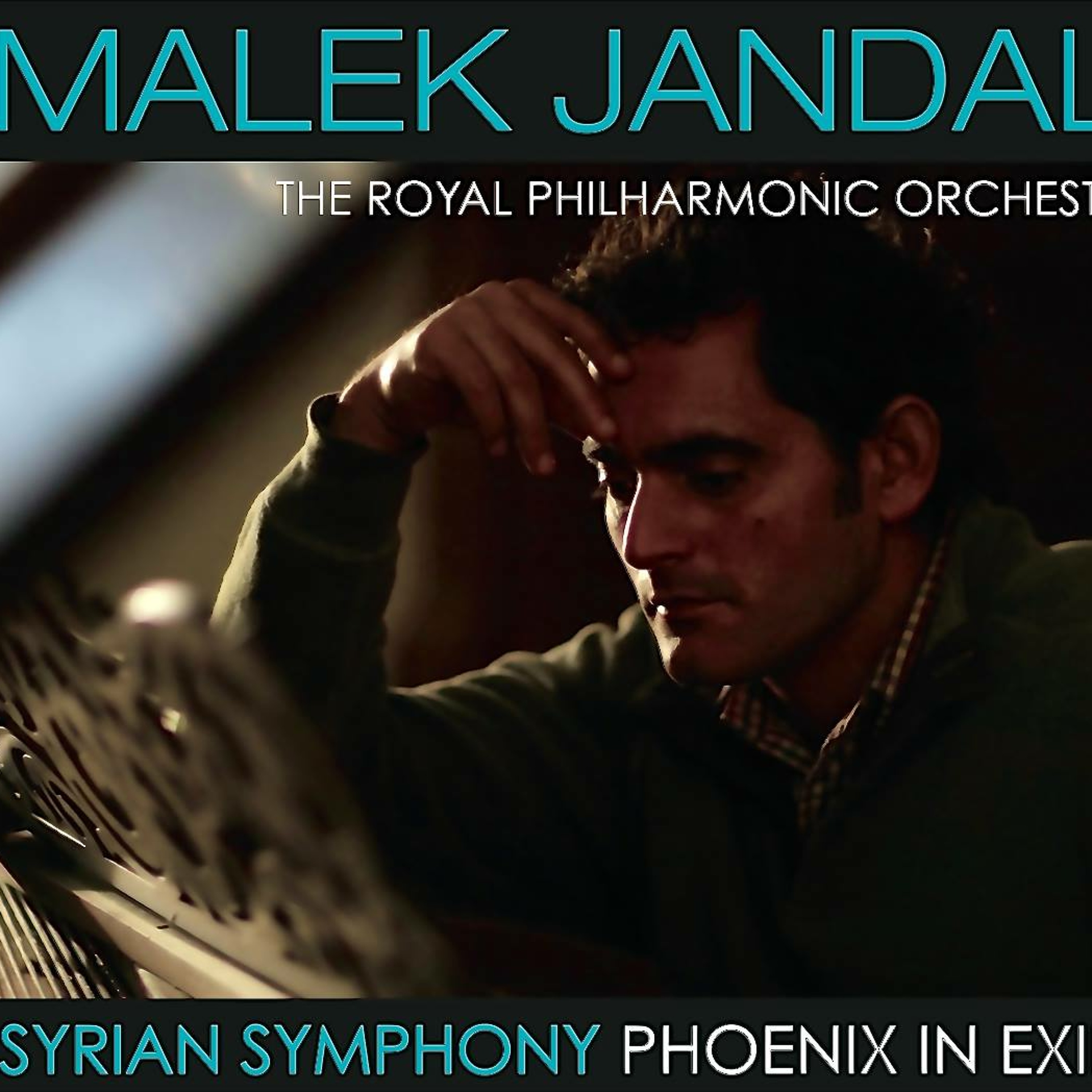
Malek Jandali | Symphony No. 1 | Syrian Symphony | Allegro non troppo ma molto energico | Movement I
from MALEK JANDALI | مـالـك جـنـدلـي · host MALEK JANDALI | مـالـك جـنـدلـي
Symphony No. 1 in F Major 'Syrian Symphony' Allegro non troppo ma motto energico (Movement I) by composer and pianist Malek Jandali http://MalekJandali.com founder of http://PianosForPeace.org Composed in the United States and recorded with the Russian Philharmonic Orchestra in Moscow under the baron of Sergey Kondsrahev, this work aims to preserve and present the rich heritage and cultural identity of Syria at one of the most pivotal moments in the nation’s history. In March 2011, Syrian children ignited the flame of a historic peaceful revolution for freedom, human rights and justice. As the bombs were falling on his homeland and forced millions of families, including his own into exile, the composer defiantly began writing his symphony. Jandali’s work on his symphony was not continuous, but was interrupted by the production of an astounding series of other weighty compositions: a Violin Concerto, the Piano Theme and Variations, a symphony for chamber orchestra, Syrian anthem, and a series of trio works for piano, cello and the traditional Arabic instrument, the Oud. Events of the ongoing Syrian revolution imbued Jandali with a sense of urgency and moral obligation to give the voiceless a voice. The slow movement was completed in only one week, shortly after the chemical weapons attack on Al-Ghouta in Damascus on August 21, 2013. The symphony continues for four epic movements. After the initial energetic first and second movements, comes an ambiguous and melancholic slow movement. More secure is the forth movement, a dance in 9/8, though that is swept away by a caustic finale, eking its way towards a dazzlingly victorious coda. Jandali’s F-Major Symphony has a cyclic aspect, unity being provided by the appearance of the main theme in both the first and last movements. This new symphonic mastery was clearly not brought about only by a reaction to contemporary events, but also by sustained contact with the well-springs of polyphonic elegant music. The first movement immediately sets up the Syrian scene that will remain ever present throughout the symphony. The strength, freedom and individuality of the strings, representing the Syrian people, pitted against the brutal, machine-like rhythms of the brass and timpani – their oppressors. A bassoon solo marks the end of the movement and invites us into a dreamlike atmosphere of total serenity, peace and calm. It is a wistful and nostalgic world, soon to be shattered by tyranny. The main part of the first movement is a driving Allegro in sonata form, with a Syrian sounding principal theme and a yearning lyric melody that is quintessentially Jandali. The unique and innovative quality of this work is particularly in evidence in the first movement, which consists of two main themes inspired by Syrian street songs. The principal motivic complex, compressed into five notes (F-E-Db-E-C), needed to be expanded in time and space. As a starting point for a symphonic composition it is entirely novel, and it is the cause not only of the concentration, the lapidariness of the movement, but also of its character of being unremittingly related to a goal, to a patriotic cause.
Embed this episode
Ready to play
Malek Jandali | Symphony No. 1 | Syrian Symphony | Allegro non troppo ma molto energico | Movement I
No transcript for this episode yet
Similar Episodes
No similar episodes found.
Similar Podcasts
No similar podcasts found.