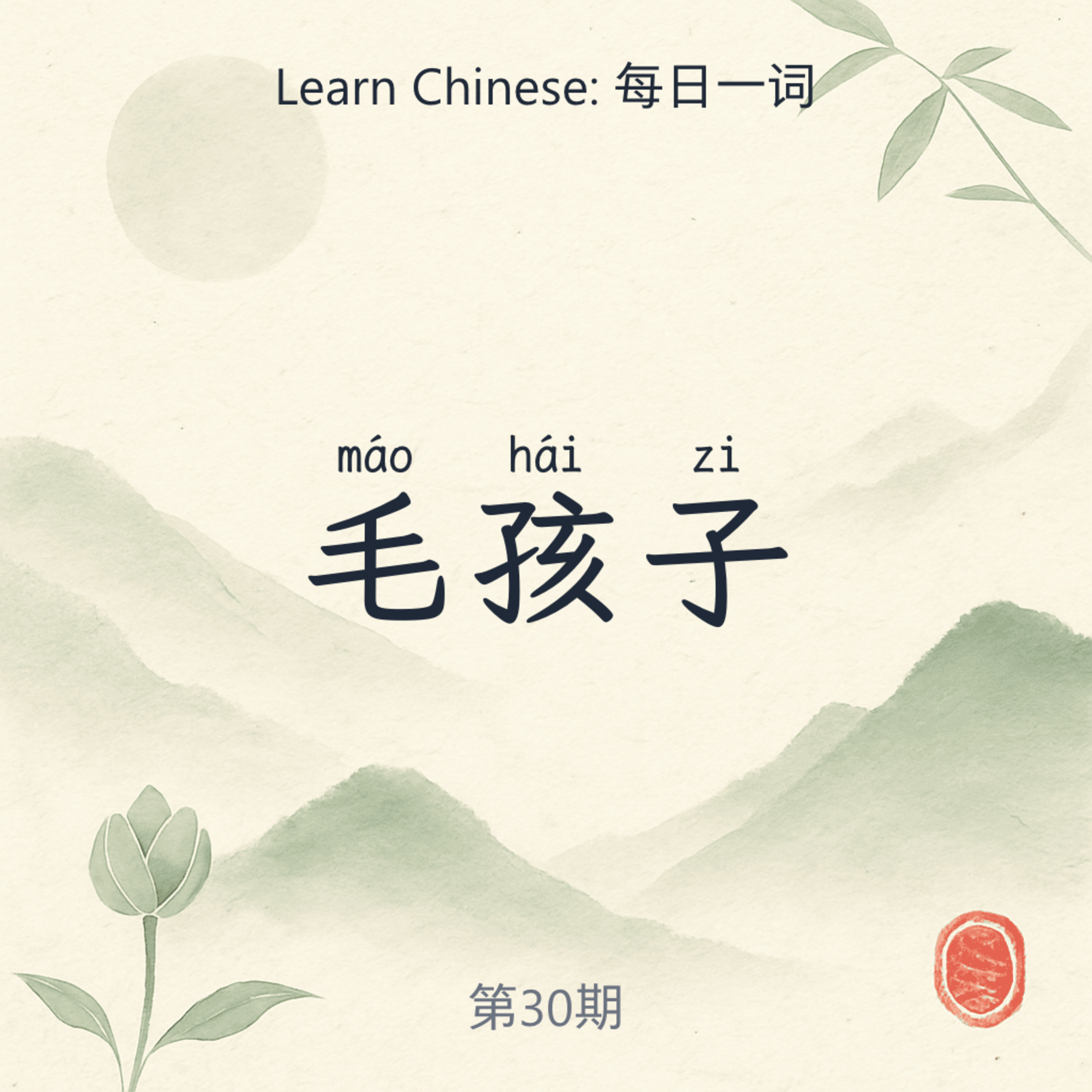
毛孩子 (máo hái zi) episode artwork

EPISODE · Feb 1, 2026 · 1 MIN

毛孩子 (máo hái zi)

from Chinese Word of the Day | 每日一词 · host Gallant Guo

特师的每日一词,2026年1月29日的词汇是:毛 máo 孩 hái 子 zi释义 Definition毛孩子是指身上长毛的小孩子,常用来昵称宠物,尤其是猫狗等毛茸茸的动物。毛孩子 (máo hái zi) refers to little children with fur on their bodies, often used as an affectionate nickname for pets, especially furry animals like cats and dogs.例句 Example近期的《看天下》杂志中,有篇标题为《宠物友好空间,不应该是规则的盲区》的文章,作者毛孩子是这样用这个词的:「从我们决定养育宠物的那一刻起,​“毛孩子”便成了我们的家人。既然视如家人,就应管教有度,并为其产生的所有过失承担责任。文明养宠,或许才是我们给爱宠最好的保护。」这里说的是养宠物的人应该把宠物当作家人一样对待。In a recent issue of Vista Magazine, there was an article titled 'Pet-Friendly Spaces Should Not Be a Blind Spot in the Rules'. The author, using the name 毛孩子 (Máo Háizi), used the term like this: 'From the moment we decide to raise a pet, 毛孩子 becomes our family. Since we regard them as family, we should discipline them appropriately and take responsibility for all their mistakes. Civilized pet ownership is perhaps the best protection we can give our beloved pets.' This passage discusses how pet owners should treat their pets like family members.你知道吗? Did You Know?毛孩子这个词带有亲切、可爱的感情色彩,多用于口语。类似的词还有“毛小孩”“汪星人”(狗)、“喵星人”(猫)等。注意“毛孩子”一般指宠物,不用于人类小孩;若说人类小孩,常用“宝贝”“娃儿”等。这个词源于人们对宠物毛茸茸外形的直观描述,加上“孩子”表达疼爱之情。The term 毛孩子 (máo hái zi) carries a warm, affectionate, and cute connotation and is mostly used in spoken language. Similar terms include 毛小孩 (máo xiǎo hái), 汪星人 (wāng xīng rén) (for dogs), and 喵星人 (miāo xīng rén) (for cats). Note that 毛孩子 (máo hái zi) generally refers to pets and is not used for human children; for human children, terms like 宝贝 (bǎo bèi) or 娃儿 (wá er) are commonly used. This word originates from a direct description of a pet's furry appearance, combined with 孩子 (hái zi) (child) to express affection.

NOW PLAYING

毛孩子 (máo hái zi)

0:00 1:37

No transcript for this episode yet

We transcribe on demand. Request one and we'll notify you when it's ready — usually under 10 minutes.

MG Show MG Show The MG Show, hosted by Jeffrey Pedersen and Shannon Townsend, is a leading alternative media platform dedicated to uncovering the truth behind today’s most pressing political issues. Launched in 2019, the show has grown exponentially, offering unfiltered insights, comprehensive research, and real-time analysis. With a commitment to independent journalism and factual integrity, the MG Show empowers its audience with knowledge and encourages active participation in the political discourse. Ask A Spaceman Archives - 365 Days of Astronomy Ask A Spaceman Archives - 365 Days of Astronomy Podcasting Astronomy Every Day of the Year Breaking News Show | eTurboNews Juergen Thomas Steinmetz News is relevant to the global travel and tourism industry, human rights and global issues.Breaking news when it happens and only from the source. いろはにマネーの「ながら学習」 IrohaniMoney この番組では、インターン生2人が、金融、経済、投資関連の気になる情報を分かりやすくお伝えしていきます。インターン生の会話を「ながら聴き」する感覚で一緒に勉強していきましょう!ご意見箱フォーム:https://forms.gle/TTGaVP2TJksNMKJo7ぜひお便りや感想をお待ちしています!公式X:https://x.com/irohanimoney番組のハッシュタグは「#いろはにながら」です。番組への感想をお待ちしています!いろはにマネー:https://www.bridge-salon.jp/money/姉妹サイト:https://kabu.bridge-salon.jp/姉妹サイト:https://bridge-salon.jp/(株)インベストメントブリッジ運営

Frequently Asked Questions

How long is this episode of Chinese Word of the Day | 每日一词?

This episode is 1 minute long.

When was this Chinese Word of the Day | 每日一词 episode published?

This episode was published on February 1, 2026.

What is this episode about?

特师的每日一词,2026年1月29日的词汇是:毛 máo 孩 hái 子 zi释义 Definition毛孩子是指身上长毛的小孩子,常用来昵称宠物,尤其是猫狗等毛茸茸的动物。毛孩子 (máo hái zi) refers to little children with fur on their bodies, often used as an affectionate nickname for pets, especially furry animals like cats and...

Can I download this Chinese Word of the Day | 每日一词 episode?

Yes, you can download this episode by clicking the download button on the episode player, or subscribe to the podcast in your preferred podcast app for automatic downloads.
URL copied to clipboard!