
EPISODE · Mar 22, 2025 · 5 MIN
Master AI Prompting: 5 Insider Tips for Tech Adventurers
from I am GPTed - what you need to know about Chat GPT, Bard, Llama, and Artificial Intelligence · host Inception Point AI
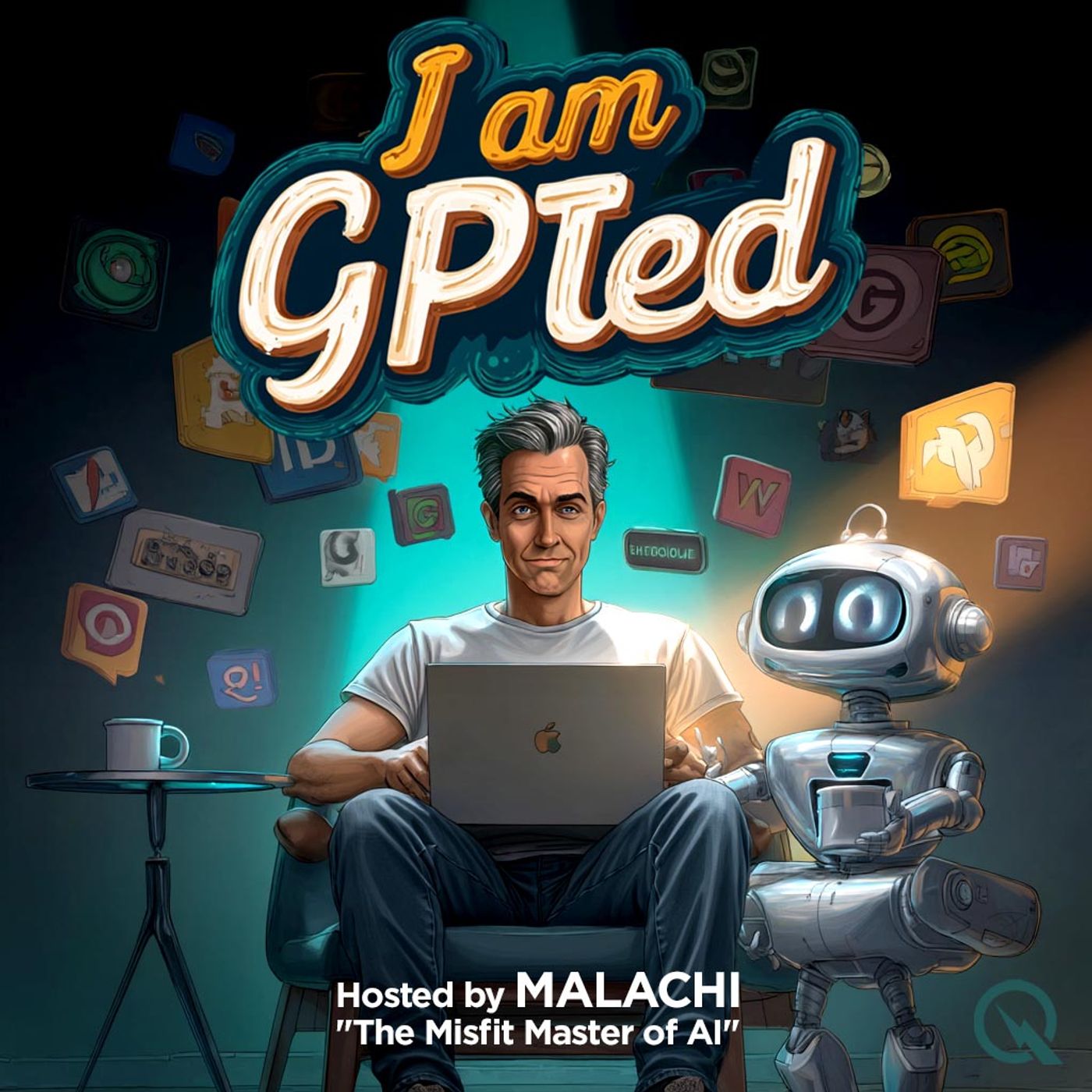
Hey there, AI adventurers! It's Malachi, your Misfit Master of AI, back with another episode of "I am GPTed." Today, we're diving into some practical tips and techniques to help you navigate the wild world of AI without getting lost in the jargon jungle. First up, let's talk about a prompting technique that can seriously level up your AI game. It's called "be specific or be terrified." Okay, I may have coined that phrase, but hear me out. When you're prompting an AI, the more specific you are, the better the results. Let's be real and get analog here... imagine you're ordering a pizza. If you just say "give me a pizza," you might end up with a sad, plain cheese pie. But if you say "I want a large, thin-crust pizza with pepperoni, mushrooms, and extra cheese," suddenly, you're in business. The same goes for AI prompts. For example, instead of asking an AI to "write a story," try something like "write a 500-word mystery story set in a haunted mansion, featuring a retired detective and a ghostly butler." Trust me, the difference is night and day. I learned this the hard way when I asked an AI to "create a logo" and ended up with a generic clipart nightmare. Never again. Now, let's talk about a practical use case for AI that you might not have considered: meal planning. Yes, you heard that right. You can use AI to generate weekly meal plans based on your preferences, dietary restrictions, and even what's on sale at your local grocery store. It's like having a personal chef without the hefty price tag. Just prompt the AI with something like "create a 7-day meal plan for a family of four, focusing on healthy, budget-friendly meals, and taking into account a gluten allergy." Boom, dinner is served. But wait, there's a catch! One common mistake beginners make is taking AI-generated content as gospel. Remember, AI is like a super-powered parrot – it can repeat and combine information in impressive ways, but it doesn't always understand the context or accuracy of what it's saying. So, when you're using AI for meal planning or any other task, always double-check the output for accuracy and feasibility. You don't want to end up with a recipe that calls for "a pinch of unicorn dust" or a meal plan that suggests feeding your family nothing but kale smoothies for a week. Trust me, I've been there, and it's not pretty. To help you build your AI interaction skills, here's a simple exercise: start a conversation with an AI and try to keep it going for at least 10 exchanges. But here's the twist: each time the AI responds, you have to incorporate a random word into your next prompt. It could be anything from "pineapple" to "existentialism." This exercise will help you think on your feet and adapt your prompts to keep the conversation flowing. It's like improv comedy, but with less sweating and more typing. Finally, let's talk about evaluating and improving AI-generated content. The key here is to read the output critically and ask yourself, "Does this make se This content was created in partnership and with the help of Artificial Intelligence AI.
What this episode covers
Hey there, AI adventurers! It's Malachi, your Misfit Master of AI, back with another episode of "I am GPTed." Today, we're diving into some practical tips and techniques to help you navigate the wild world of AI without getting lost in the jargon jungle. First up, let's talk about a prompting technique that can seriously level up your AI game. It's called "be specific or be terrified." Okay, I may have coined that phrase, but hear me out. When you're prompting an AI, the more specific you are, the better the results. Let's be real and get analog here... imagine you're ordering a pizza. If you just say "give me a pizza," you might end up with a sad, plain cheese pie. But if you say "I want a large, thin-crust pizza with pepperoni, mushrooms, and extra cheese," suddenly, you're in business. The same goes for AI prompts. For example, instead of asking an AI to "write a story," try something like "write a 500-word mystery story set in a haunted mansion, featuring a retired detective and a ghostly butler." Trust me, the difference is night and day. I learned this the hard way when I asked an AI to "create a logo" and ended up with a generic clipart nightmare. Never again. Now, let's talk about a practical use case for AI that you might not have considered: meal planning. Yes, you heard that right. You can use AI to generate weekly meal plans based on your preferences, dietary restrictions, and even what's on sale at your local grocery store. It's like having a personal chef without the hefty price tag. Just prompt the AI with something like "create a 7-day meal plan for a family of four, focusing on healthy, budget-friendly meals, and taking into account a gluten allergy." Boom, dinner is served. But wait, there's a catch! One common mistake beginners make is taking AI-generated content as gospel. Remember, AI is like a super-powered parrot – it can repeat and combine information in impressive ways, but it doesn't always understand the context or accuracy of what it's saying. So, when you're using AI for meal planning or any other task, always double-check the output for accuracy and feasibility. You don't want to end up with a recipe that calls for "a pinch of unicorn dust" or a meal plan that suggests feeding your family nothing but kale smoothies for a week. Trust me, I've been there, and it's not pretty. To help you build your AI interaction skills, here's a simple exercise: start a conversation with an AI and try to keep it going for at least 10 exchanges. But here's the twist: each time the AI responds, you have to incorporate a random word into your next prompt. It could be anything from "pineapple" to "existentialism." This exercise will help you think on your feet and adapt your prompts to keep the conversation flowing. It's like improv comedy, but with less sweating and more typing. Finally, let's talk about evaluating and improving AI-generated content. The key here is to read the output critically and ask yourself, "Does this make se This content was created in partnership and with the help of Artificial Intelligence AI.
NOW PLAYING
Master AI Prompting: 5 Insider Tips for Tech Adventurers
No transcript for this episode yet
Similar Episodes
Mar 26, 2026 ·1m
Mar 19, 2026 ·34m
Feb 18, 2026 ·11m
Feb 11, 2026 ·45m