
EPISODE · Apr 26, 2025 · 5 MIN
Master Your AI Writing Skills: 5 Proven Techniques for Content Creators
from I am GPTed - what you need to know about Chat GPT, Bard, Llama, and Artificial Intelligence · host Inception Point AI
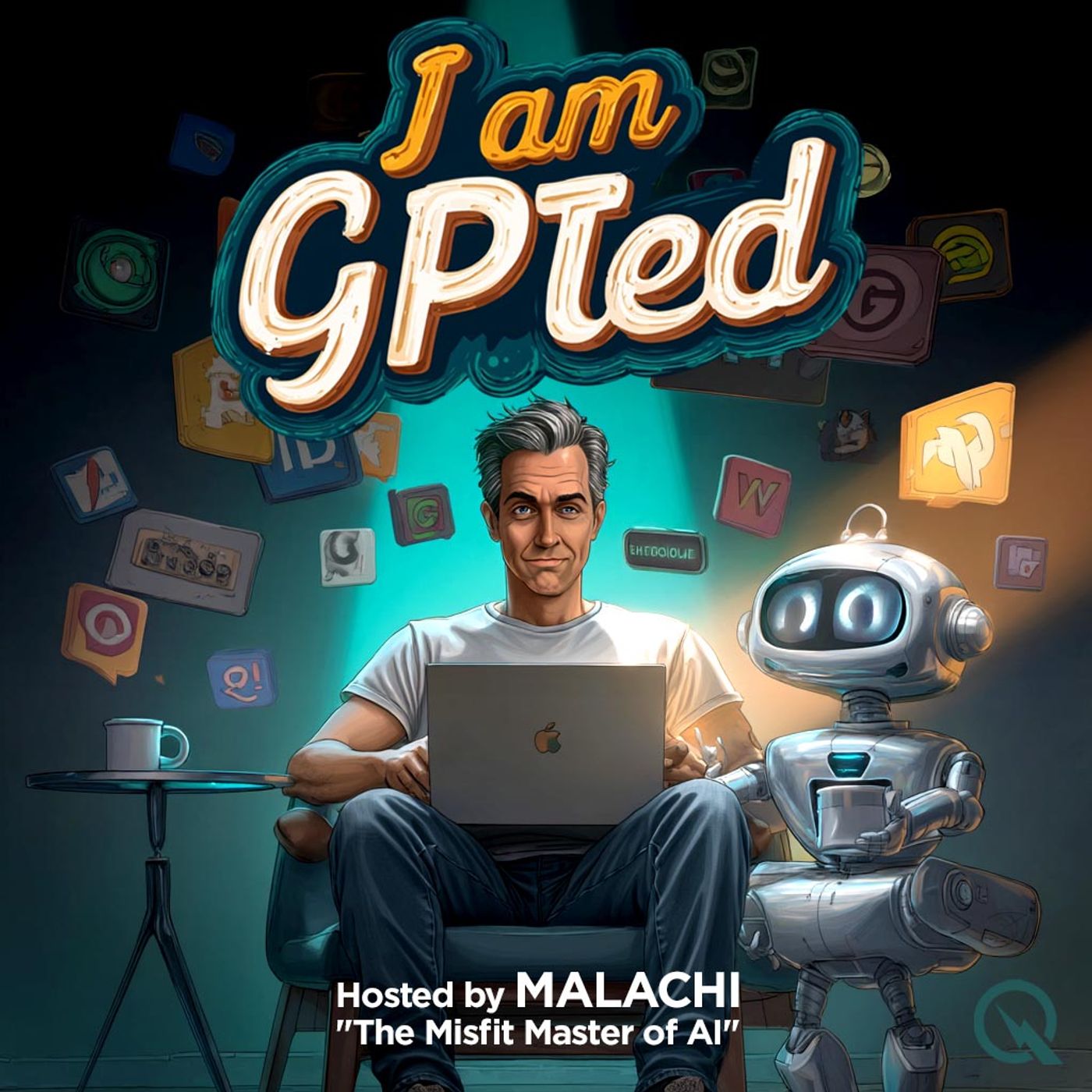
Hey there, AI adventurers! It's Malachi, your Misfit Master of AI, back with another episode of "I am GPTed." Today, we're diving into some practical tips and techniques to help you navigate the wild world of AI without getting lost in the jargon jungle. First up, let's talk about a prompting technique that can really up your AI game. It's called "progressive prompting," and trust me, it's not as fancy as it sounds. Let's be real and get analog here... think of it like cooking a meal. You don't just throw all the ingredients in at once and hope for the best, right? Nah, you add things step by step, tasting as you go, until you've got a Michelin-star-worthy dish. Progressive prompting is the same deal. Here's an example: instead of asking an AI to "write a blog post about the benefits of meditation," start with something like, "List five benefits of meditation." Then, take that output and feed it back in with, "For each benefit, provide a brief explanation and a real-life example." Finally, you might say, "Use the previous information to create a well-structured blog post with an introduction and conclusion." See? Step by step, tasting as you go. I learned this the hard way when I tried to get an AI to write my entire memoir in one go. Trust me, it wasn't pretty. Now, let's talk about a practical use case you might not have considered: using AI to help with your everyday writing tasks, like emails or reports. I know, I know, it sounds like something out of a sci-fi movie, but it's real, and it's incredibly helpful. You can use AI to generate outlines, brainstorm ideas, or even polish up your grammar and style. It's like having a personal writing assistant, minus the coffee runs and the judgy looks when you use "who" instead of "whom." But before you go AI-wild, let me warn you about a common mistake beginners make: over-relying on the AI. It's easy to get caught up in the "ooh, shiny!" factor and just accept whatever the AI spits out. But remember, AI is a tool, not a replacement for human judgment. Always review and edit the output, and don't be afraid to tweak or even discard what doesn't work. I once used an AI to write a love letter to my partner, and let's just say I'm lucky they have a good sense of humor. So, how can you practice and improve your AI skills? Here's a simple exercise: take a piece of writing you've done recently, like an email or a social media post, and try rewriting it with the help of an AI. Compare the original and the AI-assisted version, and see what you can learn from the differences. Maybe the AI helped you tighten up your sentences, or maybe it suggested a new angle you hadn't considered. The more you practice, the better you'll get at leveraging AI to enhance your own writing. Finally, let's talk about evaluating and improving AI-generated content. The key here is to look for coherence, relevance, and originality. Does the output make sense and flow logically? Does it actually address the prompt or question yo This content was created in partnership and with the help of Artificial Intelligence AI.
What this episode covers
Hey there, AI adventurers! It's Malachi, your Misfit Master of AI, back with another episode of "I am GPTed." Today, we're diving into some practical tips and techniques to help you navigate the wild world of AI without getting lost in the jargon jungle. First up, let's talk about a prompting technique that can really up your AI game. It's called "progressive prompting," and trust me, it's not as fancy as it sounds. Let's be real and get analog here... think of it like cooking a meal. You don't just throw all the ingredients in at once and hope for the best, right? Nah, you add things step by step, tasting as you go, until you've got a Michelin-star-worthy dish. Progressive prompting is the same deal. Here's an example: instead of asking an AI to "write a blog post about the benefits of meditation," start with something like, "List five benefits of meditation." Then, take that output and feed it back in with, "For each benefit, provide a brief explanation and a real-life example." Finally, you might say, "Use the previous information to create a well-structured blog post with an introduction and conclusion." See? Step by step, tasting as you go. I learned this the hard way when I tried to get an AI to write my entire memoir in one go. Trust me, it wasn't pretty. Now, let's talk about a practical use case you might not have considered: using AI to help with your everyday writing tasks, like emails or reports. I know, I know, it sounds like something out of a sci-fi movie, but it's real, and it's incredibly helpful. You can use AI to generate outlines, brainstorm ideas, or even polish up your grammar and style. It's like having a personal writing assistant, minus the coffee runs and the judgy looks when you use "who" instead of "whom." But before you go AI-wild, let me warn you about a common mistake beginners make: over-relying on the AI. It's easy to get caught up in the "ooh, shiny!" factor and just accept whatever the AI spits out. But remember, AI is a tool, not a replacement for human judgment. Always review and edit the output, and don't be afraid to tweak or even discard what doesn't work. I once used an AI to write a love letter to my partner, and let's just say I'm lucky they have a good sense of humor. So, how can you practice and improve your AI skills? Here's a simple exercise: take a piece of writing you've done recently, like an email or a social media post, and try rewriting it with the help of an AI. Compare the original and the AI-assisted version, and see what you can learn from the differences. Maybe the AI helped you tighten up your sentences, or maybe it suggested a new angle you hadn't considered. The more you practice, the better you'll get at leveraging AI to enhance your own writing. Finally, let's talk about evaluating and improving AI-generated content. The key here is to look for coherence, relevance, and originality. Does the output make sense and flow logically? Does it actually address the prompt or question yo This content was created in partnership and with the help of Artificial Intelligence AI.
NOW PLAYING
Master Your AI Writing Skills: 5 Proven Techniques for Content Creators
No transcript for this episode yet
Similar Episodes
Mar 26, 2026 ·1m
Mar 19, 2026 ·34m
Feb 18, 2026 ·11m
Feb 11, 2026 ·45m