
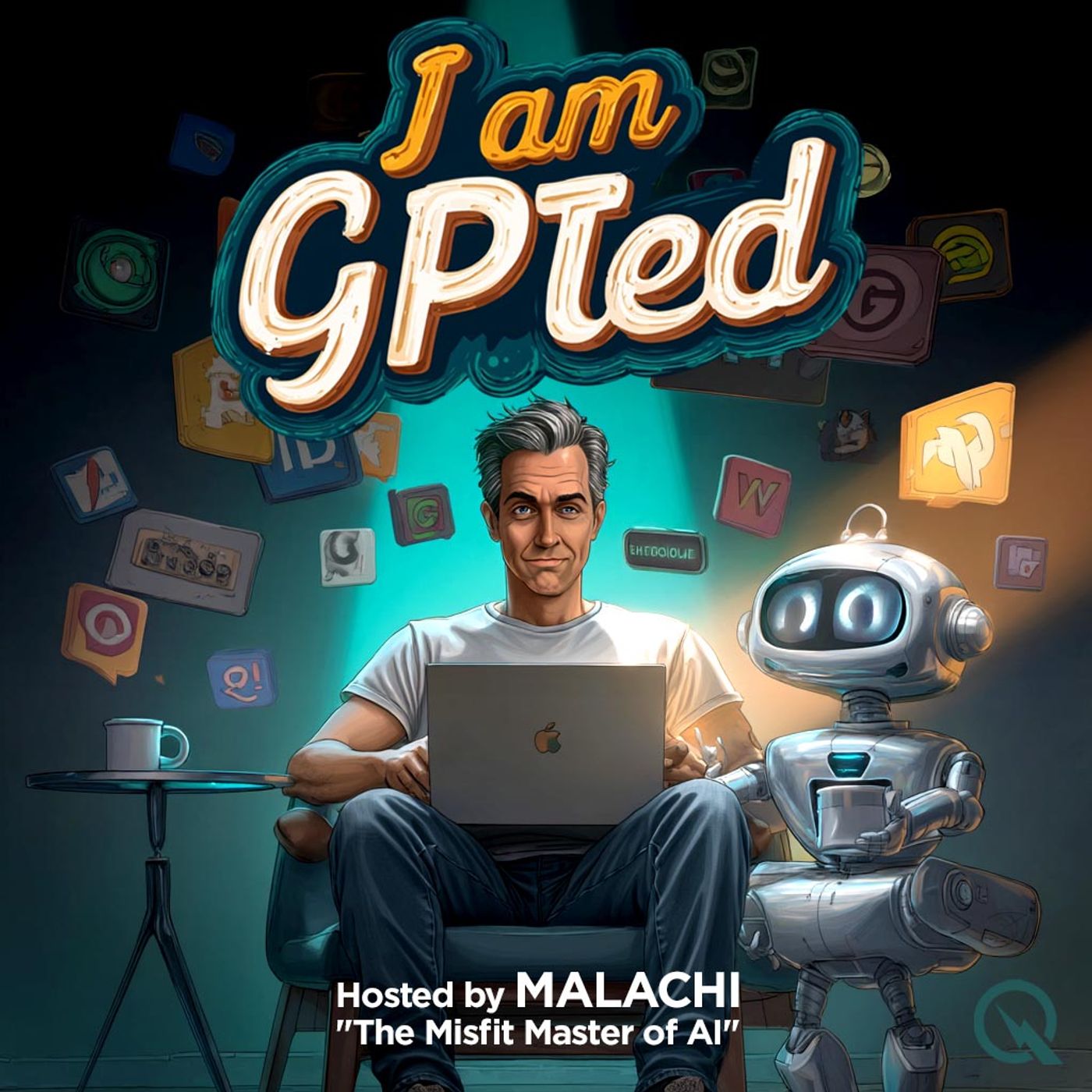
EPISODE · Apr 1, 2025 · 5 MIN
Mastering AI: 5 Insider Tricks for Beginners to Level Up Their Digital Skills
from I am GPTed - what you need to know about Chat GPT, Bard, Llama, and Artificial Intelligence · host Inception Point AI
Hey there, Malachi here, your Misfit Master of AI, and welcome to another episode of "I am GPTed." Today, we're diving into some practical tips and tricks to help you level up your AI game, even if you're a total beginner like I was not too long ago. First up, let's talk about prompting techniques. Now, I know the word "technique" might sound fancy, but trust me, it's not rocket science. It's all about being clear and specific with your AI buddy. Let's be real and get analog here... think of it like ordering at a restaurant. If you just say "I'm hungry," you might end up with a mystery dish. But if you say, "I'd like the veggie burger with a side of sweet potato fries, hold the mayo," you're more likely to get exactly what you want. The same goes for AI prompts. For example, instead of asking, "Can you write me a story?" try something like, "Write a 500-word short story about a time-traveling detective who solves a mystery in ancient Egypt, with a plot twist at the end." I learned this the hard way when I asked for a "fun story" and got a 10-page epic about a sentient toaster. Talk about a carb overload! Now, let's move on to a practical use case you might not have considered: using AI to help with meal planning and grocery lists. I know, I know, it sounds like a small thing, but hear me out. You can ask your AI pal to generate a week's worth of healthy, budget-friendly meal ideas based on your dietary preferences and what's in season. Then, have it create a grocery list for you. Boom! No more staring blankly into your fridge, wondering what to cook. But I digress... let's talk about a common mistake beginners make: assuming AI is always right. News flash: it's not. AI can spit out some pretty convincing stuff, but it's up to you to fact-check and use your human brain. I once took an AI-generated article at face value and shared it on social media, only to find out later that it was full of inaccuracies. Talk about a digital facepalm moment! So, how can you avoid this pitfall? My advice: always double-check the info, especially if you're using it for something important. And if you're not sure, ask for sources or references. A good AI should be able to back up its claims. Alright, let's get practical. Here's a simple exercise to help you build your AI interaction skills: start a conversation with an AI about a topic you're passionate about. It could be anything from knitting to space exploration. Ask questions, share your thoughts, and see where the conversation goes. The more you practice, the more comfortable you'll get with the back-and-forth flow. Finally, let's talk about evaluating and improving AI-generated content. The key here is to read it with a critical eye. Does it make sense? Is it well-structured? Does it sound like a human wrote it, or is it a bit too robotic? If it needs work, don't be afraid to give your AI some constructive feedback. Say something like, "Hey, thanks for the effort, but this part is a bit confusing. Can y This content was created in partnership and with the help of Artificial Intelligence AI.
What this episode covers
Hey there, Malachi here, your Misfit Master of AI, and welcome to another episode of "I am GPTed." Today, we're diving into some practical tips and tricks to help you level up your AI game, even if you're a total beginner like I was not too long ago. First up, let's talk about prompting techniques. Now, I know the word "technique" might sound fancy, but trust me, it's not rocket science. It's all about being clear and specific with your AI buddy. Let's be real and get analog here... think of it like ordering at a restaurant. If you just say "I'm hungry," you might end up with a mystery dish. But if you say, "I'd like the veggie burger with a side of sweet potato fries, hold the mayo," you're more likely to get exactly what you want. The same goes for AI prompts. For example, instead of asking, "Can you write me a story?" try something like, "Write a 500-word short story about a time-traveling detective who solves a mystery in ancient Egypt, with a plot twist at the end." I learned this the hard way when I asked for a "fun story" and got a 10-page epic about a sentient toaster. Talk about a carb overload! Now, let's move on to a practical use case you might not have considered: using AI to help with meal planning and grocery lists. I know, I know, it sounds like a small thing, but hear me out. You can ask your AI pal to generate a week's worth of healthy, budget-friendly meal ideas based on your dietary preferences and what's in season. Then, have it create a grocery list for you. Boom! No more staring blankly into your fridge, wondering what to cook. But I digress... let's talk about a common mistake beginners make: assuming AI is always right. News flash: it's not. AI can spit out some pretty convincing stuff, but it's up to you to fact-check and use your human brain. I once took an AI-generated article at face value and shared it on social media, only to find out later that it was full of inaccuracies. Talk about a digital facepalm moment! So, how can you avoid this pitfall? My advice: always double-check the info, especially if you're using it for something important. And if you're not sure, ask for sources or references. A good AI should be able to back up its claims. Alright, let's get practical. Here's a simple exercise to help you build your AI interaction skills: start a conversation with an AI about a topic you're passionate about. It could be anything from knitting to space exploration. Ask questions, share your thoughts, and see where the conversation goes. The more you practice, the more comfortable you'll get with the back-and-forth flow. Finally, let's talk about evaluating and improving AI-generated content. The key here is to read it with a critical eye. Does it make sense? Is it well-structured? Does it sound like a human wrote it, or is it a bit too robotic? If it needs work, don't be afraid to give your AI some constructive feedback. Say something like, "Hey, thanks for the effort, but this part is a bit confusing. Can y This content was created in partnership and with the help of Artificial Intelligence AI.
NOW PLAYING
Mastering AI: 5 Insider Tricks for Beginners to Level Up Their Digital Skills
No transcript for this episode yet
Similar Episodes
Mar 26, 2026 ·1m
Mar 19, 2026 ·34m
Feb 18, 2026 ·11m
Feb 11, 2026 ·45m