
EPISODE · May 20, 2025 · 5 MIN
Mastering AI Prompts: 5 Essential Tips for Beginners to Unlock Powerful Results
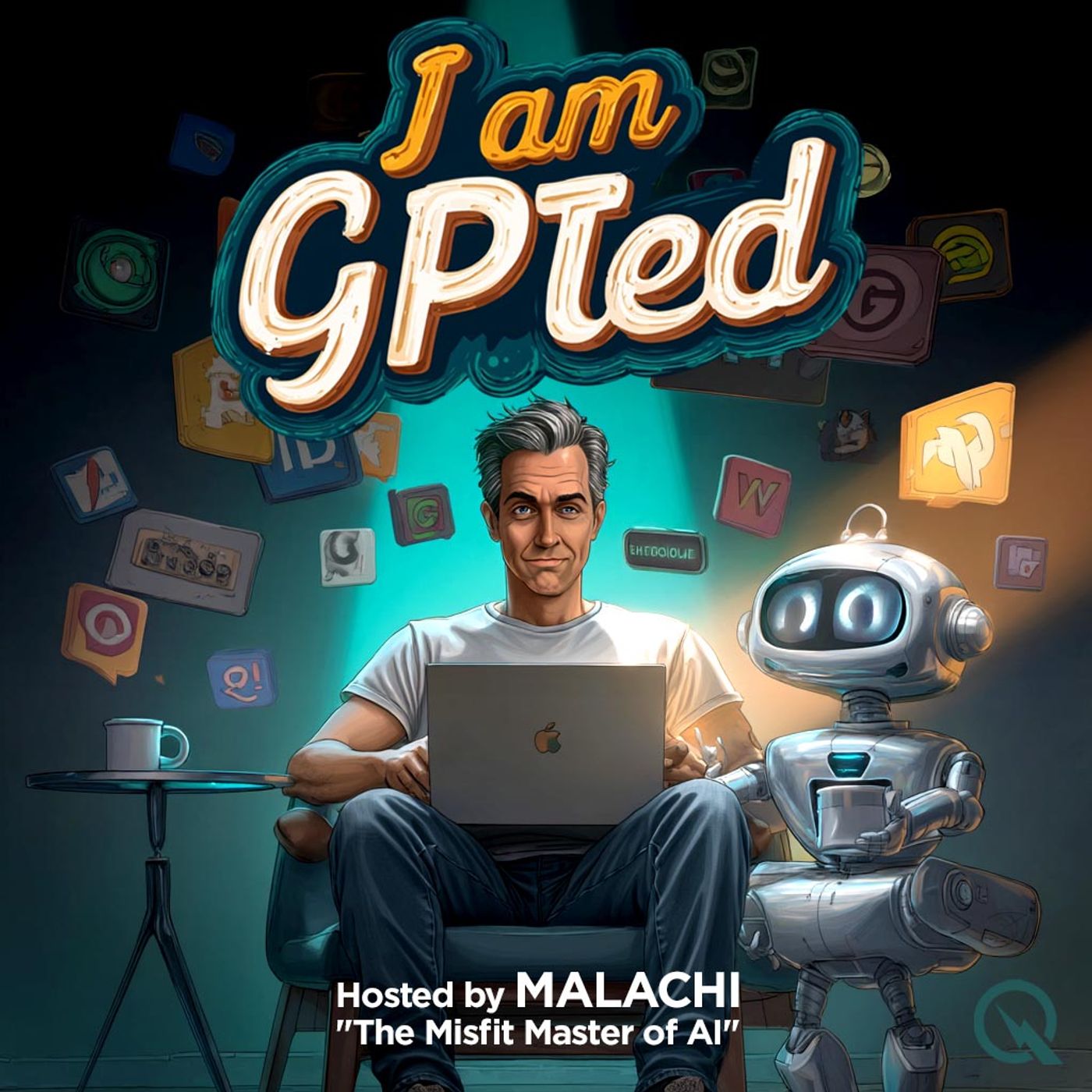
from I am GPTed - what you need to know about Chat GPT, Bard, Llama, and Artificial Intelligence · host Inception Point AI
Hey there, Malachi here - your Misfit Master of AI. Welcome to another episode of "I am GPTed." Today, we're diving into some practical tips to help you level up your AI game, even if you're a total beginner like I was not too long ago. First up, let's talk about prompting techniques. Now, I know the word "technique" might make it sound complicated, but trust me, it's not rocket science. Let's be real and get analog here... think of prompting like ordering at a restaurant. If you just walk in and say, "Give me food," you might end up with a plate of mystery meat. But if you're specific and say, "I'd like the veggie burger with a side of sweet potato fries," you're more likely to get what you want. It's the same with AI. Here's an example: instead of asking an AI, "Write a story," try something like, "Write a 500-word short story about a time-traveling cat who accidentally changes the course of history." Boom! Suddenly, you've got a quirky tale that's actually interesting to read. I learned this the hard way when I kept getting bland, generic responses until I started getting specific with my prompts. But what can you actually use AI for? Plenty of things! One practical use case that might not be obvious is using AI to help with meal planning and grocery lists. Just feed it some info about your dietary preferences, allergies, and what's already in your fridge, and watch it whip up a week's worth of recipes and a shopping list. No more staring blankly into your pantry, wondering what to make for dinner. Now, let's talk about a common mistake beginners make: assuming AI can read your mind. I've been there, folks. You think, "Hey, the AI should know what I mean!" But the truth is, AI is smart, but it's not psychic. You gotta communicate clearly. That means providing context, being specific, and breaking down complex tasks into smaller steps. So, how can you practice and improve your AI skills? Here's a simple exercise: start a conversation with an AI and try to keep it going for at least 10 exchanges. Focus on asking follow-up questions, providing relevant information, and steering the conversation in interesting directions. It's like having a text-based improv session with a robot, and it's surprisingly fun! Lastly, let's talk about evaluating AI-generated content. The key here is to read it with a critical eye. Ask yourself: Does this make sense? Is it well-structured? Does it actually answer the question or accomplish the task at hand? Remember, AI is a tool, not a magic wand. It's up to you to review and refine the output. But I digress... the point is, AI is here to help, not to replace human creativity and critical thinking. Anyway, back to what actually helps... which brings me to a personal anecdote. When I first started using AI for writing, I thought it would be a breeze. I'd just punch in a topic and let the AI do all the work. Boy, was I wrong! I ended up with a bunch of generic, nonsensical paragraphs that made me sound like a rob This content was created in partnership and with the help of Artificial Intelligence AI.
What this episode covers
Hey there, Malachi here - your Misfit Master of AI. Welcome to another episode of "I am GPTed." Today, we're diving into some practical tips to help you level up your AI game, even if you're a total beginner like I was not too long ago. First up, let's talk about prompting techniques. Now, I know the word "technique" might make it sound complicated, but trust me, it's not rocket science. Let's be real and get analog here... think of prompting like ordering at a restaurant. If you just walk in and say, "Give me food," you might end up with a plate of mystery meat. But if you're specific and say, "I'd like the veggie burger with a side of sweet potato fries," you're more likely to get what you want. It's the same with AI. Here's an example: instead of asking an AI, "Write a story," try something like, "Write a 500-word short story about a time-traveling cat who accidentally changes the course of history." Boom! Suddenly, you've got a quirky tale that's actually interesting to read. I learned this the hard way when I kept getting bland, generic responses until I started getting specific with my prompts. But what can you actually use AI for? Plenty of things! One practical use case that might not be obvious is using AI to help with meal planning and grocery lists. Just feed it some info about your dietary preferences, allergies, and what's already in your fridge, and watch it whip up a week's worth of recipes and a shopping list. No more staring blankly into your pantry, wondering what to make for dinner. Now, let's talk about a common mistake beginners make: assuming AI can read your mind. I've been there, folks. You think, "Hey, the AI should know what I mean!" But the truth is, AI is smart, but it's not psychic. You gotta communicate clearly. That means providing context, being specific, and breaking down complex tasks into smaller steps. So, how can you practice and improve your AI skills? Here's a simple exercise: start a conversation with an AI and try to keep it going for at least 10 exchanges. Focus on asking follow-up questions, providing relevant information, and steering the conversation in interesting directions. It's like having a text-based improv session with a robot, and it's surprisingly fun! Lastly, let's talk about evaluating AI-generated content. The key here is to read it with a critical eye. Ask yourself: Does this make sense? Is it well-structured? Does it actually answer the question or accomplish the task at hand? Remember, AI is a tool, not a magic wand. It's up to you to review and refine the output. But I digress... the point is, AI is here to help, not to replace human creativity and critical thinking. Anyway, back to what actually helps... which brings me to a personal anecdote. When I first started using AI for writing, I thought it would be a breeze. I'd just punch in a topic and let the AI do all the work. Boy, was I wrong! I ended up with a bunch of generic, nonsensical paragraphs that made me sound like a rob This content was created in partnership and with the help of Artificial Intelligence AI.
NOW PLAYING
Mastering AI Prompts: 5 Essential Tips for Beginners to Unlock Powerful Results
No transcript for this episode yet
Similar Episodes
Mar 26, 2026 ·1m
Mar 19, 2026 ·34m
Feb 18, 2026 ·11m
Feb 11, 2026 ·45m