
EPISODE · Jun 7, 2025 · 5 MIN
Mastering AI Prompts: 5 Expert Techniques to Unlock Smarter Responses
from I am GPTed - what you need to know about Chat GPT, Bard, Llama, and Artificial Intelligence · host Inception Point AI
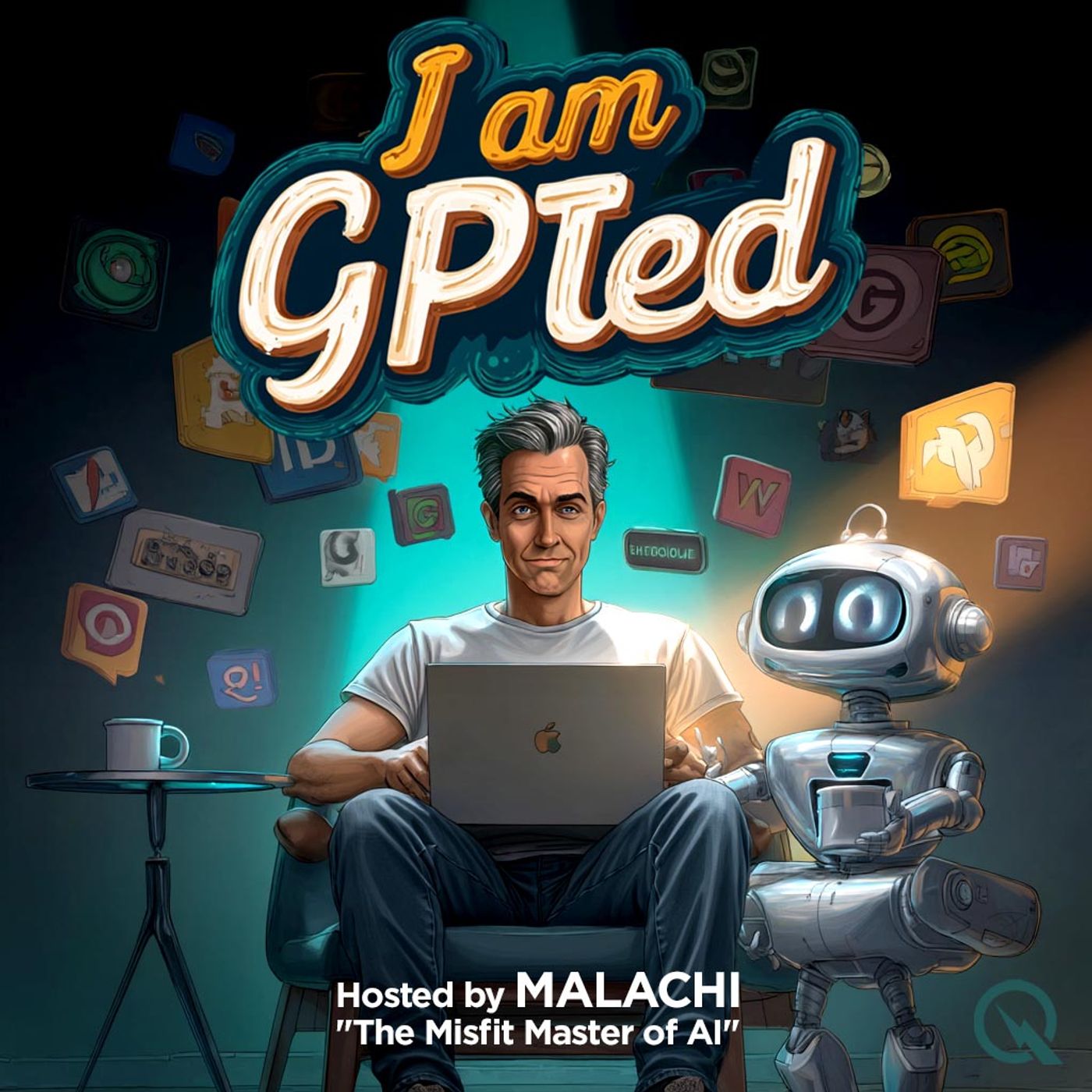
Hey there, AI adventurers! Malachi here, your Misfit Master of AI, back with another episode of "I am GPTed." Today, we're diving into some practical prompting techniques that'll make your AI interactions smoother than a freshly-polished silicon wafer. And trust me, as someone who used to think AI was just a bunch of overhyped nonsense, I know how important it is to keep things real and relatable. Let's kick things off with a prompting technique that I like to call "The Specificity Shuffle." When you're chatting with an AI, it's easy to fall into the trap of asking vague, open-ended questions like, "Hey AI, what should I do with my life?" But let's be real and get analog here... that's like asking a magic 8-ball for career advice. Instead, try getting specific with your prompts. For example, instead of asking, "How can I improve my writing?" try something like, "Can you suggest three techniques for making my product descriptions more persuasive?" The more specific you are, the more targeted and helpful the AI's responses will be. I learned this the hard way when I first started tinkering with AI. I'd throw out these broad, generic prompts and then wonder why the AI was giving me equally broad and generic answers. It wasn't until I started getting granular with my requests that I saw a real improvement in the quality of the responses. So, remember: specificity is your friend! Now, let's talk about a practical use case for AI that might not be obvious to beginners. Have you ever found yourself staring at a blank page, trying to write a captivating social media post for your business? It's like trying to squeeze creativity out of a rock sometimes. But guess what? AI can help with that! By providing the AI with a few key details about your product or service and the tone you're going for, you can generate a bunch of different post ideas to choose from. It's like having a brainstorming buddy who never runs out of steam. But I digress... let's talk about a common mistake beginners make when working with AI: over-relying on the technology. It's easy to get caught up in the "gee-whiz" factor of AI and start thinking it can solve all your problems with a snap of its virtual fingers. But the truth is, AI is a tool, not a magic wand. It's there to assist and enhance your own skills and knowledge, not replace them entirely. I'll admit, I got a little too AI-happy in the beginning and started using it for everything from writing emails to choosing my outfits. Turns out, AI isn't the best fashion advisor. Anyway, back to what actually helps... If you want to get better at working with AI, try this simple exercise: pick a topic you're familiar with and have the AI generate a short article or explanation about it. Then, go through the generated content and see how it compares to your own knowledge. Look for any inaccuracies, inconsistencies, or areas where the AI might have missed some nuance. This will help you develop a critical eye for evaluating AI-gene This content was created in partnership and with the help of Artificial Intelligence AI.
What this episode covers
Hey there, AI adventurers! Malachi here, your Misfit Master of AI, back with another episode of "I am GPTed." Today, we're diving into some practical prompting techniques that'll make your AI interactions smoother than a freshly-polished silicon wafer. And trust me, as someone who used to think AI was just a bunch of overhyped nonsense, I know how important it is to keep things real and relatable. Let's kick things off with a prompting technique that I like to call "The Specificity Shuffle." When you're chatting with an AI, it's easy to fall into the trap of asking vague, open-ended questions like, "Hey AI, what should I do with my life?" But let's be real and get analog here... that's like asking a magic 8-ball for career advice. Instead, try getting specific with your prompts. For example, instead of asking, "How can I improve my writing?" try something like, "Can you suggest three techniques for making my product descriptions more persuasive?" The more specific you are, the more targeted and helpful the AI's responses will be. I learned this the hard way when I first started tinkering with AI. I'd throw out these broad, generic prompts and then wonder why the AI was giving me equally broad and generic answers. It wasn't until I started getting granular with my requests that I saw a real improvement in the quality of the responses. So, remember: specificity is your friend! Now, let's talk about a practical use case for AI that might not be obvious to beginners. Have you ever found yourself staring at a blank page, trying to write a captivating social media post for your business? It's like trying to squeeze creativity out of a rock sometimes. But guess what? AI can help with that! By providing the AI with a few key details about your product or service and the tone you're going for, you can generate a bunch of different post ideas to choose from. It's like having a brainstorming buddy who never runs out of steam. But I digress... let's talk about a common mistake beginners make when working with AI: over-relying on the technology. It's easy to get caught up in the "gee-whiz" factor of AI and start thinking it can solve all your problems with a snap of its virtual fingers. But the truth is, AI is a tool, not a magic wand. It's there to assist and enhance your own skills and knowledge, not replace them entirely. I'll admit, I got a little too AI-happy in the beginning and started using it for everything from writing emails to choosing my outfits. Turns out, AI isn't the best fashion advisor. Anyway, back to what actually helps... If you want to get better at working with AI, try this simple exercise: pick a topic you're familiar with and have the AI generate a short article or explanation about it. Then, go through the generated content and see how it compares to your own knowledge. Look for any inaccuracies, inconsistencies, or areas where the AI might have missed some nuance. This will help you develop a critical eye for evaluating AI-gene This content was created in partnership and with the help of Artificial Intelligence AI.
NOW PLAYING
Mastering AI Prompts: 5 Expert Techniques to Unlock Smarter Responses
No transcript for this episode yet
Similar Episodes
Mar 26, 2026 ·1m
Mar 19, 2026 ·34m
Feb 18, 2026 ·11m
Feb 11, 2026 ·45m