
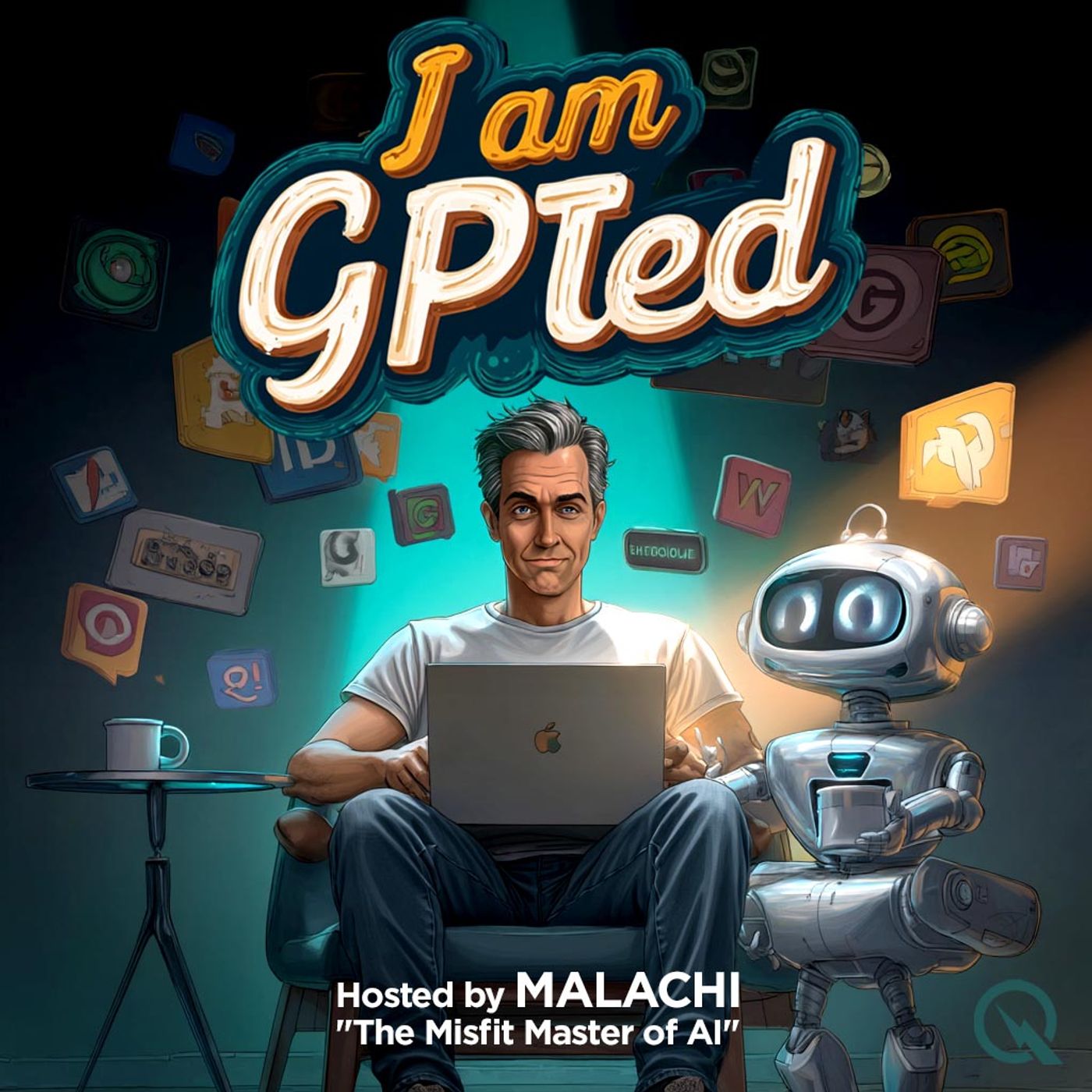
EPISODE · Jul 14, 2025 · 3 MIN
Mastering AI Prompts: Your Ultimate Guide to Crafting Compelling Digital Content
from I am GPTed - what you need to know about Chat GPT, Bard, Llama, and Artificial Intelligence · host Inception Point AI
Hey there, it's Mal, your Misfit Master of AI, back with another episode of practical AI advice for the skeptically curious. Today, we're diving into prompting techniques, unexpected use cases, and common mistakes that even I, in all my AI mastery, have made. So, grab a cup of coffee and let's get started. First up, let's talk about prompting. Now, I know it sounds like something you'd do to a forgetful actor, but in AI, it's all about getting the best responses from our digital friends. One technique I swear by is what I call the "be specific, but not too specific" method. It's like ordering at a restaurant - you want to give enough details to get what you want, but not so many that the chef gets overwhelmed and serves you a plate of confusion. For example, instead of asking an AI to "write a story," try something like "write a 500-word short story about a misfit AI master who accidentally becomes an expert." Trust me, the difference is night and day. Now, let's talk practical use cases. Sure, AI can help with boring stuff like scheduling and email, but have you ever thought about using it to spice up your love life? I'm not saying you should let an AI write your Tinder profile, but it can help you craft the perfect opening line or even suggest date ideas based on your shared interests. Just don't blame me if your AI-generated pickup line lands you in the friend zone. But, as with any new skill, there are plenty of mistakes to be made. One common beginner blunder is assuming that AI can read your mind. Newsflash: it can't. You need to be clear and specific with your prompts, or you'll end up with output that's about as useful as a screen door on a submarine. I once asked an AI to "create a logo," and let's just say the result was more abstract art than brand identity. Lesson learned. So, how can you avoid such mistakes and improve your AI skills? Practice, practice, practice. Try this simple exercise: pick a topic you're interested in, like cooking or travel, and generate a short piece of content using an AI tool. Then, read it over and ask yourself, "Does this make sense? Is it useful? Is it engaging?" If not, tweak your prompt and try again. Rinse and repeat until you've got a piece of content that would make even the most discerning reader say, "Hey, that's not bad for a computer!" Finally, when it comes to evaluating and improving AI-generated content, there's one key thing to remember: it's not about perfection, it's about progress. Don't get discouraged if your first few attempts are a bit rough around the edges. Even the most seasoned AI pros (like yours truly) had to start somewhere. Keep refining your prompts, experimenting with different tools, and most importantly, learning from your mistakes. Trust me, you'll be churning out AI masterpieces in no time. Well, that's all for today, folks. But before I go, let me leave you with a little personal anecdote. When I first started playing around with AI, I thought it was all just a bun This content was created in partnership and with the help of Artificial Intelligence AI.
What this episode covers
Hey there, it's Mal, your Misfit Master of AI, back with another episode of practical AI advice for the skeptically curious. Today, we're diving into prompting techniques, unexpected use cases, and common mistakes that even I, in all my AI mastery, have made. So, grab a cup of coffee and let's get started. First up, let's talk about prompting. Now, I know it sounds like something you'd do to a forgetful actor, but in AI, it's all about getting the best responses from our digital friends. One technique I swear by is what I call the "be specific, but not too specific" method. It's like ordering at a restaurant - you want to give enough details to get what you want, but not so many that the chef gets overwhelmed and serves you a plate of confusion. For example, instead of asking an AI to "write a story," try something like "write a 500-word short story about a misfit AI master who accidentally becomes an expert." Trust me, the difference is night and day. Now, let's talk practical use cases. Sure, AI can help with boring stuff like scheduling and email, but have you ever thought about using it to spice up your love life? I'm not saying you should let an AI write your Tinder profile, but it can help you craft the perfect opening line or even suggest date ideas based on your shared interests. Just don't blame me if your AI-generated pickup line lands you in the friend zone. But, as with any new skill, there are plenty of mistakes to be made. One common beginner blunder is assuming that AI can read your mind. Newsflash: it can't. You need to be clear and specific with your prompts, or you'll end up with output that's about as useful as a screen door on a submarine. I once asked an AI to "create a logo," and let's just say the result was more abstract art than brand identity. Lesson learned. So, how can you avoid such mistakes and improve your AI skills? Practice, practice, practice. Try this simple exercise: pick a topic you're interested in, like cooking or travel, and generate a short piece of content using an AI tool. Then, read it over and ask yourself, "Does this make sense? Is it useful? Is it engaging?" If not, tweak your prompt and try again. Rinse and repeat until you've got a piece of content that would make even the most discerning reader say, "Hey, that's not bad for a computer!" Finally, when it comes to evaluating and improving AI-generated content, there's one key thing to remember: it's not about perfection, it's about progress. Don't get discouraged if your first few attempts are a bit rough around the edges. Even the most seasoned AI pros (like yours truly) had to start somewhere. Keep refining your prompts, experimenting with different tools, and most importantly, learning from your mistakes. Trust me, you'll be churning out AI masterpieces in no time. Well, that's all for today, folks. But before I go, let me leave you with a little personal anecdote. When I first started playing around with AI, I thought it was all just a bun This content was created in partnership and with the help of Artificial Intelligence AI.
NOW PLAYING
Mastering AI Prompts: Your Ultimate Guide to Crafting Compelling Digital Content
No transcript for this episode yet
Similar Episodes
Mar 26, 2026 ·1m
Mar 19, 2026 ·34m
Feb 18, 2026 ·11m
Feb 11, 2026 ·45m