PodParley PodParley

Meet the author - Elizabeth Finkel

Elizabeth Finkel was in conversation with Joan Le…

An episode of the Experience ANU podcast, hosted by Experience ANU, titled "Meet the author - Elizabeth Finkel" was published on September 24, 2025 and runs 58 minutes.

September 24, 2025 ·58m · Experience ANU

0:00 / 0:00

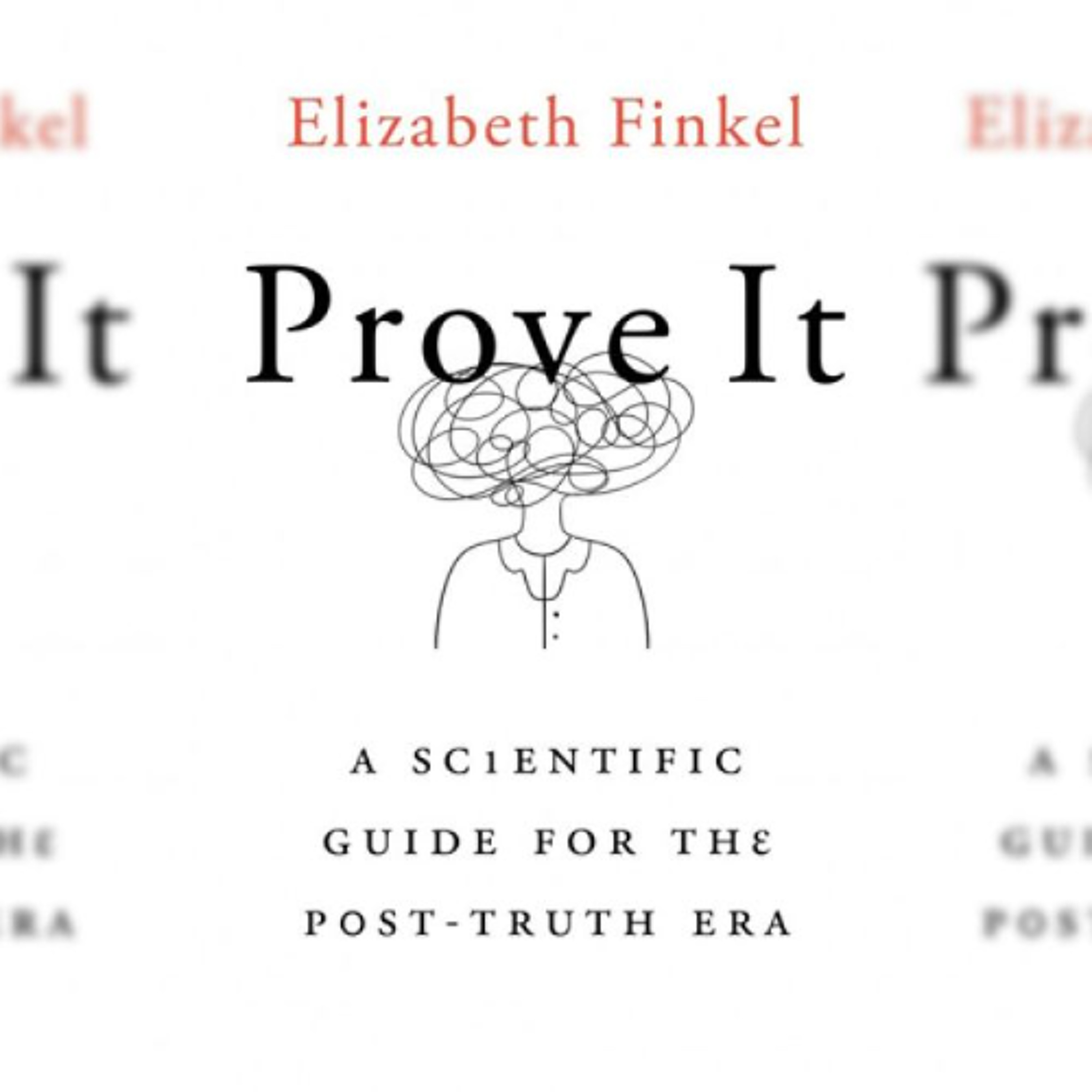
Elizabeth Finkel was in conversation with Joan Leach on Elizabeth's new book Prove It: A Scientific Guide for the Post-Truth Era, a compelling journey through science's big breakthroughs, by an award-winning Australian science writer. Humans developed the scientific method over centuries. Its departure from what came before was that theories should be fuelled by data, not opinion. Today, the institutions that underpin democracy – the law, academia, government, journalism – all rely on its central idea: seeking facts and interrogating them through robust discussion and real-world testing. Yet in the post-truth era, public conversations can feel far from scientific. In Prove It, Elizabeth Finkel describes how the scientific method plays out in a series of controversies, from proving the existence of Einstein's gravitational waves to identifying the origins of Covid-19, from understanding human origins to defining consciousness. Through these tales of dispute and discovery, she breaks down the key elements of scientific thinking. Full of politics, prejudice, obsession, heroism and eccentricity, Prove It captures the drama and excitement of scientific discovery and debate and argues compellingly that its lessons are more crucial now than ever. Elizabeth Finkel holds a PhD in biochemistry and spent ten years as a research scientist before becoming an award-winning journalist and author of The Genome Generation, among other books. She is a founding editor of Cosmos magazine and a regular contributor to the US magazine Science, Radio National's Science Show and The Monthly. Her awards include a Queensland Premier's Literary Award for Stem Cells: Controversy at the Frontiers of Science, the National Press Club's award for Higher Education Journalist of the Year and the Eureka Award for Science Journalism. Professor Joan Leach, Deputy Vice Chancellor (Academic) at the Australian National University, is a leading global expert in science communication specialising in public engagement with controversial and frontier science and the ethics of science communication. From 2016 to April 2025 Joan was Director, Australian National Centre for the Public Awareness of Science and is past president of Australian Science Communicators and past Chair of the National Committee for History and Philosophy of Science at the Australian Academy of Science. The vote of thanks was given by Anna Maria Arabia, Chief Executive, Australian Academy of Science

Elizabeth Finkel was in conversation with Joan Leach on Elizabeth's new book Prove It: A Scientific Guide for the Post-Truth Era, a compelling journey through science's big breakthroughs, by an award-winning Australian science writer. Humans developed the scientific method over centuries. Its departure from what came before was that theories should be fuelled by data, not opinion. Today, the institutions that underpin democracy – the law, academia, government, journalism – all rely on its central idea: seeking facts and interrogating them through robust discussion and real-world testing. Yet in the post-truth era, public conversations can feel far from scientific. In Prove It, Elizabeth Finkel describes how the scientific method plays out in a series of controversies, from proving the existence of Einstein's gravitational waves to identifying the origins of Covid-19, from understanding human origins to defining consciousness. Through these tales of dispute and discovery, she breaks down the key elements of scientific thinking. Full of politics, prejudice, obsession, heroism and eccentricity, Prove It captures the drama and excitement of scientific discovery and debate and argues compellingly that its lessons are more crucial now than ever. Elizabeth Finkel holds a PhD in biochemistry and spent ten years as a research scientist before becoming an award-winning journalist and author of The Genome Generation, among other books. She is a founding editor of Cosmos magazine and a regular contributor to the US magazine Science, Radio National's Science Show and The Monthly. Her awards include a Queensland Premier's Literary Award for Stem Cells: Controversy at the Frontiers of Science, the National Press Club's award for Higher Education Journalist of the Year and the Eureka Award for Science Journalism. Professor Joan Leach, Deputy Vice Chancellor (Academic) at the Australian National University, is a leading global expert in science communication specialising in public engagement with controversial and frontier science and the ethics of science communication. From 2016 to April 2025 Joan was Director, Australian National Centre for the Public Awareness of Science and is past president of Australian Science Communicators and past Chair of the National Committee for History and Philosophy of Science at the Australian Academy of Science. The vote of thanks was given by Anna Maria Arabia, Chief Executive, Australian Academy of Science
Interviews with Anupama Chopra Film Companion Anupama Chopra is a film critic, television anchor and book author. She has been writing about Bollywood since 1993. Her work has appeared in publications such as The New York Times, Hindustan Times, The Los Angeles Times and Vogue (India). Here you can find all of her interviews and conversations with Bollywood and Hollywood's leading actors and filmmakers. In short, everything you need to enhance your cinematic experience.Millions of listeners seek out Bingepods (Ideabrew Studios Network content) every day. Get in touch with us to advertise, join the network or click listen to  enjoy content by some of India's top audio [email protected] | Apple Taittriyaka Upanishad by Unknown Loyal Books The word Upanishad (upa-ni-shad) consists of, "Upa" means "near;" "ni" means "down;" "shad" means "to sit." Thus, Upanishad is to sit down near the teacher to discuss, learn, practice, and experience. There are some 200 or more Upanishads. Some are lost and are only known about because of being referenced in other Upanishads. Most of the Upanishads were kept secret for centuries, only passed on to others orally in the form of Shloka (a category of verse line developed from the Vedic Anustubh meter).Taittiriya is a Sanskrit word that means "from Tittiri". The root of this name has been interpreted in two ways: "from Vedic sage Tittiri" or a collection of verses from mythical students who became Tittiris (birds, partridges) in order to gain knowledge.This Upanishad is divided into three sections called Vallis: Siksha (Pronunciation /Instruction) Valli , Ananda (bliss of Brahman) Valli , and Bhrigu (son of Varuna, the god of all water elements) Valli.The chronology of Taittriyaka Upanish Katha Upanishad by Unknown Loyal Books The word Upanishad (upa-ni-shad) consists of, "Upa" means "near;" "ni" means "down;" "shad" means "to sit." Thus, Upanishad is to sit down near the teacher to discuss, learn, practice, and experience. There are some 200 or more Upanishads. Some are lost and are only known about because of being referenced in other Upanishads.Most of the Upanishads were kept secret for centuries, only passed on to others orally in the form of Shloka (a category of verse line developed from the Vedic Anustubh meter).Katha-Upanishad is one the 11 principal Upanishads. Its chronology is contested as being between fifth century BCE and 1st millennium BCE.Katha (Sanskrit: कठ) literally means "distress". Katha Upanishad uses words that symbolically embed and creatively have multiple meanings. For example, a closely pronounced word Katha (Sanskrit: कथा) literally means "story, legend, conversation, speech, tale". All of these related meanings are relevant to the Katha Upanishad.The text presents Death as the T Brihadaranyaka Upanishad Unknown The word Upanishad (upa-ni-shad) consists of, "Upa" means "near;" "ni" means "down;" "shad" means "to sit." Thus, Upanishad is to sit down near the teacher to discuss, learn, practice, and experience. There are some 200 or more Upanishads. Some are lost and are only known about because of being referenced in other Upanishads. Most of the Upanishads were kept secret for centuries, only passed on to others orally in the form of Shlokas (a category of verse line developed from the Vedic Anustubh meter).The Bṛhadāraṇyaka Upanishad (Sanskrit: बृहदारण्यक उपनिषद्) is one of the oldest, mukhya (primary) Upanishads. It is contained within the Shatapatha Brahmana (Brahmana is a collection of ancient Indian texts with commentaries on the Vedas.), which is itself a part of Shukla Yajur Veda. Brihad means great. Aryanka (Snskrit) आरण्यक means means pertaining to the forest. Aranyaka in the Upanishadic context refers to a treatise to be read or expounded by anchorites in the quiet of the fo
URL copied to clipboard!