PodParley PodParley

Meet the author - Graeme Turner

Graeme Turner was in conversation with Frank Bong…

An episode of the Experience ANU podcast, hosted by Experience ANU, titled "Meet the author - Graeme Turner" was published on July 29, 2025 and runs 59 minutes.

July 29, 2025 ·59m · Experience ANU

0:00 / 0:00

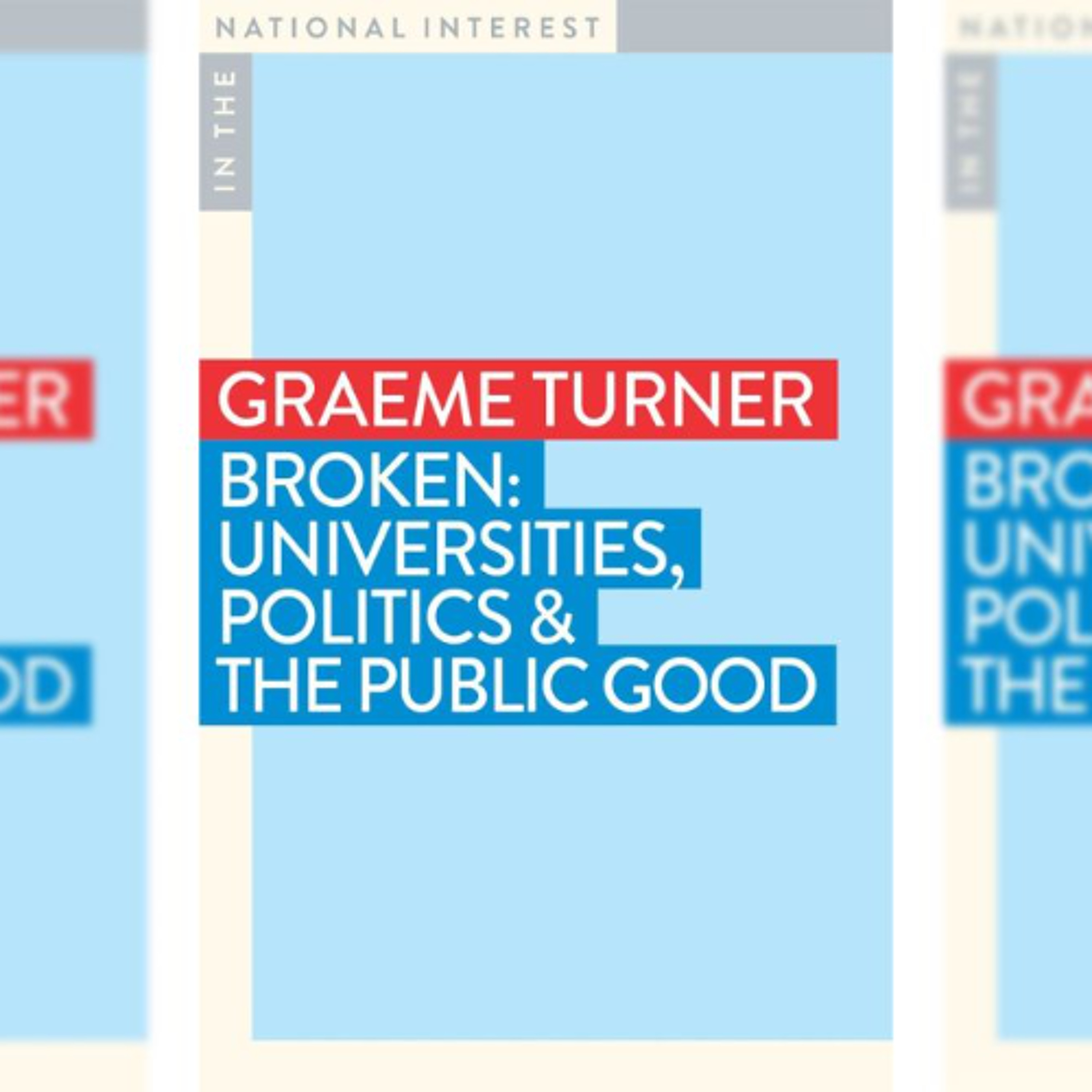
Graeme Turner was in conversation with Frank Bongiorno on his new book Broken: Universities, Politics and the Public Good. A strong higher education system is fundamental to civil society. The building of knowledge and the dissemination of information is vital to the proper functioning of our democracy. At the economic level, higher education is in the top three of our export industries; international students have become central to the hospitality, retail and agricultural economies; and the country desperately needs well-trained, knowledgeable citizens to shore up its future. Yet, in February 2024, a detailed review of higher education in this country concluded that the system is broken and urgently needs fixing. The problems that afflict it are legion, including over-investment in international enrolment, an epidemic of casualisation and the burning out of a generation of academics, culture wars over the content and orientation of university research and teaching, the lack of sectoral coordination around the national interest, and the consequences of decades of funding cuts. In Broken, Graeme Turner provides a reality check for those who imagine the academic life is one of privilege and leisure, laying bare the enormous challenges and lack of hope experienced by many in academia. He unearths the foundations of this crisis, then explains how the solution lies in an overhaul of the one-size-fits-all approach to university funding, the establishment of genuine full-time career paths, and the formation of an independent body to ensure our university system serves the national interest in both teaching and research, rather than the ferocious competitiveness of the marketplace. Above all, we need to jettison the current economic focus on education, and re-embrace the idea that higher learning is a fundamental public good – and should be funded as such. Graeme Turner AO is Emeritus Professor of Cultural Studies at the University of Queensland. He has published 30 books and his work has been translated into eleven languages. He has served as President of the Academy of the Humanities, is a former Federation Fellow, and is the only humanities scholar to have served two successive terms as a member of the Prime Minister’s Science, Engineering and Innovation Council. He has had extensive engagement with higher education policy, research assessment and commentary on the sector, including prominent roles with the Australian Research Council, the National Collaborative Research Infrastructure Strategy, and the Learned Academies. He co-authored the landmark 2014 study of the state of the humanities, creative arts and social sciences disciplines in Australia, Mapping HASS. His 'state of the nation' book, The Shrinking Nation, was published in 2023. Frank Bongiorno AM, Professor of History ANU, is currently President of the Council for the Humanities, Arts and Social Sciences. He is a Fellow of the Royal Historical Society, the Academy of the Social Sciences in Australia, the Australian Academy of the Humanities and a Whitlam Institute Distinguished Fellow at Western Sydney University. His most recent book is Dreamers and Schemers: A Political History of Australia. Allan Behm, Senior advisor, International & Security Affairs Program at the Australia Institute, will give the vote of thanks

Graeme Turner was in conversation with Frank Bongiorno on his new book Broken: Universities, Politics and the Public Good. A strong higher education system is fundamental to civil society. The building of knowledge and the dissemination of information is vital to the proper functioning of our democracy. At the economic level, higher education is in the top three of our export industries; international students have become central to the hospitality, retail and agricultural economies; and the country desperately needs well-trained, knowledgeable citizens to shore up its future. Yet, in February 2024, a detailed review of higher education in this country concluded that the system is broken and urgently needs fixing. The problems that afflict it are legion, including over-investment in international enrolment, an epidemic of casualisation and the burning out of a generation of academics, culture wars over the content and orientation of university research and teaching, the lack of sectoral coordination around the national interest, and the consequences of decades of funding cuts. In Broken, Graeme Turner provides a reality check for those who imagine the academic life is one of privilege and leisure, laying bare the enormous challenges and lack of hope experienced by many in academia. He unearths the foundations of this crisis, then explains how the solution lies in an overhaul of the one-size-fits-all approach to university funding, the establishment of genuine full-time career paths, and the formation of an independent body to ensure our university system serves the national interest in both teaching and research, rather than the ferocious competitiveness of the marketplace. Above all, we need to jettison the current economic focus on education, and re-embrace the idea that higher learning is a fundamental public good – and should be funded as such. Graeme Turner AO is Emeritus Professor of Cultural Studies at the University of Queensland. He has published 30 books and his work has been translated into eleven languages. He has served as President of the Academy of the Humanities, is a former Federation Fellow, and is the only humanities scholar to have served two successive terms as a member of the Prime Minister’s Science, Engineering and Innovation Council. He has had extensive engagement with higher education policy, research assessment and commentary on the sector, including prominent roles with the Australian Research Council, the National Collaborative Research Infrastructure Strategy, and the Learned Academies. He co-authored the landmark 2014 study of the state of the humanities, creative arts and social sciences disciplines in Australia, Mapping HASS. His 'state of the nation' book, The Shrinking Nation, was published in 2023. Frank Bongiorno AM, Professor of History ANU, is currently President of the Council for the Humanities, Arts and Social Sciences. He is a Fellow of the Royal Historical Society, the Academy of the Social Sciences in Australia, the Australian Academy of the Humanities and a Whitlam Institute Distinguished Fellow at Western Sydney University. His most recent book is Dreamers and Schemers: A Political History of Australia. Allan Behm, Senior advisor, International & Security Affairs Program at the Australia Institute, will give the vote of thanks
Interviews with Anupama Chopra Film Companion Anupama Chopra is a film critic, television anchor and book author. She has been writing about Bollywood since 1993. Her work has appeared in publications such as The New York Times, Hindustan Times, The Los Angeles Times and Vogue (India). Here you can find all of her interviews and conversations with Bollywood and Hollywood's leading actors and filmmakers. In short, everything you need to enhance your cinematic experience.Millions of listeners seek out Bingepods (Ideabrew Studios Network content) every day. Get in touch with us to advertise, join the network or click listen to  enjoy content by some of India's top audio [email protected] | Apple Taittriyaka Upanishad by Unknown Loyal Books The word Upanishad (upa-ni-shad) consists of, "Upa" means "near;" "ni" means "down;" "shad" means "to sit." Thus, Upanishad is to sit down near the teacher to discuss, learn, practice, and experience. There are some 200 or more Upanishads. Some are lost and are only known about because of being referenced in other Upanishads. Most of the Upanishads were kept secret for centuries, only passed on to others orally in the form of Shloka (a category of verse line developed from the Vedic Anustubh meter).Taittiriya is a Sanskrit word that means "from Tittiri". The root of this name has been interpreted in two ways: "from Vedic sage Tittiri" or a collection of verses from mythical students who became Tittiris (birds, partridges) in order to gain knowledge.This Upanishad is divided into three sections called Vallis: Siksha (Pronunciation /Instruction) Valli , Ananda (bliss of Brahman) Valli , and Bhrigu (son of Varuna, the god of all water elements) Valli.The chronology of Taittriyaka Upanish Katha Upanishad by Unknown Loyal Books The word Upanishad (upa-ni-shad) consists of, "Upa" means "near;" "ni" means "down;" "shad" means "to sit." Thus, Upanishad is to sit down near the teacher to discuss, learn, practice, and experience. There are some 200 or more Upanishads. Some are lost and are only known about because of being referenced in other Upanishads.Most of the Upanishads were kept secret for centuries, only passed on to others orally in the form of Shloka (a category of verse line developed from the Vedic Anustubh meter).Katha-Upanishad is one the 11 principal Upanishads. Its chronology is contested as being between fifth century BCE and 1st millennium BCE.Katha (Sanskrit: कठ) literally means "distress". Katha Upanishad uses words that symbolically embed and creatively have multiple meanings. For example, a closely pronounced word Katha (Sanskrit: कथा) literally means "story, legend, conversation, speech, tale". All of these related meanings are relevant to the Katha Upanishad.The text presents Death as the T Brihadaranyaka Upanishad Unknown The word Upanishad (upa-ni-shad) consists of, "Upa" means "near;" "ni" means "down;" "shad" means "to sit." Thus, Upanishad is to sit down near the teacher to discuss, learn, practice, and experience. There are some 200 or more Upanishads. Some are lost and are only known about because of being referenced in other Upanishads. Most of the Upanishads were kept secret for centuries, only passed on to others orally in the form of Shlokas (a category of verse line developed from the Vedic Anustubh meter).The Bṛhadāraṇyaka Upanishad (Sanskrit: बृहदारण्यक उपनिषद्) is one of the oldest, mukhya (primary) Upanishads. It is contained within the Shatapatha Brahmana (Brahmana is a collection of ancient Indian texts with commentaries on the Vedas.), which is itself a part of Shukla Yajur Veda. Brihad means great. Aryanka (Snskrit) आरण्यक means means pertaining to the forest. Aranyaka in the Upanishadic context refers to a treatise to be read or expounded by anchorites in the quiet of the fo
URL copied to clipboard!