PodParley PodParley

Meet the author - Greg Haddrick

Award-winning author Greg Haddrick was in convers…

An episode of the Experience ANU podcast, hosted by Experience ANU, titled "Meet the author - Greg Haddrick" was published on November 17, 2025 and runs 58 minutes.

November 17, 2025 ·58m · Experience ANU

0:00 / 0:00

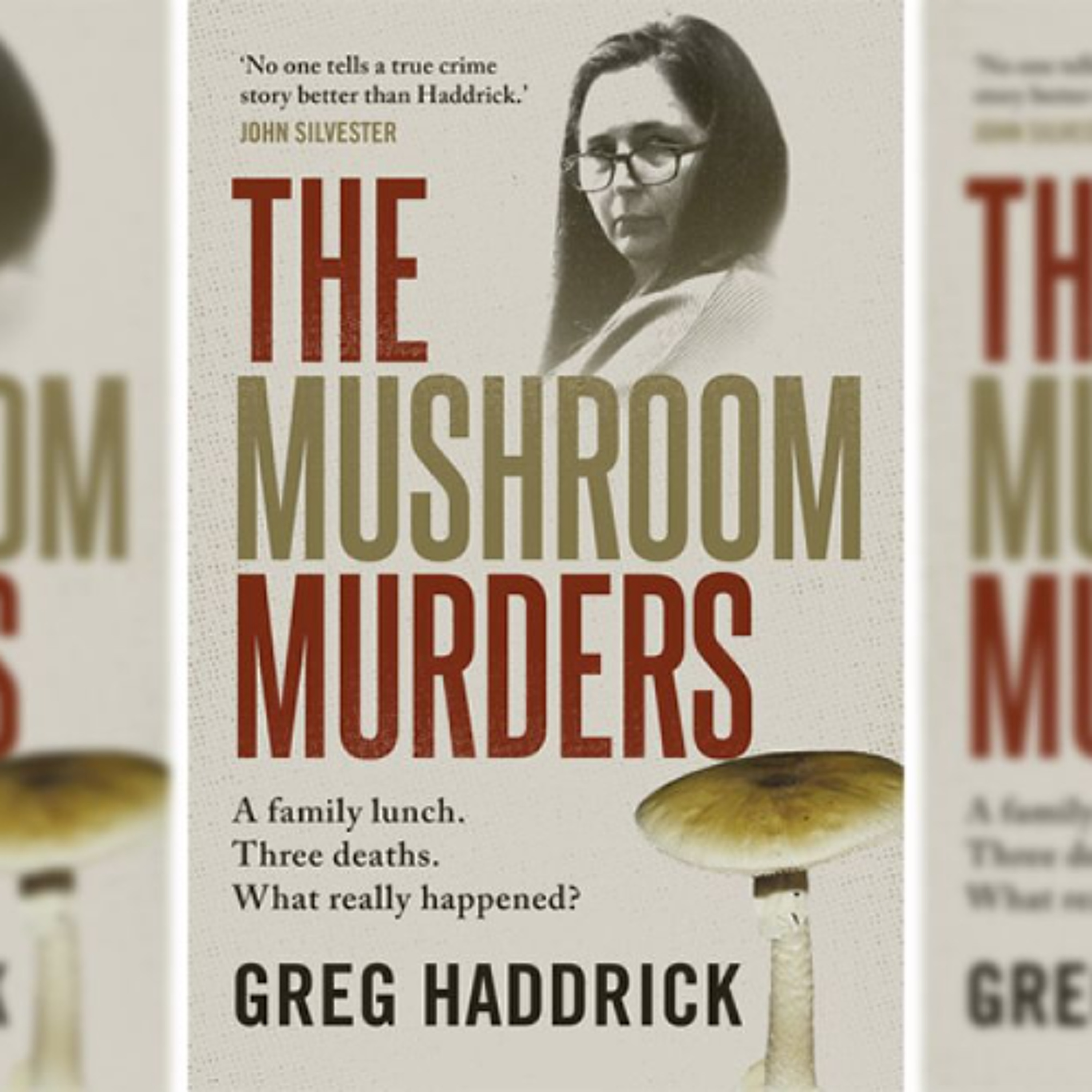
Award-winning author Greg Haddrick was in conversation with Michael Brissenden on Greg's new book The Mushroom Murders. A family lunch. Three deaths. What really happened? The shocking story of a weekend lunch laced with a highly toxic mushroom, and a triple murder trial that gripped the world, shattered a family and gave a mother a life sentence. On 29 July 2023, Erin Patterson hosted a family lunch at her home in the small regional Victorian town of Leongatha. She had invited her parents-in-law, Don and Gail Patterson, and Gail's sister, Heather Wilkinson, and her husband Ian. Erin made beef Wellington for her guests, individual beef eye fillets covered in mushroom paste, wrapped in pastry. The following day, all four guests were taken to hospital, and Heather, Gail and Don died. Ian Wilkinson barely survived. A toxicologist found traces of the highly poisonous death cap mushroom in the remains of the meal. At first, it appeared to be a dreadful accident. As the police investigation continued, the evidence mounted, seeming to point one way. Yet Erin Patterson spun a web of lies, and steadfastly claimed she did not intend to harm her relatives. Greg Haddrick tells the fascinating inside story of the dramatic murder trial, and the forensic evidence that convinced the jury to convict a suburban mother of a gruesome triple murder. With many details not previously revealed in the media, it is the compelling story of a troubled family and the world's most poisonous mushroom,. Greg Haddrick is a Logie Award-winning screenwriter and film and television producer. His credits include the TV series Underbelly, Janet King, and Pine Gap, and he has also won seven AWGIE Awards as a writer, three AFI Awards as a producer, and an International Emmy Award nomination as a writer and producer. He is the author of In the Dead of Night about the Wonnangatta Valley murders, which was shortlisted for the 2025 Danger Award. Michael Brissenden was a journalist with the ABC for 35 years, covering politics, national security issues and spent many years working as a foreign correspondent. He now writes fiction and has published four novels: The List (2017), Dead Letters (2021) , Smoke (2024) and Dust (2025). The vote of thanks was given by Meredith Rossner, Professor of Criminology at POLIS: The Centre for Social Policy Research at ANU

Award-winning author Greg Haddrick was in conversation with Michael Brissenden on Greg's new book The Mushroom Murders. A family lunch. Three deaths. What really happened? The shocking story of a weekend lunch laced with a highly toxic mushroom, and a triple murder trial that gripped the world, shattered a family and gave a mother a life sentence. On 29 July 2023, Erin Patterson hosted a family lunch at her home in the small regional Victorian town of Leongatha. She had invited her parents-in-law, Don and Gail Patterson, and Gail's sister, Heather Wilkinson, and her husband Ian. Erin made beef Wellington for her guests, individual beef eye fillets covered in mushroom paste, wrapped in pastry. The following day, all four guests were taken to hospital, and Heather, Gail and Don died. Ian Wilkinson barely survived. A toxicologist found traces of the highly poisonous death cap mushroom in the remains of the meal. At first, it appeared to be a dreadful accident. As the police investigation continued, the evidence mounted, seeming to point one way. Yet Erin Patterson spun a web of lies, and steadfastly claimed she did not intend to harm her relatives. Greg Haddrick tells the fascinating inside story of the dramatic murder trial, and the forensic evidence that convinced the jury to convict a suburban mother of a gruesome triple murder. With many details not previously revealed in the media, it is the compelling story of a troubled family and the world's most poisonous mushroom,. Greg Haddrick is a Logie Award-winning screenwriter and film and television producer. His credits include the TV series Underbelly, Janet King, and Pine Gap, and he has also won seven AWGIE Awards as a writer, three AFI Awards as a producer, and an International Emmy Award nomination as a writer and producer. He is the author of In the Dead of Night about the Wonnangatta Valley murders, which was shortlisted for the 2025 Danger Award. Michael Brissenden was a journalist with the ABC for 35 years, covering politics, national security issues and spent many years working as a foreign correspondent. He now writes fiction and has published four novels: The List (2017), Dead Letters (2021) , Smoke (2024) and Dust (2025). The vote of thanks was given by Meredith Rossner, Professor of Criminology at POLIS: The Centre for Social Policy Research at ANU
Interviews with Anupama Chopra Film Companion Anupama Chopra is a film critic, television anchor and book author. She has been writing about Bollywood since 1993. Her work has appeared in publications such as The New York Times, Hindustan Times, The Los Angeles Times and Vogue (India). Here you can find all of her interviews and conversations with Bollywood and Hollywood's leading actors and filmmakers. In short, everything you need to enhance your cinematic experience.Millions of listeners seek out Bingepods (Ideabrew Studios Network content) every day. Get in touch with us to advertise, join the network or click listen to  enjoy content by some of India's top audio [email protected] | Apple Taittriyaka Upanishad by Unknown Loyal Books The word Upanishad (upa-ni-shad) consists of, "Upa" means "near;" "ni" means "down;" "shad" means "to sit." Thus, Upanishad is to sit down near the teacher to discuss, learn, practice, and experience. There are some 200 or more Upanishads. Some are lost and are only known about because of being referenced in other Upanishads. Most of the Upanishads were kept secret for centuries, only passed on to others orally in the form of Shloka (a category of verse line developed from the Vedic Anustubh meter).Taittiriya is a Sanskrit word that means "from Tittiri". The root of this name has been interpreted in two ways: "from Vedic sage Tittiri" or a collection of verses from mythical students who became Tittiris (birds, partridges) in order to gain knowledge.This Upanishad is divided into three sections called Vallis: Siksha (Pronunciation /Instruction) Valli , Ananda (bliss of Brahman) Valli , and Bhrigu (son of Varuna, the god of all water elements) Valli.The chronology of Taittriyaka Upanish Katha Upanishad by Unknown Loyal Books The word Upanishad (upa-ni-shad) consists of, "Upa" means "near;" "ni" means "down;" "shad" means "to sit." Thus, Upanishad is to sit down near the teacher to discuss, learn, practice, and experience. There are some 200 or more Upanishads. Some are lost and are only known about because of being referenced in other Upanishads.Most of the Upanishads were kept secret for centuries, only passed on to others orally in the form of Shloka (a category of verse line developed from the Vedic Anustubh meter).Katha-Upanishad is one the 11 principal Upanishads. Its chronology is contested as being between fifth century BCE and 1st millennium BCE.Katha (Sanskrit: कठ) literally means "distress". Katha Upanishad uses words that symbolically embed and creatively have multiple meanings. For example, a closely pronounced word Katha (Sanskrit: कथा) literally means "story, legend, conversation, speech, tale". All of these related meanings are relevant to the Katha Upanishad.The text presents Death as the T Brihadaranyaka Upanishad Unknown The word Upanishad (upa-ni-shad) consists of, "Upa" means "near;" "ni" means "down;" "shad" means "to sit." Thus, Upanishad is to sit down near the teacher to discuss, learn, practice, and experience. There are some 200 or more Upanishads. Some are lost and are only known about because of being referenced in other Upanishads. Most of the Upanishads were kept secret for centuries, only passed on to others orally in the form of Shlokas (a category of verse line developed from the Vedic Anustubh meter).The Bṛhadāraṇyaka Upanishad (Sanskrit: बृहदारण्यक उपनिषद्) is one of the oldest, mukhya (primary) Upanishads. It is contained within the Shatapatha Brahmana (Brahmana is a collection of ancient Indian texts with commentaries on the Vedas.), which is itself a part of Shukla Yajur Veda. Brihad means great. Aryanka (Snskrit) आरण्यक means means pertaining to the forest. Aranyaka in the Upanishadic context refers to a treatise to be read or expounded by anchorites in the quiet of the fo
URL copied to clipboard!