PodParley PodParley

Meet the author - Julianne Schultz

Julianne Schultz was in conversation with Allan B…

An episode of the Experience ANU podcast, hosted by Experience ANU, titled "Meet the author - Julianne Schultz" was published on November 17, 2025 and runs 59 minutes.

November 17, 2025 ·59m · Experience ANU

0:00 / 0:00

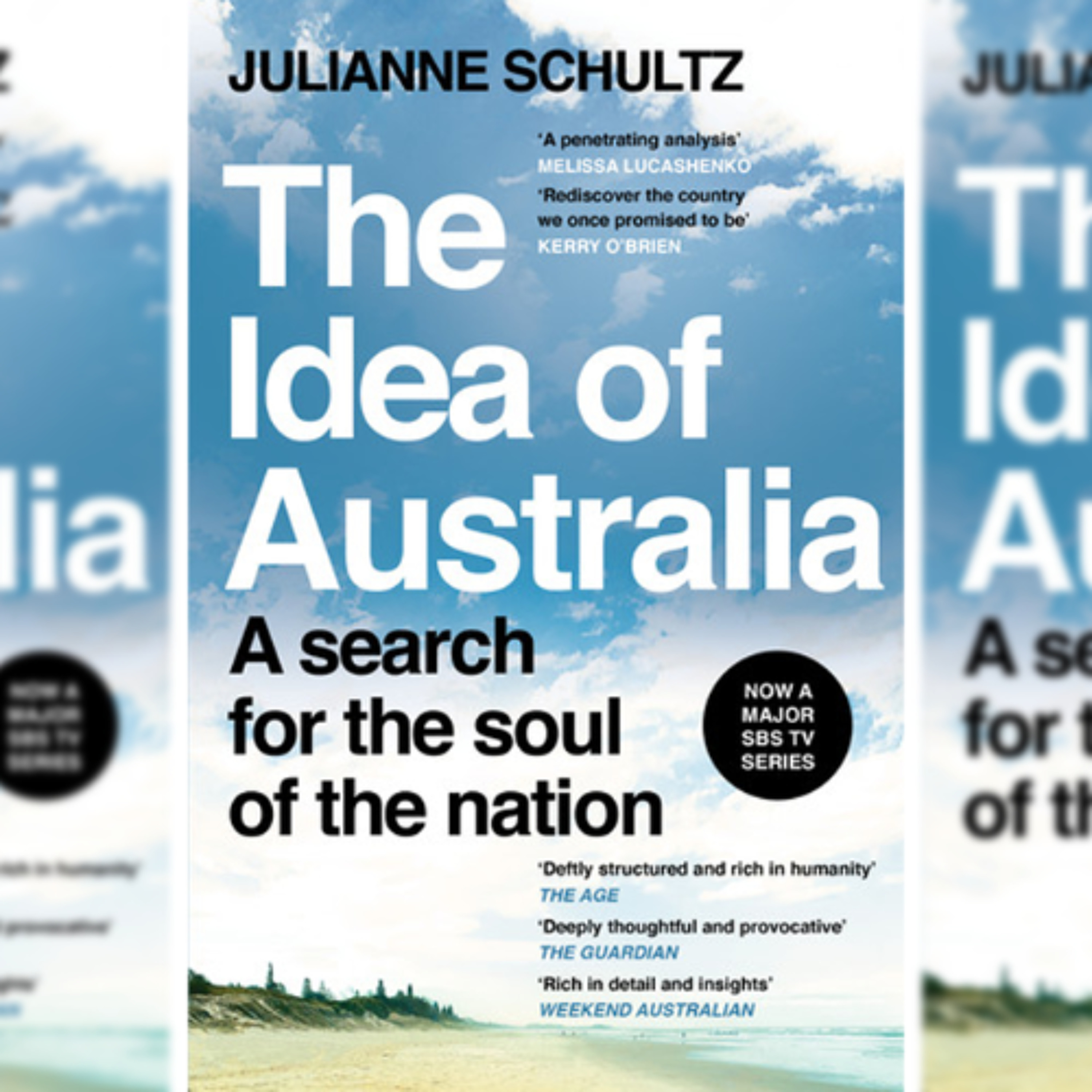
Julianne Schultz was in conversation with Allan Behm on the updated edition of her bookThe Idea of AustraliaA search for the soul of the nation. Its publication complements the October SBS four-part series, hostedby Rachel Griffiths,inspired by, and based on, Julianne Schultz’s book. What is the ‘idea of Australia’? What defines the soul of our nation? Are we an egalitarian, generous, outward-looking country? Or is Australia a place that has retreated into silence and denial about the past and become selfish, greedy and insular? These were some of the questions Julianne Schultz set out to answer when she wrote the book, in part using the pandemic as an X-ray, to trace strengths and weaknesses in the stories we tell ourselves. As the executive producer of the Blackfella Films/SBS series two years later, and after the defeat of the Voice referendum, the questions still loomed. A lifetime of watching Australia as a journalist, editor, academic and writer has given Julianne Schultz a unique platform from which to ask and answer these critical questions. The series explores these questions with a ruch montage of leading experts, family stories and a unique use of the contemporary archive. It doesn't flinch from the past, but points to a hopeful future. Schultz came to realise that the idea of Australia is a contest between those who are imaginative, hopeful, altruistic and ambitious, and those who are defensive and inward-looking. She became convinced we need to acknowledge and better understand our past to make sense of our present and build a positive and inclusive future. She suggests what Australia could be: smart, compassionate, engaged, fair and informed. This important, searing and compelling book explains us to ourselves and suggests ways Australia can realise her true potential. Urgent, inspiring and optimistic, The Idea of Australia presents the vision we need to fully appreciate our great strengths and crucial challenges. Julianne Schultz AM FAHA FRSN is Professor Emerita of Humanities, Languages and Social Science, Griffith University. She was the publisher and founding editor of Griffith Review from 2003-2021 and Professor of Media and Culture in the Griffith Centre for Social and Cultural Research, Griffith University. She was the Chair of The Conversation Media Group from 2019 until 2023. She is a member of the board of the Sydney Writers Festival, writes a fortnightly column for The Guardian and is an acclaimed author of several books, including Reviving the Fourth Estate and Steel City Blues. She became a Member of the Order of Australia for services to journalism and the community in 2009, an honorary fellow of the Australian Academy of Humanities in 2010 and a Fellow of the Royal Society NSW in 2023. Allan Behm, Senior Advisor, International & Security Affairs Program at the Australia Institute, Canberra, specialises in international and security policy development, political and security risk evaluation, policy analysis and development, and negotiating the policy/politics interface. Following a career spanning nearly 30 years in the Australian Public Service, he was Chief of Staff to Minister for Climate Change and Industry Greg Combet (2009 to 2013) and senior advisor to the Shadow Minister for Foreign Affairs, Senator Penny Wong (2017–19). He has a significant publishing record and is a respected commentator in both the electronic and print media. The vote of thanks was given by Professor Kate Fullagar FAHA, Institute for Humanities and Social Sciences, Australian Catholic University.

Julianne Schultz was in conversation with Allan Behm on the updated edition of her bookThe Idea of AustraliaA search for the soul of the nation. Its publication complements the October SBS four-part series, hostedby Rachel Griffiths,inspired by, and based on, Julianne Schultz’s book. What is the ‘idea of Australia’? What defines the soul of our nation? Are we an egalitarian, generous, outward-looking country? Or is Australia a place that has retreated into silence and denial about the past and become selfish, greedy and insular? These were some of the questions Julianne Schultz set out to answer when she wrote the book, in part using the pandemic as an X-ray, to trace strengths and weaknesses in the stories we tell ourselves. As the executive producer of the Blackfella Films/SBS series two years later, and after the defeat of the Voice referendum, the questions still loomed. A lifetime of watching Australia as a journalist, editor, academic and writer has given Julianne Schultz a unique platform from which to ask and answer these critical questions. The series explores these questions with a ruch montage of leading experts, family stories and a unique use of the contemporary archive. It doesn't flinch from the past, but points to a hopeful future. Schultz came to realise that the idea of Australia is a contest between those who are imaginative, hopeful, altruistic and ambitious, and those who are defensive and inward-looking. She became convinced we need to acknowledge and better understand our past to make sense of our present and build a positive and inclusive future. She suggests what Australia could be: smart, compassionate, engaged, fair and informed. This important, searing and compelling book explains us to ourselves and suggests ways Australia can realise her true potential. Urgent, inspiring and optimistic, The Idea of Australia presents the vision we need to fully appreciate our great strengths and crucial challenges. Julianne Schultz AM FAHA FRSN is Professor Emerita of Humanities, Languages and Social Science, Griffith University. She was the publisher and founding editor of Griffith Review from 2003-2021 and Professor of Media and Culture in the Griffith Centre for Social and Cultural Research, Griffith University. She was the Chair of The Conversation Media Group from 2019 until 2023. She is a member of the board of the Sydney Writers Festival, writes a fortnightly column for The Guardian and is an acclaimed author of several books, including Reviving the Fourth Estate and Steel City Blues. She became a Member of the Order of Australia for services to journalism and the community in 2009, an honorary fellow of the Australian Academy of Humanities in 2010 and a Fellow of the Royal Society NSW in 2023. Allan Behm, Senior Advisor, International & Security Affairs Program at the Australia Institute, Canberra, specialises in international and security policy development, political and security risk evaluation, policy analysis and development, and negotiating the policy/politics interface. Following a career spanning nearly 30 years in the Australian Public Service, he was Chief of Staff to Minister for Climate Change and Industry Greg Combet (2009 to 2013) and senior advisor to the Shadow Minister for Foreign Affairs, Senator Penny Wong (2017–19). He has a significant publishing record and is a respected commentator in both the electronic and print media. The vote of thanks was given by Professor Kate Fullagar FAHA, Institute for Humanities and Social Sciences, Australian Catholic University.
Interviews with Anupama Chopra Film Companion Anupama Chopra is a film critic, television anchor and book author. She has been writing about Bollywood since 1993. Her work has appeared in publications such as The New York Times, Hindustan Times, The Los Angeles Times and Vogue (India). Here you can find all of her interviews and conversations with Bollywood and Hollywood's leading actors and filmmakers. In short, everything you need to enhance your cinematic experience.Millions of listeners seek out Bingepods (Ideabrew Studios Network content) every day. Get in touch with us to advertise, join the network or click listen to  enjoy content by some of India's top audio [email protected] | Apple Taittriyaka Upanishad by Unknown Loyal Books The word Upanishad (upa-ni-shad) consists of, "Upa" means "near;" "ni" means "down;" "shad" means "to sit." Thus, Upanishad is to sit down near the teacher to discuss, learn, practice, and experience. There are some 200 or more Upanishads. Some are lost and are only known about because of being referenced in other Upanishads. Most of the Upanishads were kept secret for centuries, only passed on to others orally in the form of Shloka (a category of verse line developed from the Vedic Anustubh meter).Taittiriya is a Sanskrit word that means "from Tittiri". The root of this name has been interpreted in two ways: "from Vedic sage Tittiri" or a collection of verses from mythical students who became Tittiris (birds, partridges) in order to gain knowledge.This Upanishad is divided into three sections called Vallis: Siksha (Pronunciation /Instruction) Valli , Ananda (bliss of Brahman) Valli , and Bhrigu (son of Varuna, the god of all water elements) Valli.The chronology of Taittriyaka Upanish Katha Upanishad by Unknown Loyal Books The word Upanishad (upa-ni-shad) consists of, "Upa" means "near;" "ni" means "down;" "shad" means "to sit." Thus, Upanishad is to sit down near the teacher to discuss, learn, practice, and experience. There are some 200 or more Upanishads. Some are lost and are only known about because of being referenced in other Upanishads.Most of the Upanishads were kept secret for centuries, only passed on to others orally in the form of Shloka (a category of verse line developed from the Vedic Anustubh meter).Katha-Upanishad is one the 11 principal Upanishads. Its chronology is contested as being between fifth century BCE and 1st millennium BCE.Katha (Sanskrit: कठ) literally means "distress". Katha Upanishad uses words that symbolically embed and creatively have multiple meanings. For example, a closely pronounced word Katha (Sanskrit: कथा) literally means "story, legend, conversation, speech, tale". All of these related meanings are relevant to the Katha Upanishad.The text presents Death as the T Brihadaranyaka Upanishad Unknown The word Upanishad (upa-ni-shad) consists of, "Upa" means "near;" "ni" means "down;" "shad" means "to sit." Thus, Upanishad is to sit down near the teacher to discuss, learn, practice, and experience. There are some 200 or more Upanishads. Some are lost and are only known about because of being referenced in other Upanishads. Most of the Upanishads were kept secret for centuries, only passed on to others orally in the form of Shlokas (a category of verse line developed from the Vedic Anustubh meter).The Bṛhadāraṇyaka Upanishad (Sanskrit: बृहदारण्यक उपनिषद्) is one of the oldest, mukhya (primary) Upanishads. It is contained within the Shatapatha Brahmana (Brahmana is a collection of ancient Indian texts with commentaries on the Vedas.), which is itself a part of Shukla Yajur Veda. Brihad means great. Aryanka (Snskrit) आरण्यक means means pertaining to the forest. Aranyaka in the Upanishadic context refers to a treatise to be read or expounded by anchorites in the quiet of the fo
URL copied to clipboard!