PodParley PodParley

Meet the author - Liz Cameron

Liz Cameron was in conversation with Alex Sloan o…

An episode of the Experience ANU podcast, hosted by Experience ANU, titled "Meet the author - Liz Cameron" was published on July 30, 2025 and runs 55 minutes.

July 30, 2025 ·55m · Experience ANU

0:00 / 0:00

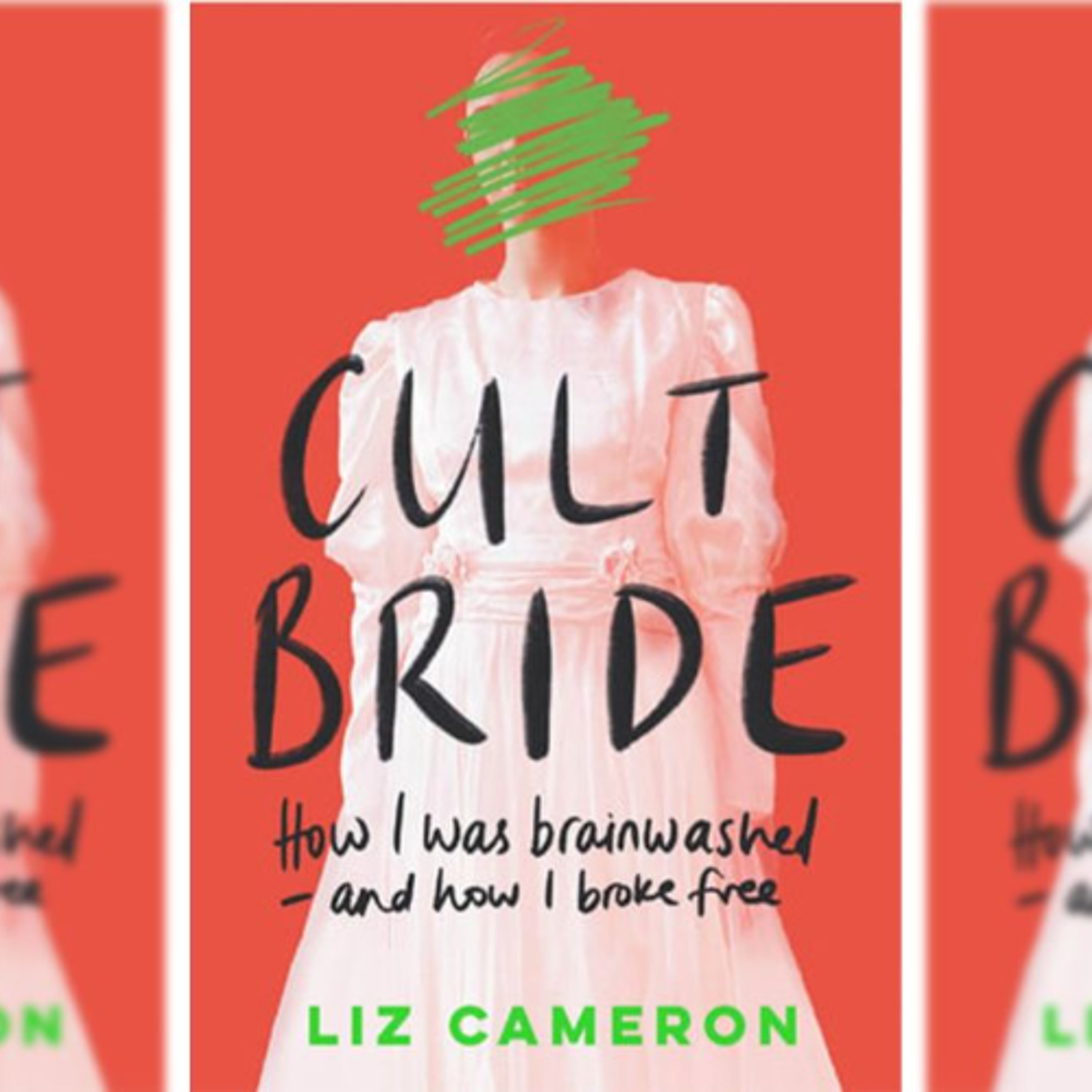
Liz Cameron was in conversation with Alex Sloan on her new book Cult Bride How I Was Brainwashed – and How I Broke Free, ‘an intriguing and powerful memoir,’ in which Liz asks how are people like you and me brainwashed into cults? As an 18 year-old on her gap year in Canberra, Liz is approached at a shopping centre by a woman who asks her survey questions about her Christian faith. Liz is slowly brought into her small, friendly church community – but little does she know that her new ‘friends’ are members of the South Korean cult Providence, which currently operates in more than 70 countries. This is the story of how Liz endured mind-control techniques and a visit to the cult’s convicted serial rapist leader in prison and came out the other side alive. She takes us behind the scenes to show us how cults operate in plain sight – and how we can unpick the systems that enable them to prey on vulnerable people. This powerful, candid memoir tells one woman’s extraordinary story of how she was broken down by a secretive, predatory cult – and how she broke free and remade her life. Pantera publisher, Tom Langshaw, has stated, ‘Liz tells her story with grace and dignity, cleverly supported by research into cult operations and advocacy for policy change. Her memoir is a remarkable personal story of survival with a deeper and more purposeful meaning, exploring the extremes of coercive control and the cults that operate in plain sight’. Liz Cameron grew up in fundamentalist Christianity and was brainwashed into the JMS cult at age 18 in 2011. Since escaping in 2013, she's worked on slowly rebuilding her life while also helping to raise awareness of cults and assist in deprogramming other cult victims. She now resides in Canberra and balances full-time professional work with cult awareness and advocacy, while also studying a psychology degree. In 2023, after flying to South Korea to film the documentary The Cult Next Door for Channel 7's Spotlight program, Liz's public profile grew as she began talking honestly on social media about the insidious nature of cults, cult psychology, and deprogramming. Alex Sloan AM is an award winning journalist, panellist, MC and commentator whose extensive media career spans 30 years, including 27 years with ABC Radio. Alex is a Director and Deputy Chair of Australia's think-tank, The Australia Institute and a Director of The Winston Churchill Memorial Trust. In 2017 Alex was named ACT Citizen of the Year and in 2019 Alex was made a Member of the Order of Australia (AM) for her significant service to the community of Canberra, and to the broadcast media as a radio presenter.

Liz Cameron was in conversation with Alex Sloan on her new book Cult Bride How I Was Brainwashed – and How I Broke Free, ‘an intriguing and powerful memoir,’ in which Liz asks how are people like you and me brainwashed into cults? As an 18 year-old on her gap year in Canberra, Liz is approached at a shopping centre by a woman who asks her survey questions about her Christian faith. Liz is slowly brought into her small, friendly church community – but little does she know that her new ‘friends’ are members of the South Korean cult Providence, which currently operates in more than 70 countries. This is the story of how Liz endured mind-control techniques and a visit to the cult’s convicted serial rapist leader in prison and came out the other side alive. She takes us behind the scenes to show us how cults operate in plain sight – and how we can unpick the systems that enable them to prey on vulnerable people. This powerful, candid memoir tells one woman’s extraordinary story of how she was broken down by a secretive, predatory cult – and how she broke free and remade her life. Pantera publisher, Tom Langshaw, has stated, ‘Liz tells her story with grace and dignity, cleverly supported by research into cult operations and advocacy for policy change. Her memoir is a remarkable personal story of survival with a deeper and more purposeful meaning, exploring the extremes of coercive control and the cults that operate in plain sight’. Liz Cameron grew up in fundamentalist Christianity and was brainwashed into the JMS cult at age 18 in 2011. Since escaping in 2013, she's worked on slowly rebuilding her life while also helping to raise awareness of cults and assist in deprogramming other cult victims. She now resides in Canberra and balances full-time professional work with cult awareness and advocacy, while also studying a psychology degree. In 2023, after flying to South Korea to film the documentary The Cult Next Door for Channel 7's Spotlight program, Liz's public profile grew as she began talking honestly on social media about the insidious nature of cults, cult psychology, and deprogramming. Alex Sloan AM is an award winning journalist, panellist, MC and commentator whose extensive media career spans 30 years, including 27 years with ABC Radio. Alex is a Director and Deputy Chair of Australia's think-tank, The Australia Institute and a Director of The Winston Churchill Memorial Trust. In 2017 Alex was named ACT Citizen of the Year and in 2019 Alex was made a Member of the Order of Australia (AM) for her significant service to the community of Canberra, and to the broadcast media as a radio presenter.
Interviews with Anupama Chopra Film Companion Anupama Chopra is a film critic, television anchor and book author. She has been writing about Bollywood since 1993. Her work has appeared in publications such as The New York Times, Hindustan Times, The Los Angeles Times and Vogue (India). Here you can find all of her interviews and conversations with Bollywood and Hollywood's leading actors and filmmakers. In short, everything you need to enhance your cinematic experience.Millions of listeners seek out Bingepods (Ideabrew Studios Network content) every day. Get in touch with us to advertise, join the network or click listen to  enjoy content by some of India's top audio [email protected] | Apple Taittriyaka Upanishad by Unknown Loyal Books The word Upanishad (upa-ni-shad) consists of, "Upa" means "near;" "ni" means "down;" "shad" means "to sit." Thus, Upanishad is to sit down near the teacher to discuss, learn, practice, and experience. There are some 200 or more Upanishads. Some are lost and are only known about because of being referenced in other Upanishads. Most of the Upanishads were kept secret for centuries, only passed on to others orally in the form of Shloka (a category of verse line developed from the Vedic Anustubh meter).Taittiriya is a Sanskrit word that means "from Tittiri". The root of this name has been interpreted in two ways: "from Vedic sage Tittiri" or a collection of verses from mythical students who became Tittiris (birds, partridges) in order to gain knowledge.This Upanishad is divided into three sections called Vallis: Siksha (Pronunciation /Instruction) Valli , Ananda (bliss of Brahman) Valli , and Bhrigu (son of Varuna, the god of all water elements) Valli.The chronology of Taittriyaka Upanish Katha Upanishad by Unknown Loyal Books The word Upanishad (upa-ni-shad) consists of, "Upa" means "near;" "ni" means "down;" "shad" means "to sit." Thus, Upanishad is to sit down near the teacher to discuss, learn, practice, and experience. There are some 200 or more Upanishads. Some are lost and are only known about because of being referenced in other Upanishads.Most of the Upanishads were kept secret for centuries, only passed on to others orally in the form of Shloka (a category of verse line developed from the Vedic Anustubh meter).Katha-Upanishad is one the 11 principal Upanishads. Its chronology is contested as being between fifth century BCE and 1st millennium BCE.Katha (Sanskrit: कठ) literally means "distress". Katha Upanishad uses words that symbolically embed and creatively have multiple meanings. For example, a closely pronounced word Katha (Sanskrit: कथा) literally means "story, legend, conversation, speech, tale". All of these related meanings are relevant to the Katha Upanishad.The text presents Death as the T Brihadaranyaka Upanishad Unknown The word Upanishad (upa-ni-shad) consists of, "Upa" means "near;" "ni" means "down;" "shad" means "to sit." Thus, Upanishad is to sit down near the teacher to discuss, learn, practice, and experience. There are some 200 or more Upanishads. Some are lost and are only known about because of being referenced in other Upanishads. Most of the Upanishads were kept secret for centuries, only passed on to others orally in the form of Shlokas (a category of verse line developed from the Vedic Anustubh meter).The Bṛhadāraṇyaka Upanishad (Sanskrit: बृहदारण्यक उपनिषद्) is one of the oldest, mukhya (primary) Upanishads. It is contained within the Shatapatha Brahmana (Brahmana is a collection of ancient Indian texts with commentaries on the Vedas.), which is itself a part of Shukla Yajur Veda. Brihad means great. Aryanka (Snskrit) आरण्यक means means pertaining to the forest. Aranyaka in the Upanishadic context refers to a treatise to be read or expounded by anchorites in the quiet of the fo
URL copied to clipboard!