
EPISODE · Feb 6, 2026 · 33 MIN
Menopause and the Link to Alzheimer's Brain Changes
from Whole Life Studio · host Norse Studio
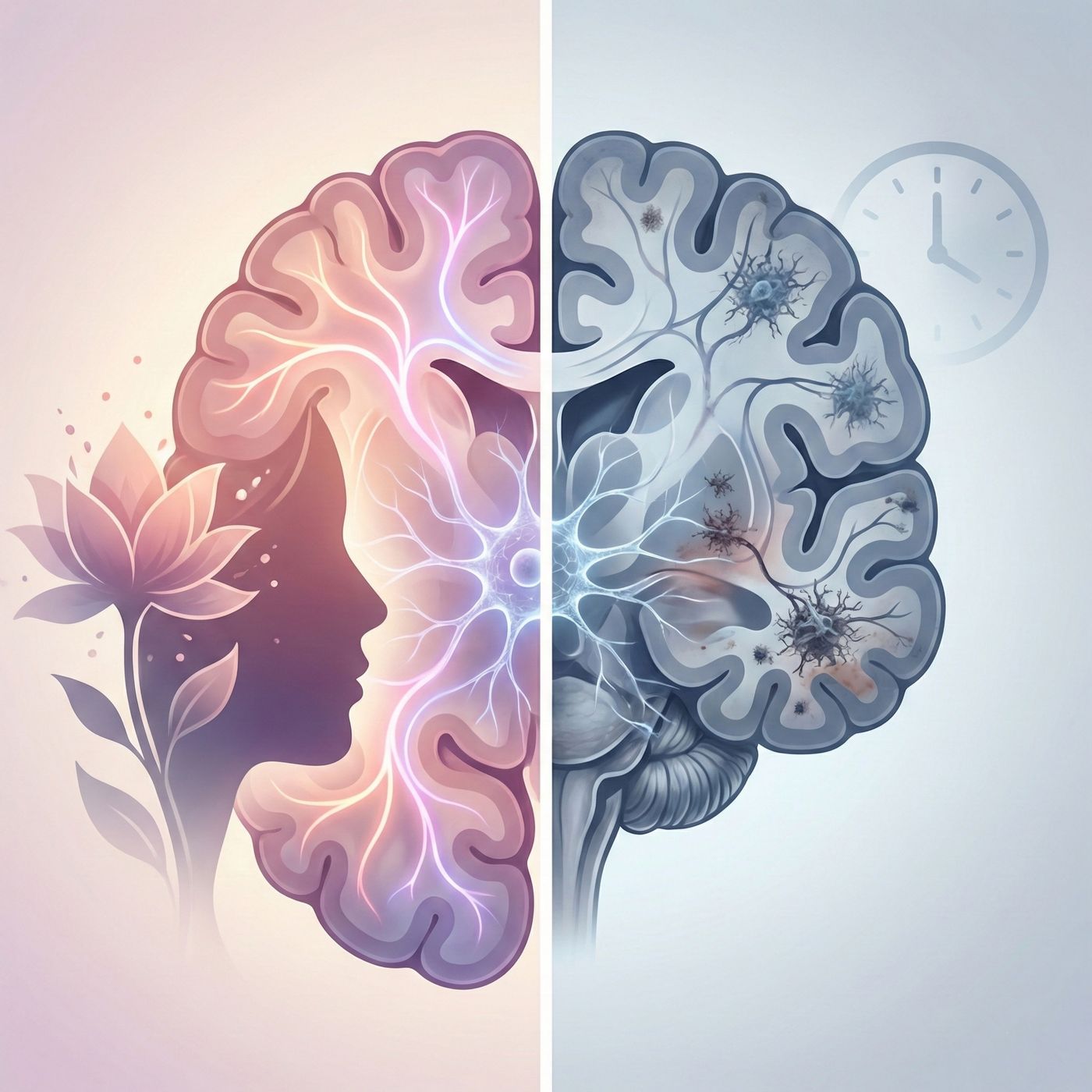
Recent comprehensive research conducted in the United Kingdom has identified a significant link between menopause and brain changes that mirror those observed in Alzheimer’s disease. Based on data from nearly 125,000 women—approximately 11,000 of whom underwent MRI scans—scientists observed a loss of gray matter in brain regions associated with memory and emotion. This structural decline may help explain why women are nearly twice as likely to develop dementia compared to men.The study, published in the journal Psychological Medicine, highlights that the affected areas are those typically damaged by Alzheimer's. These include the hippocampus, which is essential for learning and memory; the entorhinal cortex, necessary for memory formation and spatial orientation; and the anterior cingulate cortex, which regulates attention and emotions. Gray matter, composed of nerve cell bodies and dendrites, is vital for neural communication, whereas white matter consists of the long axons that transmit impulses to distant areas.According to Professor Barbara Sahakian from the University of Cambridge, these changes may leave women more vulnerable to cognitive issues later in life. Interestingly, the study found that hormone replacement therapy (HRT) did not appear to prevent the loss of gray matter. While HRT is a standard and effective method for treating physical symptoms like hot flashes and sleep disturbances, its long-term impact on brain health is still a subject of scientific debate. In Poland, the Polish Menopause and Andropause Society (PTMA) supports menopausal hormone therapy as a safe option for healthy women, particularly those under 60 or within ten years of the onset of menopause. However, experts acknowledge that current understanding of how menopause and HRT affect memory, mood, and brain structure remains limited.The disparity between genders is evident in health statistics. In the UK, women make up about two-thirds of those living with Alzheimer's. A similar trend exists in Poland, where 2023 data from the National Health Fund (NFZ) shows that out of roughly 366,000 to 382,600 people treated for Alzheimer's and related dementias, 67% were women.While hormonal shifts are a significant factor, researchers emphasize that lifestyle choices can mitigate risks. Regular physical activity, avoiding smoking, and limiting alcohol consumption are key strategies for maintaining brain health. Furthermore, Dr. Christelle Langley stresses that the psychological challenges of menopause should not be overlooked. She urges a greater sensitivity toward women's mental health during this transition, emphasizing that there is no shame in seeking support for the emotional and cognitive difficulties that can occur. Hosted on Acast. See acast.com/privacy for more information.Become a supporter of this podcast: https://www.spreaker.com/podcast/whole-life-studio--6886552/support.
Embed this episode
Ready to play
Menopause and the Link to Alzheimer's Brain Changes
No transcript for this episode yet
Similar Episodes
No similar episodes found.
Similar Podcasts
No similar podcasts found.