
EPISODE · Feb 23, 2026 · 41 MIN
Micro 42: Adenoviruses
from Clinical Deep Dives · host Dr Manaan Kar Ray
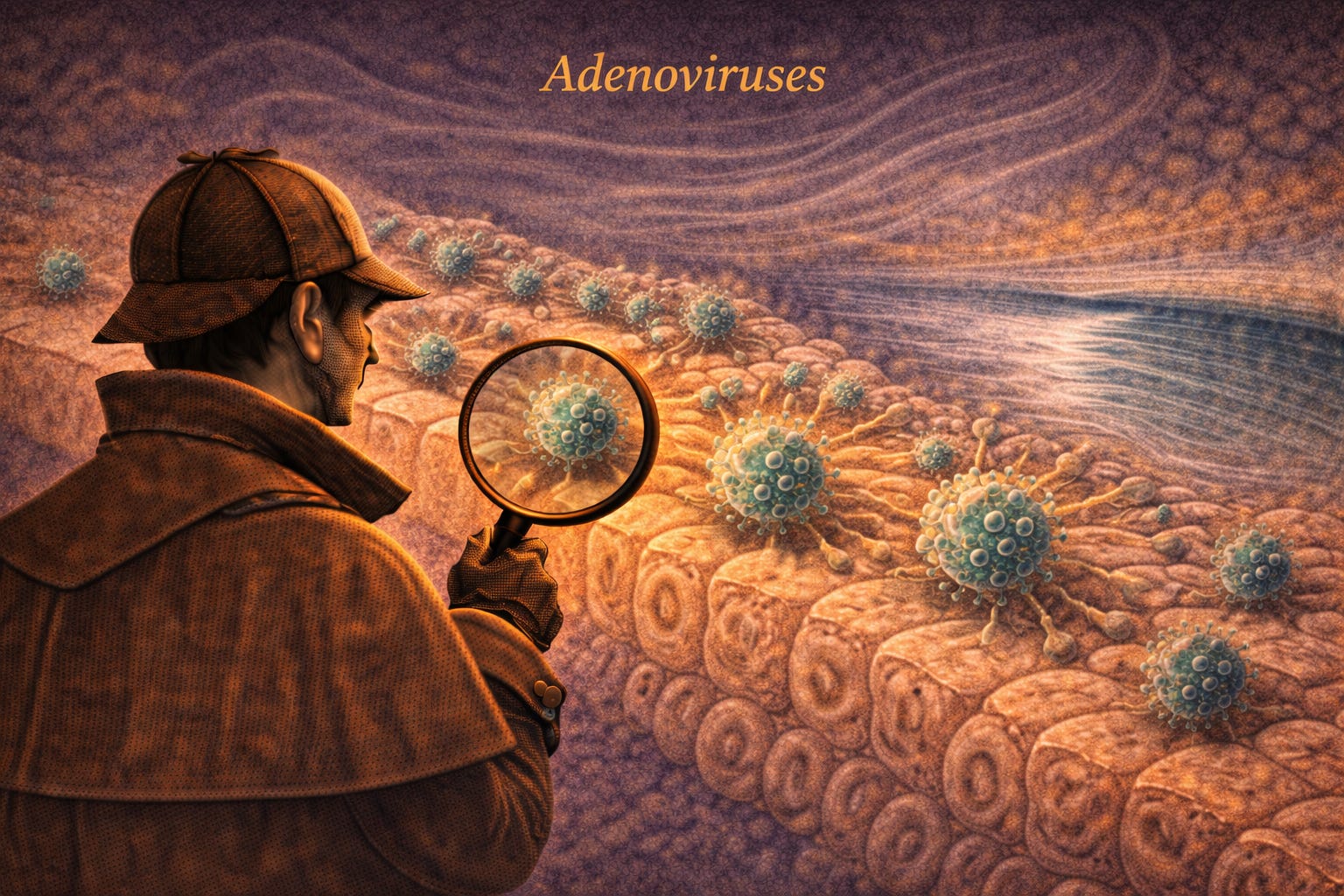
This episode explores adenoviruses, medium-sized, non-enveloped double-stranded DNA viruses known for environmental resilience and broad tissue tropism. Drawing from Murray’s Chapter 42, it examines how structural stability supports widespread transmission.The narrative begins with viral architecture: icosahedral symmetry with distinctive fibre projections that mediate cellular attachment. Their lack of an envelope makes them resistant to drying, detergents, and environmental stress - enabling efficient spread in community settings.Clinically, adenoviruses are associated with:* Pharyngitis and respiratory illness* Conjunctivitis, including epidemic keratoconjunctivitis* Gastroenteritis, particularly in children* Haemorrhagic cystitis* Severe disease in immunocompromised hostsThe episode emphasises inflammatory pathology rather than latency. Unlike herpesviruses, adenoviruses generally cause acute, self-limited infection, though they may persist in lymphoid tissue.Conceptually, adenoviruses represent structural durability paired with mucosal targeting. Clinically, infection control - especially in institutional settings - becomes central.Key Takeaways* Adenoviruses are non-enveloped double-stranded DNA viruses* Environmental stability enhances transmission* Commonly cause respiratory and ocular infections* Severe disease may occur in immunocompromised patients* Infection control limits outbreaks This is a public episode. If you'd like to discuss this with other subscribers or get access to bonus episodes, visit drmanaankarray.substack.com/subscribe
Embed this episode
Ready to play
Micro 42: Adenoviruses
No transcript for this episode yet
Similar Episodes
No similar episodes found.
Similar Podcasts
No similar podcasts found.