
EPISODE · Feb 24, 2026 · 1H 23M
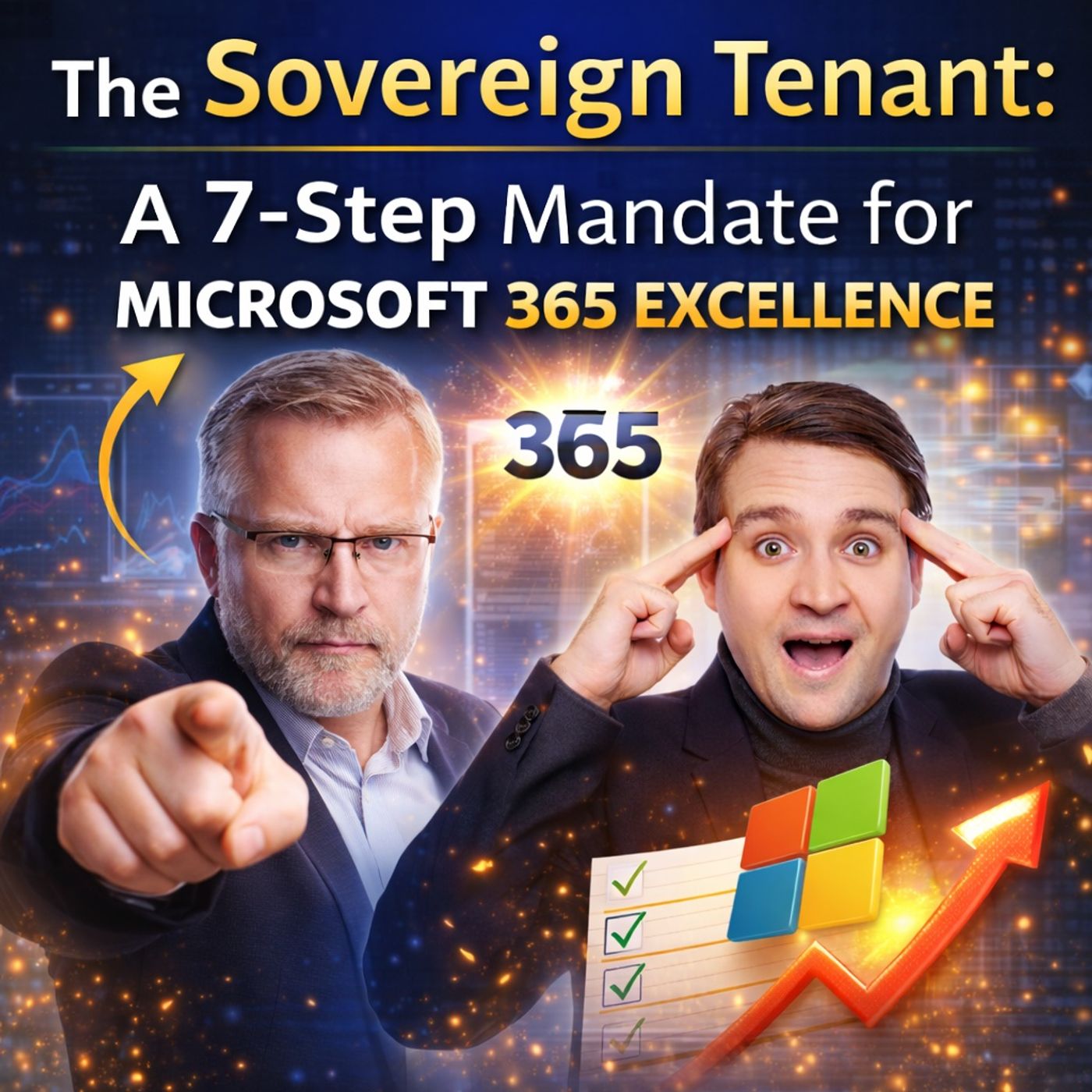
Microsoft 365 Governance: The Sovereign Tenant Framework (7 Steps to Control, Security and Architecture Excellence)
from M365.FM - Modern work, security, and productivity with Microsoft 365 · host Mirko Peters - Founder of m365.fm, m365.show and m365con.net
Microsoft 365 Governance: The Sovereign Tenant Framework (7 Steps to Control, Security and Architecture Excellence) In this episode, you’ll learn why most Microsoft 365 environments fail not because of missing tools, but because they lack sovereignty. You’ll understand how to transform your tenant from a loosely configured environment into a controlled, deterministic system that governs identity, data, and operations.why most Microsoft 365 tenants operate without real controlhow sovereignty defines security, governance, and system behaviorwhy architecture determines whether your tenant works for you or against youThis episode is ideal for architects, consultants, and IT professionals working with Microsoft 365, governance, and security.WHY MOST TENANTS ARE NOT IN CONTROLMost organizations treat their Microsoft 365 tenant as a configuration container. They configure settings, deploy tools, and react to issues as they appear. But this approach creates a dangerous illusion. The system continues to run, but no one is truly controlling it. Over time, this leads to:configuration driftpermission sprawlsecurity gapsuncontrolled growthThis is not a tooling problem.It is an architectural problem.WHAT “SOVEREIGN TENANT” REALLY MEANSA sovereign tenant is not about compliance checklists or best practices. It is about control. It means your Microsoft 365 environment behaves in a predictable, enforceable, and auditable way. Sovereignty in cloud systems is fundamentally about control over data, identity, and operations In this model:the system enforces rules automaticallyidentity defines decisionsgovernance is embedded, not documentedYou are not reacting to the system.The system behaves exactly as designed.THE 7-STEP SOVEREIGN TENANT FRAMEWORKThe Sovereign Tenant Framework introduces a structured model for achieving this level of control. It is not a checklist. It is an architectural mandate. At a high level, it includes seven core layers:identity as a decision engine instead of a directorystrict tenant boundaries and isolationconfiguration as code to eliminate driftlifecycle governance to control tenant sprawlgovernance of AI agents and automation identitiesdeterministic operations instead of manual processescontinuous sovereignty as an ongoing disciplineEach layer reinforces the others. If one is missing, the system becomes unstable.IDENTITY AS THE FOUNDATIONEverything starts with identity. In a sovereign tenant, identity is not just authentication.It is the system that decides:who gets accesswhen access is grantedunder which conditionsWithout deterministic identity, governance collapses. This is why modern Microsoft environments treat identity as the control plane of the system.BOUNDARIES CREATE CONTROLMost organizations think of restrictions as limitations. But in reality, boundaries create stability. A sovereign tenant enforces:explicit trust relationshipscontrolled data flowsclear separation between environmentsWithout boundaries, systems become unpredictable. And unpredictability is where risk lives.CONFIGURATION DRIFT IS THE ENEMYOne of the biggest hidden problems in Microsoft 365 is drift. Small changes accumulate over time.exceptions are addedpermissions are expandedconfigurations deviate from the original designEventually, the system no longer reflects its intended architecture. This is why configuration must be treated as code. Only approved, version-controlled changes should exist.WHY AI MAKES THIS MORE CRITICALAI changes the scale of everything. Copilot and agents operate on your existing system. They do not create new problems.They amplify existing ones.bad permissions become visible at scalemisconfigurations spread fasterweak governance turns into systemic riskWithout sovereignty, AI accelerates failure.FROM GOVERNANCE TO SOVEREIGNTYTraditional governance focuses on policies and documentation. But policies do not control systems. Only architecture does. Sovereignty means:enforcement instead of guidelinesautomation instead of reviewsdesign instead of reactionIt is governance turned into a system property.FROM TENANT TO OPERATING SYSTEMIf you are working with Microsoft 365, this episode helps you rethink your tenant. It is not just a container for tools. It is the operating system of your organization. And like any operating system, it must be:controlledpredictablesecureThe difference is simple: You either run your tenant…or your tenant runs you. KEY TAKEAWAYSmost Microsoft 365 tenants lack real controlsovereignty is about architecture, not complianceidentity is the foundation of governanceconfiguration drift destroys system integrityAI amplifies existing design problemssovereignty requires continuous enforcementQUOTES FROM THIS EPISODE"Your tenant is either sovereign or vulnerable.""Governance without enforcement is illusion.""Identity is your decision engine."TOOLS AND TOPICSSovereign Tenant - controlled Microsoft 365 architectureIdentity Governance - decision-based access controlConfiguration as Code - eliminating driftTenant Boundaries - enforcing system separationAI Governance - managing autonomous agentsDeterministic Systems - predictable system behaviorBecome a supporter of this podcast: https://www.spreaker.com/podcast/m365-fm-modern-work-security-and-productivity-with-microsoft-365--6704921/support.
Embed this episode
NOW PLAYING
Microsoft 365 Governance: The Sovereign Tenant Framework (7 Steps to Control, Security and Architecture Excellence)
No transcript for this episode yet
Similar Episodes
No similar episodes found.
Similar Podcasts
No similar podcasts found.