
EPISODE · May 21, 2026 · 40 MIN
Misguided: The Soundtrack To My Life
from Misguided: The Soundtrack To My Life · host Perry Bulwer Misguided No More
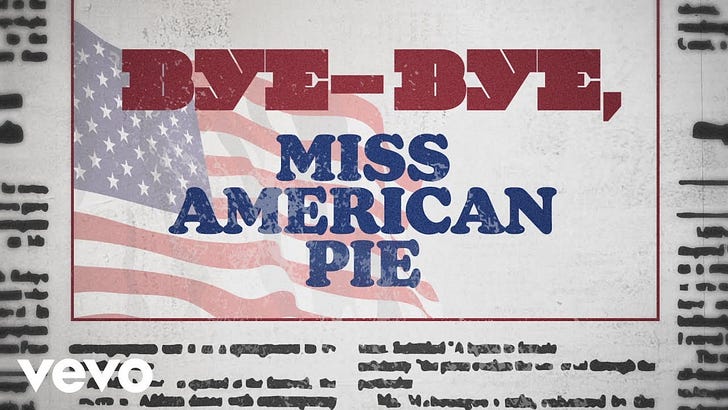
Chapter 7 – Fleeing Babylon The W***eMusic featured in this chapter:American Pie – Don McLeanI Shall Be Released – Bob DylanHuman Be-In videos from the first one in San Francisco and later ones in VancouverKohoutek – R.E.M.The Message Of Jeremiah - J. RusselThis chapter in my memoir opens with these paragraphs:The Children of God in the U.S. and Canada began fleeing to foreign mission fields in 1971, heeding Berg’s doomsday warnings about the impending destruction of America. That same year, Don McLean released his album American Pie, and the title track became a number one hit in 1972. Although McLean has always refused to explain the meaning of the song or confirm interpretations of its many cultural allusions, he did say he was reflecting on the decline of America when he wrote it.Berg’s interpretation of the lyrics twisted the song’s metaphors to fit his doomsday message. In the Mo Letter “Bye, Bye, Pie”, Berg said the broken church bells and the children screaming in the streets represented the Children of God decrying the ineffective church system and warning of God’s abandonment of America, which he claimed was depicted as the Father, Son, and Holy Ghost taking the last train to the coast when the music died. He wrote that the song was “an uncanny prophetic parable about the death of America”, and he connected it to his 1961 Message of Jeremiah doomsday prophecy:It not only mourns the passing of America, but also the death of a lost generation and the end of their music of hopefulness! In fact, I am sure that the inspiration of this ballad of gloom goes far beyond the significance the composer dreamed! The kids understand its spirit even if they don’t comprehend the meaning of the words. It’s like the lamentations of Jeremiah over the ruins of Jerusalem. It’s youth’s lament over the death of America and the music that died with her and her lost generation. … This song reminds me of what God gave us about America in ‘America the W***e’, as Babylon in the Bible, Revelation 18:21-22: “Thus with violence shall that great city Babylon be thrown down and shall be found no more at all!--And the voice of harpers and musicians and of pipers and trumpeters shall be heard no more at all in thee!”Two months before that letter, Berg published “America the W***e”, claiming that the U.S. was “tottering and reeling on the brink of economic and political disaster, about to fall to her doom, a perfect picture of the certain self-destruction of corrupt Capitalism by its own selfish weakness and rottenness and cruelty, as predicted by both Marx and the Bible! … and when she falls, the whole world capitalistic System is bound to fall with her!” Many Mo Letters in that period contained similarly extreme anti-American diatribes warning of its impending destruction, and pushing members still there to flee to foreign fields.The lyrics in McLean’s epic song, with their many references to songs, personalities and pop culture, capture the zeitgeist of the 1960s perhaps even better than Dylan’s Murder Most Foul does.American Pie – Don McLeanDid you write the book of love? And do you have faith in God above If the Bible tells you so? Now, do you believe in rock ‘n’ roll? Can music save your mortal soul? ... Oh, and there we were all in one place A generation lost in space With no time left to start again ... I went down to the sacred store Where I’d heard the music years before But the man there said the music wouldn’t play And in the streets, the children screamed The lovers cried and the poets dreamed But not a word was spoken The church bells all were broken And the three men I admire most The Father, Son and the Holy Ghost They caught the last train for the coast The day the music died And they were singing bye, bye, Miss American PieIn the early years of the Children of God, before it had an extensive catalogue of songs written by members specifically based on the cult’s teachings, we also sang some well known gospel songs, such as Oh Happy Day, which was a big hit in 1967. However, I was unaware at the time that some songs we sang paraphrased hit pop songs of the day, replacing some lyrics with religious words, phrases and imagery. This confused me when I went home for Christmas 1972, only about 9 months after I had left home to “join” the cult.At the end of November I moved to Vancouver. As Christmas approached, the leader advised those of us with families in the province to go visit them over the holidays. Though partly a public relations ploy to convince critics we were not brainwashed captives, it was also a test of commitment that weeded out those who were weak in faith and not fully dedicated disciples. Not everyone who went home for Christmas returned to the group. It was the first time I went anywhere alone since joining about nine months earlier.Once I was on my own in Port Alberni, without the constant peer pressure from other members, it was the best opportunity anyone would have to try and persuade me to drop out of dropping out and return to normal life. With each move to a new commune, I was getting farther away from my family. That visit was the last chance for someone to offer me guidance and suggest alternatives to life with the Children of God. I might’ve been susceptible to such persuasion.I stayed two weeks, which was longer than I had planned. Perhaps I was just enjoying the comforts of home, or maybe I lingered because subconsciously I hoped someone would intervene and discuss my future with me. I participated in my family’s holiday rituals and visitations with relatives, but I don’t recall having any meaningful conversations.While visiting relatives during that holiday visit, I heard a song played on the radio that really puzzled me. It was Bob Dylan’s I Shall Be Released. I wasn’t very familiar with Dylan’s songs at the time, not like I was with The Beatles, so when I heard it on the radio I was confused. We sang that song in the cult, with the word “light” in the lyric changed to “Lord”, so I thought that somehow our cult song was playing on the radio.I Shall Be Released – Bob DylanI see my light come shining From the west down to the east Any day now, any day now I shall be releasedIn chapters two and three of my memoir and this series I refer to the 1967 Summer of Love, which followed the first Human Be-In in San Francisco earlier that year. That Be-in was imitated in other cities, including Vancouver, British Columbia.... We often got more than enough free food to feed ourselves, so we used some of it in our street evangelism. On weekend evenings we parked our converted school bus on the Granville strip, one of Vancouver’s busiest shopping and entertainment areas. A sign outside our bus advertised free food, usually peanutbutter and banana sandwiches, and our gospel music played over external speakers. Songs and sandwiches were lures we used to try to hook people on Jesus.The summer of 1973 we took the bus to one of the last hippy be-ins in Stanley Park, held annually since the first one there in March 1967, modeled on San Francisco’s Human Be-In that same year. We set up on the edge of the festival, passed out sandwiches, sang songs and witnessed to anyone interested. The Hare Krishna were there too, also giving out free food to the tie-dyed crowd. I often encountered them around Vancouver doing the same things we were. Though we had different religious messages, our proselytizing methods were similar: using music and food to lure people, selling literature on the street, and setting up evangelistic missions abroad. I would next encounter Hare Krishna members on the streets of Japan, and one in an immigration office where we were both being interrogated.The following videos capture some scenes from those musical gatherings.The first Human Be-In takes place in San Francisco’s Golden Gate Park January 14, 1967First Vancouver BE-IN, March 26th 1967Vancouver Easter Be-in, Stanley Park April 6, 1969 [no volume in this video]David Berg had long predicted America’s destruction as a precursor to the rise of the antichrist and the second-coming. Now he believed that a heavenly doomsday messenger confirmed his dire predictions.On March 7, 1973 the Czech astronomer, Lubos Kohoutek, discovered a comet passing through the solar system. Scientists speculated it would produce a spectacular display as it passed by Earth at the end of December that year. Anticipating that effect, various news media, including TIME magazine, described it throughout the ensuing months as the “comet of the century”, until its unimpressive arrival.i Encouraged by those media reports, Berg proclaimed his own ominous prediction. He wrote a couple lettersii about the coming comet before predicting, in the Mo Letter “40 Days!”, that the United States would be destroyed 40 days after Kohoutek appeared.iiiIn a subsequent letter, “The Comet Comes”, Berg discusses an article headlined on the cover of the British magazine SAGA, “The Christmas Comet: Omen of Peace--or Doomsday Messenger?” The article confirmed Berg’s beliefs about comets being harbingers of historically important events. Relying on the article’s questionable scientific and historical claims, other pseudoscience such as predictions by well known astrologers, and his own numerology, Berg agreed with the author that the comet was having negative effects on the world even before it was visible. They both connected a variety of significant political, social, and environmental events around the world to the comet. Berg also believed that the predictions by astrologers matched his own end-time prophecies:All of these predictions coincide almost exactly with the interpretations of Bible prophecy and our own personal revelations in recent years which place the Second Coming of Christ about 1993 after all these foregoing events. What an amazing correlation of the forecasts of scientists, astrologers and prophets alike!ivAlthough Kohoutek was a little brighter than most comets and visible to the naked eye, it didn’t come close to being the comet of the century as expected, disappointing most observers, though not Berg. He simply reinterpreted events after the fact, explaining in the letter “The Comet’s Tale”v that because the Children of God had warned the world with his message, God didn’t need the comet’s tail to be a visual warning sign of doomsday. Whether observable or not, he insisted the comet did portend all the significant world events that preceded its arrival, and the ones he predicted would follow.Kohoutek – R.E.M. Somewhat similar to R.E.M.’s Losing My Religion, which is about unrequited love, in Kohoutek an attractive girl is compared to the comet – flashing, beautiful, and gone all too soon. Interestingly, the cover of the album this song is in shows a bible on fire.She wore bangles, she wore bells on her toes And she jumped like a fish Like a flying friend, you were gone Like Kohoutek, can’t forget thatAlthough the comet itself was a let down, it did help Berg put pressure on his followers to flee America. I was in a group that left for Hawaii on our way to various countries in East and Southeast Asia and the South Pacific thought to be safer in the event of nuclear war.Amos had prearranged for a television reporter from Seattle’s most popular evening news program to come to [our commune] to interview and film the Children of God fleeing America. The morning of our flight, a few days before the end of the year, the reporter interviewed Amos and filmed us packing our vehicles. The TV crew then followed us to the airport, filming our motorcade, which included other members just there for the camera. With the camera rolling, the reporter followed us inside to the check-in counter, and then to the waiting area where we sang the doomsday song “The Message of Jeremiah”.viWhen we arrived in Hawaii later that evening we learned that the final scene of the news report showed our exit through the boarding gate and the plane taking off. Caleb and Lydia, who went to Hawaii several weeks before we did, excitedly told us that the report’s dramatic scenes of the Children of God’s departure from doomed America had been rebroadcast around the country.Message of Jeremiah – words and lyrics by J. Russel, who was a member of the Children of God. As part of our evangelistic doomsday warnings, we frequently sang this song in public, in parks and city streets, while distributing literature, such as America The W***e, referenced at the beginning of this post.The message of Jeremiah God has committed unto my hands. The judgements of God Are soon to be poured out Upon these wicked lands. You better get right with God, Receive Jesus, before it is too late. If you don’t intend to repent, You better prepare To meet your coming fate!i Comet Kohoutek ii David Berg, “The Christmas Monster”, September 8, 1973 ”More on Kohoutek” --The Coming Comet of the Century!, November 4, 1973 iii David Berg, “40 Days!”, November 12, 1973 iv David Berg, ”The Comet Comes”, December 20, 1973, pars.3,33 v David Berg, “The Comet’s Tale”, January 24, 1974, par. 34 vi The Message of Jeremiah song lyrics Full lyrics here: https://www.nubeat.org/audio/1ad/dm-btb/LYR15.html This is a public episode. If you would like to discuss this with other subscribers or get access to bonus episodes, visit perrybulwer344598.substack.com
Embed this episode
NOW PLAYING
Misguided: The Soundtrack To My Life
No transcript for this episode yet
Similar Episodes
No similar episodes found.
Similar Podcasts
No similar podcasts found.