
EPISODE · Jun 15, 2026 · 43 MIN
Misguided: The Soundtrack To My Life
from Misguided: The Soundtrack To My Life · host Perry Bulwer Misguided No More
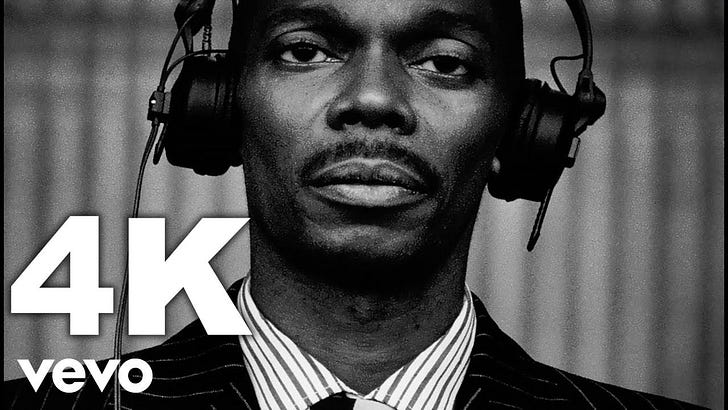
Chapter 22 – Everything Is BrokenMusic featured in this chapter:Insomnia – FaithlessEveryone’ll Let You Down – The Philosopher KingsSave Me – Remy ZeroEverything Is Broken – Bob Dylan (alternate version)In this chapter of my memoir I start by describing the psychotherapy I was eventually able to get after my complex PTSD diagnosis. I also discuss my descent into depression, poverty and homelessness as a result of my cult-related psychological breakdown.Reports of Ricky’s shocking tragedy spread quickly in the global survivor community before it hit the headlines. As I tried to make sense of the stunning news, my mind flashed back to Ricky’s last online message pleading for help to find justice and bring an end to the Family. When I first read it I didn’t think he was actually making a public appeal for people to join him in a murder plot. However, in his video he says that is exactly what he was referring to in that message.Ricky’s video was posted on one of the survivor sites soon after his suicide, but l hadn’t watched it yet when I went to my next session with the psychiatrist. She cautioned that watching it might have a negative effect on me. I knew it would increase my emotional turmoil, but I felt I had to face it full on if I ever hoped to heal. Now that I had finally started to examine my past, I couldn’t turn away from any part of it, no matter how dark, and Ricky’s video is very dark indeed. It was gut-wrenching, heart-breaking, mind-messing to realize that the 13 year old cloistered cult kid I chauffeured several times in Japan was deeply disturbed and suicidal at the time, and was now surrounded by weapons, expressing his mental torment and raging need for revenge.When that tragedy happened, I was still in the process of reading all the articles, documents, and survivor stories on the three websites. As I learned new information, and followed every conversation in the online forums, often discussing issues late into the night, it was emotionally shattering to see the full picture of the Family’s child abuse legacy emerge while putting the pieces together. Seeing things from the perspective of children raised in the cult helped me recognize the systemic abuses that affected all of them in one way or another.What started as background research for this memoir turned into a psychological crisis. After immersing myself every day in cult-related information from various sources — websites, books, academic journals, documentary films — I couldn’t turn my mind off at night, so was getting only about four or five hours of broken sleep. I began to dread going to bed, kept awake with incessant thoughts in my head. As my sleep decreased, my pain increased, eventually spreading throughout my body. I slowly became more anti-social and withdrawn, certain that no one in my family or social circles could understand what I was going through.Insomnia – FaithlessDeep in the bosom of the gentle night Is when I search for the light Pick up my pen and start to write I struggle, I fight dark forces in the clear moonlight Without fear Insomnia I can't get no sleep I used to worry Thought I was going mad in a hurry Getting stressed, making excess mess in darkness No electricity, something's all over me, greasy Insomnia, please release me And let me dream of making mad love to my girl on the heath Tearing off tights with my teeth But there's no release, no peace I toss and turn without cease Like a curse, open my eyes and rise like yeast At least, a couple of weeks since I last slept, kept taking sleepers But now I keep myself pepped Deeper still, that night I write by candlelight, I find insight Fundamental movement, huh, so when it's black This insomniac, take an original tack Keep the beast in my nature under ceaseless attack I gets no sleep I can't get no sleep I need to sleep, I can't get no sleepWhile I waited for my turn in group therapy, I started weekly sessions with a psychologist, a recent graduate with limited clinical experience. Although she read all the psychiatrist’s detailed notes in my file, after a couple conversations it was clear she knew very little about the kinds of cult-related issues I was dealing with. So, I lent her Cults In Our Midst and a VHS video of the 1994 documentary, Children of God.i I was teaching her more than she was helping me.I had a more helpful experience with group therapy, which I started in the summer of 2005. The doctor leading it was one of Canada’s top PTSD specialists, Dr. Greg Passey, a former military psychiatrist recognized internationally for his trauma research and therapy work with UN peacekeeping forces who witnessed genocidal war crimes in Rwanda and Yugoslavia. Now in private practice, he worked primarily with military veterans, police and other emergency first responders.In weekly sessions, Dr. Passey taught us the basic psychological mechanisms of PTSD, and strategies for dealing with the symptoms. None of the other nine people were survivors of an abusive cult, although two of them were sexually abused by Catholic priests. But while we had different traumatic experiences, we all suffered many of the same symptoms. There was a strange comfort in talking to strangers. We helped each other see behaviours and attitudes we didn’t recognize in ourselves until we saw and heard them in each other.Although it wasn’t specifically cult recovery therapy, I began to recognize how much of my mental state and behaviour, both in the cult and after leaving, was caused by undiagnosed complex PTSD. That helped me understand my uncharacteristic reactions in certain situations, how they were connected to past experiences, how those experiences led to ill health, and why I was developing new symptoms after all these years.I found it helpful to understand my experiences in the Family as a spiritual variation of long-term domestic abuse causing battered wife syndrome, a subcategory of PTSD. After all, I had been a bride of Christ according to the Family’s version of bridal theology.I wrote an academic article on the cult’s bridal theology, which was published in the International Cultic Studies Association’s journal International Journal of Coercion, Abuse and Manipulation, Vol 8, 2025.A few months after Ricky’s murder-suicide, before I started group therapy, I travelled to Texas for a weekend conference with about twenty second generation survivors from around the U.S., Canada and Europe. I was one of two former first generation members who were invited. The conference was organized by Julia McNeil,ii who created the Moving On website in 2001 as a safe space for second generation survivors of the Family to find resources, tell their stories, and offer mutual moral support. Over 5000 of Julia’s peers participated on the site.Knowing personally how difficult it was for anyone raised in a socially isolated cult to create a new life after leaving with few resources, little education and no support, Julia helped establish Safe Passage Foundation (SPF),iii in 2003 to assist to those in need. The conference was a brainstorming session on ways to raise awareness of SPF’s work.I couldn’t provide financial assistance to SPF, but I could be an advocate by corroborating the stories of abuse survivors and helping to amplify their voices that some scholars attempted to silence. By now I was aware that there was a division among academics who study groups like the Family.iv One crucial difference is that some accept cult survivor stories as relevant evidence of harms caused by high demand groups, while others doubt, dispute or downplay their claims of abuse. The differences between those two camps are reflected in two academic journals, Cultic Studies Reviewv and Nova Religio.vi The latter refers to “new religious movements”, a term some scholars prefer as it avoids negative connotations associated with the word ‘cult’.I first learned of those academic disputesvii by reading the book Misunderstanding Cults: Searching for Objectivity in a Controversial Field.viii That anthology of articles by scholars who study the subject attempts to bridge the divide through direct discourse between the two sides. The assertions of some of those scholars insinuate that what I personally experienced and witnessed didn’t happen, and that thousands of abuse survivors discussing their experiences on the Moving On website must be exaggerating or lying. That outraged me.I found it extremely frustrating and infuriating that some scholars attacked the credibility of former cult members,ix x stereotyping and smearing them as self-serving liars, while at the same time accepting the truthfulness of accounts by current cult members as if they had no self-interest in lying to protect themselves and their group. That made no sense to me, and seemed to be academic bias. The author of the next book I read displayed that bias in his study of the Family, so I wrote a detailed response hoping it would be published in one of those academic journals.I wrote the article “A Response to James D Chancellors Life In The Family”, which was published in Cultic Studies Review Vol.6, No.2, 2007 to fill in some of the gaps and provide a perspective, that of a former member, not found in James D. Chancellor’s one-sided book Life In The Family: an oral history of the Children of God. Chancellor’s response to my article, and my reply to Chancellor’s response were both published in that same journal. I’ve put the entire article and the two responses on my blog, and included the links where you can find those articles on International Cultic Studies Association website.https://perry-bulwer.blogspot.com/p/response-to-james-d-chancellors-life-in.htmlhttps://articles1.icsahome.com/articles/a-response-to-james-d--chancellor-s-life-in-the-family-an-oral-history-of-the-children-of-godhttps://articles1.icsahome.com/articles/a-response-to-perry-bulwer-s-evaluation-of-life-in-the-familyhttps://articles1.icsahome.com/articles/a-rejoinder-to-james-chancellor-s-response-to-my-articleIn the next part of this chapter in my memoir I describe my descent into depression, poverty and homelessness as a result of my cult-related psychological breakdown.After my PTSD group therapy finished at the end of 2005 I had no further mental health support, and no intimate relationships I could discuss my experiences with. I did tell a few people that I had been in a cult, but no one could easily relate to that, so those uneasy conversations didn’t last long. Since my breakdown I had slowly withdrawn from all the friends I made during my nine years in Vancouver. Depression and widespread chronic pain reduced my desire to socialize, so I stopped most activities I once enjoyed, and isolated myself....I was subsisting on poverty level disability in what was fast becoming one of North America’s most expensive cities. I could no longer afford to live in Vancouver. The rent for my apartment had almost doubled in ten years, and was now 80 percent of my income. The number of homeless in Vancouver more than quadrupled in those years. With no affordable options left, I feared becoming a statistic in that homelessness crisis, so in mid-2007 I moved back to Port Alberni, where my story started, hoping to avoid that ending.Unfortunately, homelessness was increasing everywhere, even in my small home town. I couldn’t find a place that was both affordable on my disability pension and had the kind of quiet environment I needed for my mental health to improve. For the next ten years I languished in unsuitable, substandard housing conditions that triggered my PTSD and worsened my health. I moved six times, fleeing unbearably noisy environments, bad neighbours, and unethical landlords.Lack of medical care added to my struggles after returning to Port Alberni. ...Everyone’ll Let You Down – The Philosopher KingsEveryone'll let you down All good things, and all the bad things They all fall down Everyone'll let you down.I felt abandoned by the medical system, and endangered by government policies that worsened my health and housing crises. I knew that there is a causal connection between mental illness and homelessness, and that many vulnerable citizens who face the same systemic barriers I did end up living on the street. Angered by that ongoing injustice, I decided to fight back by speaking out. Over the next few years, I filed formal complaints with four government agencies, the medical doctors oversight body, and a non-government mental health agency that unethically harmed me and other housing clients.Filing those complaints gave me some hope that I could help improve things, for myself and for everyone else in similar circumstances. However, I received unsatisfactory, bureaucratic responses to all of my complaints. In each case some policy or regulation prevented a remedy for me personally, or resolution of the systemic problems I raised.I remained mired in a deep pit of despair for years, and eventually did become homeless.In 2012, at the height of my health and housing crisis I began watching a digitized copy of the TV series Smallville about Superman’s early years. The theme song for the series is Save Me. Almost every day for several months I would hear those words “somebody save me” and wonder who would save me from my distress. I had been abandoned by the medical system, ignored by the political system, and abused by a prominent mental health advocacy organization that instead of being my advocate in a dispute with an unethical landlord, turned against me with actions that pushed me into homelessness, living on my mum’s couch for 3 months. In the end, it was my mum who saved me from homelessness when she provided the assistance I needed to move into a semi-isolated cabin that was ideal for my mental health and for finishing my memoir. Note the cover photo for the following song, a mother holding her infant.Save Me – Remy ZeroAll my dreams are falling down Crawling round and round and round Somebody save me Let your warm hands break right through it Somebody save me I don't care how you do it, just stay, stay C'mon, I've been waiting for you I see the world has folded in your heart I feel the waves crash down inside And they pull me under All my dreams are fallen down Crawlin' around and 'round and 'round Somebody save meThen right at that lowest point in my life I got lucky. I found a very old cottage on a lake 15 kilometres outside of town. ... I had tried to make a difference for others by fighting the systemic issues I faced when seeking suitable housing and healthcare, but I couldn’t save myself, let alone anyone else. So, I gave up trying to make the world a better place, and concentrated on writing this memoir. From the moment I moved into the semi-isolated log cabin I began to relax and recover from over a decade of overwhelming distress. The idyllic environment is the quietest place I have ever lived, ideal for healing and writing.This is the ending of my story in the final chapter of my memoir. I tell the ending of the cult’s story in the Epilogue. There is no happy ending to my story. Everything in my life is broken. Broken body, broken brain, broken sleep, broken health, broken family, broken relationships, broken friendships, broken finances, broken love, broken hope, broken life. The first chapter of the book started with Dylan lyrics, it’s only fitting the final chapter ends the same way.Everything Is Broken – Bob Dylan (alternate version)Broken nights, broken days Broken leaves on broken trees Broken treaties, broken vows Broken hands on broken ploughs Ain′t use in runnin', honey Ain′t no use talkin' Nothing's workin′ Everything′s broken Broken lives, hangin' by the thread Broken bones in a broken bed Broken mirror, broken charm Broken roads, don′t know where Broken words Never meant to be spoken Can't help it, honey Everything′s broken Broken clock on a broken wall Broken voices in a broken hall Broken beginnings, broken ends Streets are filled with broken hearts Take a deep breath, baby Feel like you're choking Tell me the truth now Everything′s broken Broken flesh on a broken floor Broken key on a broken door Broken idols, broken heroes Broken numbers and left the zeros Hound dogs howling Bull-frogs croaking It ain't easy, baby Everything's brokenI started this story with a Dylan song I heard on the radio. Now, at the end, I’m reminded of another song by him, “Everything Is Broken”. My life is broken. There is no happy ending.Broken family, broken relationships. Gone for years, I was lost to my real family even after I returned. Broken by the fraudulent Family, unable to talk about my experiences, I remained in many ways a stranger to them. My relationship with my dad never recovered. He remained always sarcastic with me, as he was throughout my childhood, which pushed me away, so we never had a meaningful, heartfelt conversation. The emotional attachment between us was broken long ago, so when he lay dying in a hospital a couple hundred miles away in 2015, I didn’t visit him on his deathbed. I might have, if he had asked to see me, but he didn’t. I never shed a tear, and still haven’t. I don’t know if my heart was too hard or too broken for tears.Broken social scene, broken love. Damaged by lies, betrayals and the Family’s tainted love, I’ve had difficulty even expressing the word ‘love’ to those who care for me. My inability to trust people and be open about my past prevented me from forming intimate relationships. Although I’ve had many acquaintances since leaving the cult, in those thirty years I’ve never found deep friendship or true love. I’ve been almost entirely and intentionally celibate, and have always lived alone.Broken finances, broken future. Religious manipulators preying on my ignorant teen naïveté convinced me to waste two of the most potentially productive decades of my life. Trying to warn the world of doomsday and save souls for Jesus before he returned was a fool’s mission doomed from the start. Following a false prophet left me with nothing but the clothes on my back. To make up for lost time, I invested in eight years of schooling, spending tens of thousands of dollars in student loans, but my life broke down before I could take financial advantage of that education. Unable to pay off those loans, I will likely die in debt.Broken health, broken hope. Some wounds never heal. Racked with remorse, and emotional and physical pain from a broken brain that broke my body, I’ve become old before my time. In the beginning, I thought I could save the world with religion. Later, I tried to change the world with protests, politics and law. In the end, I gave up. World-weary, I retreated from it to a life of solitude.One day, when I was about five or six years old, we discovered our dog hiding under the house. She was injured, probably hit by a car. I remember hearing an adult explain that some dogs do that when they are sick or injured. Sometimes, when the pain caused by my dogmatic past is at it’s worst, I remember that dog as I’m curled up alone in a semi-secluded log cabin, licking my wounds.That’s how I ended my story. However, in hindsight, perhaps I should’ve created a footnote to explain that being broken does not mean being useless. If I had, I would’ve added this quotation:We call ourselves broken when, in truth, those cracks may be shaping beauty we can’t yet see. Being broken doesn’t mean being useless. Sometimes, it means we’re quietly giving life to others. Our struggles, scars, or quirks may be the very things that offer comfort, hope, or inspiration to the people around us. https://lifeditsjournal.medium.com/being-broken-doesnt-mean-being-useless-fdb0624d41a2If my memoir and this podcast series has helped just one person, then it’s all worth it.i “Children of God” (1994) ii Julia McNeil iii Safe Passage Foundation iv Michael D. Langone, “The Two “Camps” of Cultic Studies: Time for a Dialogue”, Cultic Studies Journal, 2000, 17, 79-100 v Cultic Studies Review was the journal of the International Cultic Studies Association at the time. vi Nova Religio: The Journal of Alternative and Emergent Religions vii Academic Disputes and Dialogue regarding cults and brainwashing viii Benjamin Zablocki and Thomas Robbins, editors. Misunderstanding Cults: Searching for Objectivity in a Controversial Field. University of Toronto Press, 2001. ix Stephen A. Kent and Kayla Swanson, “The History of Credibility Attacks Against Former Cult Members”, International Journal of Cultic Studies Vol 8, No 2, 2017. This article contains an analyses of two important court cases, one the British child custody case involving the Family, that pitted the testimonies of former members against those of current group members. The researchers “... found that most of the apostates’ information was credible, while current members often lied.” x Carmen Almendros, et al, “Reasons for Leaving: Psychological Abuse and Distress Reported by Former Members of Cultic Groups”, Cultic Studies Review, Volume 8, Number 2, 2009, pages 111-138 This study found that negative experiences reported by former cult members were accurate and credible. It concludes that it may constitute a secondary victimization to presume inaccuracy in former members’ reports of their experiences. This is a public episode. If you would like to discuss this with other subscribers or get access to bonus episodes, visit perrybulwer344598.substack.com
Embed this episode
NOW PLAYING
Misguided: The Soundtrack To My Life
No transcript for this episode yet
Similar Episodes
No similar episodes found.
Similar Podcasts
No similar podcasts found.