
EPISODE · Oct 1, 2020 · 29 MIN
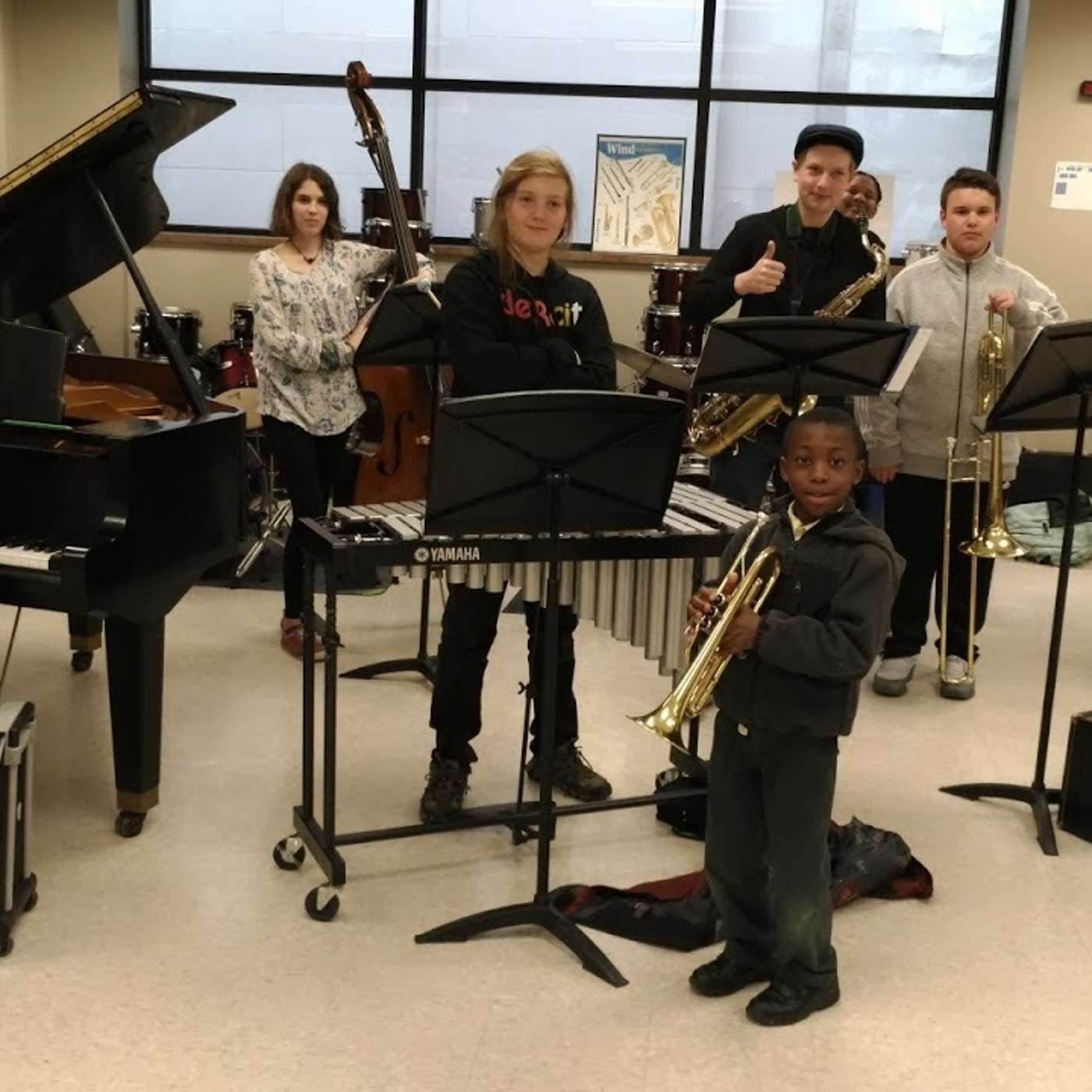
MSU Community Music School-Detroit provides music education for all ages
from MSU Today with Russ White · host Russ White
“Jill runs a really extraordinary program that represents Michigan State so nicely in Detroit on the street named after Jill on Woodward Avenue in Downtown Detroit,” quips Beekman. “So Jill, give us a sense of what the program's about and a little bit of background on what happens at the Community Music School in Detroit.” “We’re in the MSU Detroit Center just a stone's throw from the new Little Caesars Arena,” says Woodward. “And we actually just celebrated our 10th anniversary if you can believe it. I like to say we're one of the best kept secrets in music education in Detroit because we really don't spend as much time as we should tooting our own horn. We’re too busy doing the work. But the Community Music School is another way for MSU to share the resources of the university with Detroiters and with families from across Southeast Michigan. “We provide music for all ages, abilities, and incomes. But what's most important, I think, in this day and age is that we remove the economic barriers to participation in really high-quality music education for our low-income families. When you think about some of the issues that our society is thinking about, especially right now, like diversity, equity, inclusion, and belonging, the arts are one of those things that are not as accessible to everyone as we would hope they might be. It can be very expensive to rent or buy an instrument or to take private lessons, especially if you don't have that in your school. “Dean Forger looked at the situation 10 years ago and was like, ‘Geez, we really have to step up.’ It's important for all children to have access to this curriculum. We know there are just reams of research about the benefits of music study and what that does for people of all ages. But for babies and for youth development, the the skills that we really need for the 21st century economy are built into music study. You might find that a presumptuous statement, but I have a favorite quote from a Nobel Prize winning physicist. And he said that all he needed to learn for success he got from his bassoon teacher. “Kids who have access to music have better academic results and better workforce opportunities. And in general, they tend to have more civic engagement over their lifetime as voters and volunteers. So when we look at music and the skills that it teaches, we tend to think of it as building out the whole citizen. It teaches critical thinking. It teaches abstract math. Because, well, that's what musical notation is; it's all fractions. “We benefit from all the thought leaders at the College of Music who are really innovating music education today. It's not what it was when I was growing up when you learned to play Hot Cross Buns and then you moved on to harder and harder pieces. Today, they're really looking at how music can deliver different concepts including social justice concepts. We worked with some professors at the College of Music to design a curriculum we call Music Empowers. And what that does is use music as a way to introduce kids to social justice concepts.” Woodward explains what culturally relevant pedagogy is and says CMS Detroit teaches music to everyone from babies to seniors and everybody in between. And she describes how the pandemic is impacting their mission. And she details what happens in an infant class. “We are very fortunate to have Dr. Karen Salvador in the College of Music. She’s an internationally renowned expert on early childhood music. Essentially, you grow the majority of your brain synapses between being born and around age six. And music is one of the activities that, unlike just listening passively to music but interacting in a musical engagement, lights up all areas of the brain. And literally, it fuels growth and development. You learn music in the same way you learn language.” Woodward explains the Lonely Instruments in Need of Kids program. “And one of the most exciting things is that we've had 40 program alumni matriculate to MSU. Twenty five were first-generation college students from Detroit. That’s indicative of the talent that we have. There are a lot of young people who just really need additional resources to fulfill their potential. “And most of these kids didn't go on to study music. They're studying biology, and law, and communications, and they're going to be tomorrow's civic leaders in any number of fields. But music was an important tool for them to get to where their destiny needed to take them. And we've had a lot of other kids come through the program and get full scholarships to other places.” Learn more about MSU’s Community School Detroit at www.cms.msu.edu/detroit/ and on Facebook. MSU Today airs every Sunday morning at 9:00 on 105.1 FM, AM 870, and however you stream at home. Follow and subscribe on Spotify, Apple Podcasts, and wherever you get your podcasts.
Embed this episode
What this episode covers
Spartans Athletic Director Bill Beekman talks with Jill Woodward on MSU Today. Jill is director of the MSU Community Music School in Detroit, an arm of the College of Music and an extraordinary enterprise run by Dean Jim Forger and his team.
Ready to play
MSU Community Music School-Detroit provides music education for all ages
No transcript for this episode yet
Similar Episodes
No similar episodes found.
Similar Podcasts
No similar podcasts found.