
EPISODE · Nov 21, 2024 · 12 MIN
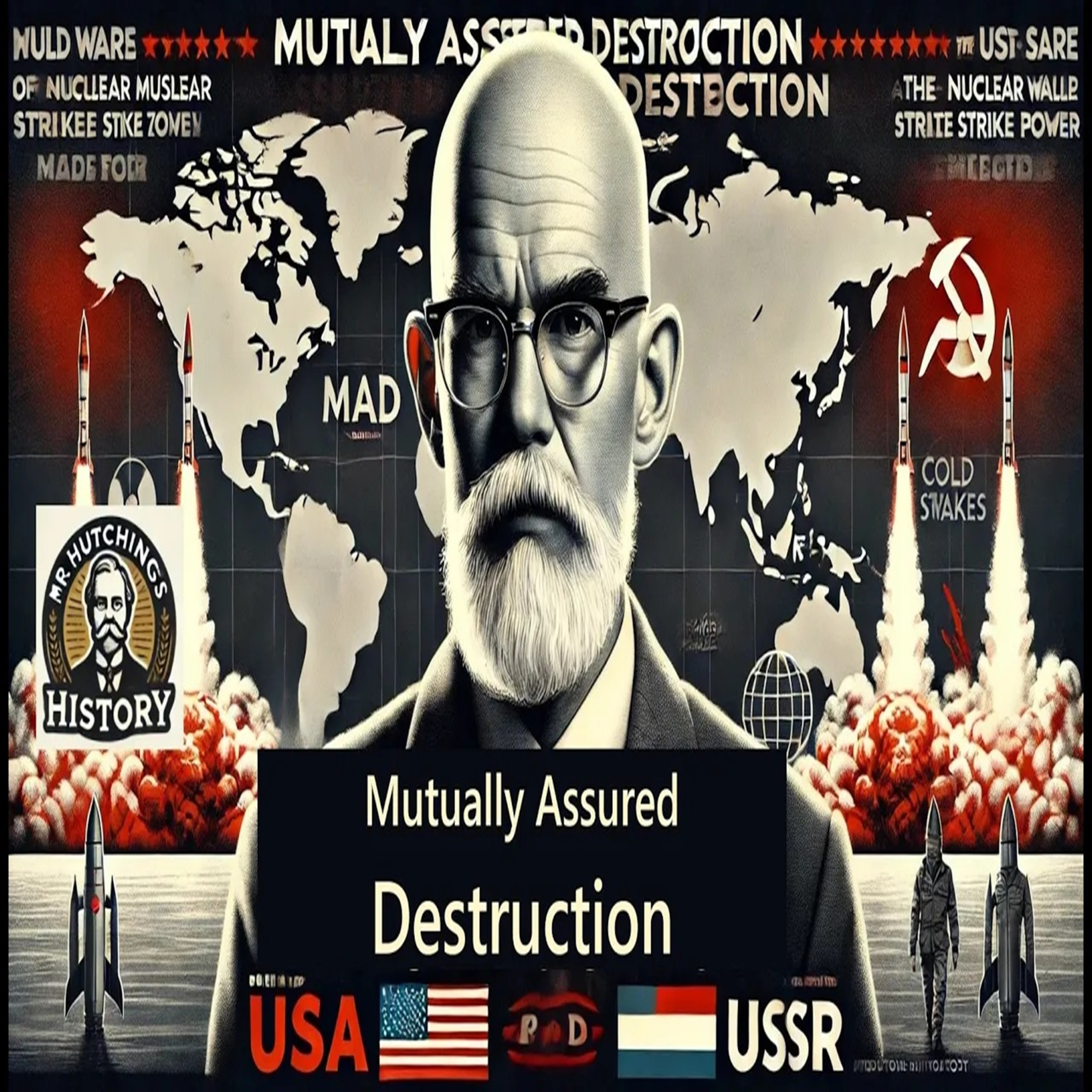
Mutually Assured Destruction (MAD) and the Cold War
from Mr. Hutchings History · host Produced, created, and written by Harold M. Hutchings
Welcome back to Mr. Hutchings History! In today’s episode, we dive deep into the concept of Mutually Assured Destruction (MAD), a cornerstone of Cold War strategy that shaped the rivalry between the United States and the Soviet Union. This doctrine of nuclear deterrence prevented direct superpower conflict but also created a tense, fear-filled global atmosphere. We will examine its origins, impact on major Cold War events, and the lasting legacy of nuclear weapons on international relations.Origins of MAD: Learn how nuclear arsenals large enough to destroy both superpowers multiple times over became the foundation of Cold War strategy.Cold War Impact: Explore key events like the Cuban Missile Crisis and the Berlin Crisis and how MAD shaped their outcomes.Criticism & Legacy: Understand critiques of MAD, from its role in escalating proxy wars to its legacy in today's nuclear security landscape.By the end, you’ll have a clearer understanding of how MAD influenced Cold War dynamics and global peace strategies.#Paper2WorldHistory #ColdWar #MutuallyAssuredDestruction #MAD #NuclearWeapons #CubanMissileCrisis #BerlinCrisis #ColdWarTensions #SovietUnion #USSR #NuclearDeterrence #ColdWarHistory #ArmsRace #NuclearStrategy #JohnLewisGaddis #RobertMcNamaraWorks CitedAlperovitz, Gar.Atomic Diplomacy: Hiroshima and Potsdam. Simon and Schuster, 1965.Gaddis, John Lewis.The Cold War: A New History. Penguin, 2005.Hogan, Michael J.A Cross of Iron: Harry S. Truman and the Origins of the National Security State. Cambridge UP, 1998.McNamara, Robert S.The Fog of War: Eleven Lessons from the Life of Robert S. McNamara. Sony Pictures, 2003.Chapters(0:00) Introduction to MADExploring the origins and significance of Mutually Assured Destruction (MAD) in the Cold War. How did this terrifying concept shape global politics?(1:02) The Core Idea of MADUnderstanding the logic behind MAD: the guarantee of total nuclear retaliation to prevent war. A high-stakes global game of deterrence.(2:05) MAD in Real-World PoliticsHow MAD influenced Cold War diplomacy, decision-making, and military strategies. A look at the ever-present threat of nuclear destruction.(3:34) The Berlin Crisis of 1961A case study of how MAD shaped Cold War conflicts. How tensions over Berlin nearly escalated into direct military confrontation.(5:37) The Arms Race: A Dangerous CompetitionSuperpowers raced to stockpile nuclear weapons, increasing global tensions. How did this relentless buildup make the world more dangerous?(7:00) Arms Control Efforts: Can MAD Be Contained?The challenge of managing nuclear arsenals. The role of treaties like the Strategic Arms Limitation Talks (SALT) in slowing nuclear proliferation.(9:00) The End of the Cold War – But Not MADThe Cold War ended, but the threat didn’t disappear. The collapse of the USSR created new dangers, with nuclear weapons scattered across former Soviet states.(10:37) Proliferation: A New Nuclear AgeThe rise of new nuclear powers like North Korea. How the post-Cold War world struggles with the ongoing risks of nuclear conflict.(11:16) What Comes After MAD?MAD dominated Cold War strategy, but does it still apply today? The challenge of managing nuclear threats in a multipolar world.(12:00) Final Thoughts: The Future of Nuclear StrategyWhy understanding MAD still matters. The need for ongoing discussion and diplomacy to prevent future nuclear crises.
Embed this episode
NOW PLAYING
Mutually Assured Destruction (MAD) and the Cold War
No transcript for this episode yet
Similar Episodes
No similar episodes found.
Similar Podcasts
No similar podcasts found.