
EPISODE · Sep 3, 2025 · 8 MIN
My Grandmother’s Lemon Chiffon Pie
from Story Medicine · host Rebecca Barry
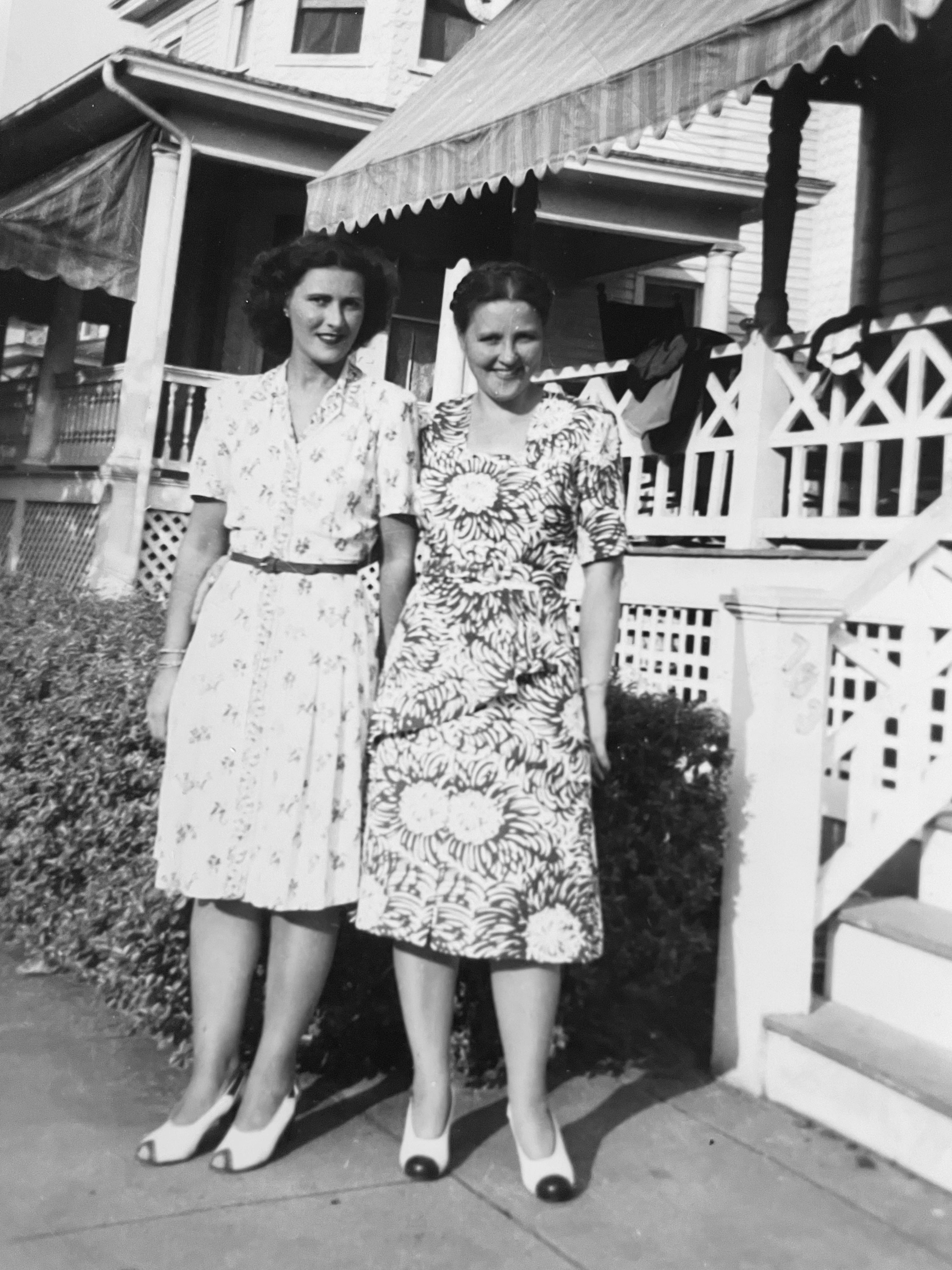
I am thinking about my grandmother’s lemon chiffon pie. This was my mother’s mother, Mary Imm, the oldest daughter in a family of 11 children. When my grandmother came to our house, she’d make chicken broth with celery and beer, pot roast, and homemade coleslaw with green peppers, and the whole house smelled rich and inviting because Grandmama would also put on a pot of coffee in the morning that would brew all day. Neither of my parents liked coffee, but I loved it, so to me, this was heaven. Once I asked her if the coffee she drank from morning to night kept her up, and she said, no, it didn’t bother her. She’d started drinking coffee at age five because that’s what she and her mother did first thing in the morning, sitting on the steps to the kitchen by themselves before everyone else got up and started screaming.My grandmother was brilliant. She never finished high school because when she was in 7th grade she had to go work at a cork factory to help support the family, but she read Proust and Kierkegaard and was a fierce critical thinker. She wanted to be a nurse, but ended up opening a restaurant with my grandpapa, who came here from Germany to get away from fascism. He was also a wonderful cook, although according to my mother, he wanted to be a lion tamer.Their restaurant was in Lancaster, PA, near the New Holland factory. They served dinner—the midday meal—to the factory workers. Roast turkey, pot roasts, mashed potatoes and green beans, freshly made gravy—you get the picture. My grandmother was known for her pies, particularly lemon chiffon.Years later, when my mother was on dialysis, I said, “Let’s do something fun! Let’s cook our way through Grandmama’s recipes!” We started with her lemon chiffon pie. When I asked Mom where the recipe originally came from she didn’t know—she doubted it came from my great grandmother because lemons would have been too expensive—but she had written it down down she first got married. She tried making it for my father once, burned the crust, curdled the lemon and that was it for years. In the middle of making the recipe, Mom said, “You know, about a year before my mother died, I called her up because I wanted to try this pie again. I told her the lemon usually curdled, and she said that was because the heat was too high. She started telling me how to keep the right temperature and while she was talking I started crying. And she said, ‘For goodness sakes, Barbara, what’s wrong?’ And I said, ‘I don’t know! I just…what will I do when you’re gone?’” “What did she say?” I asked.“She said, ‘I don’t know, you’re a putz,’” Mom laughed. “And then she said, ‘Oh, Barbara, you’ll be fine.’ And I was.” “Sort of,” I said. “You grieved your mother for quite a while.”“That’s how I was fine,” Mom said. A week before my mother died, I was in the kitchen, making a quiche. Mom was in bed, resting after dialysis. I was looking for a rolling pin in the “random kitchen things we don’t know where to put anywhere else” drawer and found a metal spoon with little animals on the handle that my sisters and I used when we were little. The second I touched it, I had a full sensory memory of being a child at our kitchen table, a round oak piece that Mom bought at a garage sale for $10 that pulled apart to seat 12. The memory was so vivid and full-bodied, it was as though time folded in on itself and I was back to those years when my parents were young, and the house smelled like wheat germ and fresh tomatoes and there were so many cats. I remembered family members and my parents’ friends—academics, and beekeepers and musicians and anti-war protestors—that filled our house in the 60s and 70s. I remembered how we’d sit at that table or by the fireplace in the living room talking about politics and telling stories and singing Pete Seeger songs, and how every day when I woke up the whole world shimmered with love. It felt like a visitation—like the house was full again—and I had a sense of time being precious and everything changing, and tears came to my eyes.Mom called to me from the bedroom asking for some iced tea, so I put the spoon down and brought her a glass. I set it on her bedside table, and when I saw her there, tucked into bed, her wig off, wisps of hair on her head like a sweet baby, I started to cry. “Oh, honey, what’s wrong?” she said.I said, “I don’t know! I just…What will I do when you’re gone?” “You’ll be fine,” she said.“I guess,” I said.“You will,” she said. “You’re pretty good at being alive.”I didn’t ask her what she meant because at the time I thought I knew, and also, I was crying. But now I wish I had! I wish I had said, Thank you. That’s the nicest thing anyone has said to me in a long time! What do you mean?What does it mean to be good at being alive? Trusting that the world is full of so many small miracles I can’t even count them, but each morning I look for them anyway? Asking every day to be pointed in the direction of love? Maybe it's making friends with death. Maybe it’s enjoying a fight with your family because you know it’s love in a different form. Maybe it’s enjoying all of it, even the days that are full of complaint, because complaining can be fun if done with gusto!Most likely it’s to know and appreciate all parts of your truest self, so you can enjoy all those same things in others. (That takes a lot of practice, but I am. working. on. it.) Anyway, when I asked to be pointed in the direction of love today, I remembered my ancestors and wanted to tell you this story.The pie was the only recipe we did together because it turned out that we wanted to do other things, like sit by the stove and talk about people’s psychological problems including our own. (Mostly mine.) Which, to be honest, we were so busy doing when we made the pie that we forgot about the heat, so the lemon curdled a little and we burned the crust. “That’s okay,” my father said when we sat down to eat it. “I like a burnt crust.” “Me too,” I said. Here is my grandmother’s lemon chiffon pie recipe. It tastes like the sun.Mary Imm’s Lemon Chiffon PieIngredients:¼ cup cold water4 eggs1 envelope Knox gelatin (7.2 g or about 2 ½ tsp)1 cup sugar, divided into ¾ cup and ¼ cup¼ tsp salt1 tsp lemon rind½ cup fresh lemon juicePie crust, either homemade or storeboughtWhipped cream, either homemade or storeboughtInstructions:1. Sprinkle one envelope of Knox gelatin over ¼ cup cold water(don’t stir or it may clump). Let stand a few minutes to soften.2. Separate 4 eggs, placing the yolks in one bowl and the whitesin another, then beat the egg yolks.3. In the top of a double boiler (or a heatproof bowl that can be set over a pot of boiling water), whisk together ¾ cups of sugar, the egg yolks, and ¼ tsp salt.4. Place over simmering water—remember to keep the heat as low as you can and pay attention so the eggs don’t curdle!—and cook, stirring, just until the mixture thickens to the consistency of custard (it should coat the back of a spoon).5. Remove from heat, then add the softened gelatin to the hot custard, stirring until dissolved.6. Stir in the ½ cup fresh lemon juice and 1 tsp grated rind and set the custard aside until it’s cool to the touch and looks like loose jelly, about 15-30 minutes.7. Beat the egg whites until stiff peaks form, gradually adding the remaining ¼ cup of sugar.8. Gently fold the cooled custard into the beaten egg whites, using a spatula to lift and turn until combined and taking yourtime so the whites stay fluffy and don’t get runny.9. Pour the filling into a baked and cooled pie shell. (You can follow a standard pie crust recipe for that—I don’t have one, I buy them premade. I do know that Grandmama used lard or Crisco, not butter, for hers.) Chill until set (at least 4 hours or overnight), then top with whipped cream before serving.10. Enjoy, ALL IN.Thank you so much for being here! You are the best! A couple of things:* Meditations for peace: As you may know, I host periodic group meditations for peace, and will be doing another one sometime this month. If you are interested in this, let me know either in the comments or you can DM me. I’ll put you on the list when I send out the invitation. * Introducing the Caretakers Cafe. Since many of you are taking care of elders, family members with dementia or other chronic illnesses, or other people, I thought it would be fun to host a gathering where we hang out on zoom, talk about what’s coming up for us, and support each other as caretakers. The first one will be Saturday, September 27th at 12:00 pm EST. You can sign up for it here: https://luma.com/v43iyqv2 * Writing Sprints at the Trumansburg Public Library I’m teaching a generative writing workshop at the Trumansburg Library on Monday, September 22nd at 4:30. I would love to see you there! This is a public episode. If you'd like to discuss this with other subscribers or get access to bonus episodes, visit rebeccabarry.substack.com/subscribe
NOW PLAYING
My Grandmother’s Lemon Chiffon Pie
No transcript for this episode yet
Similar Episodes
Apr 15, 2026 ·28m
Mar 12, 2026 ·14m
Feb 17, 2026 ·21m
Feb 14, 2026 ·11m
Jan 5, 2026 ·61m
Dec 29, 2025 ·33m