
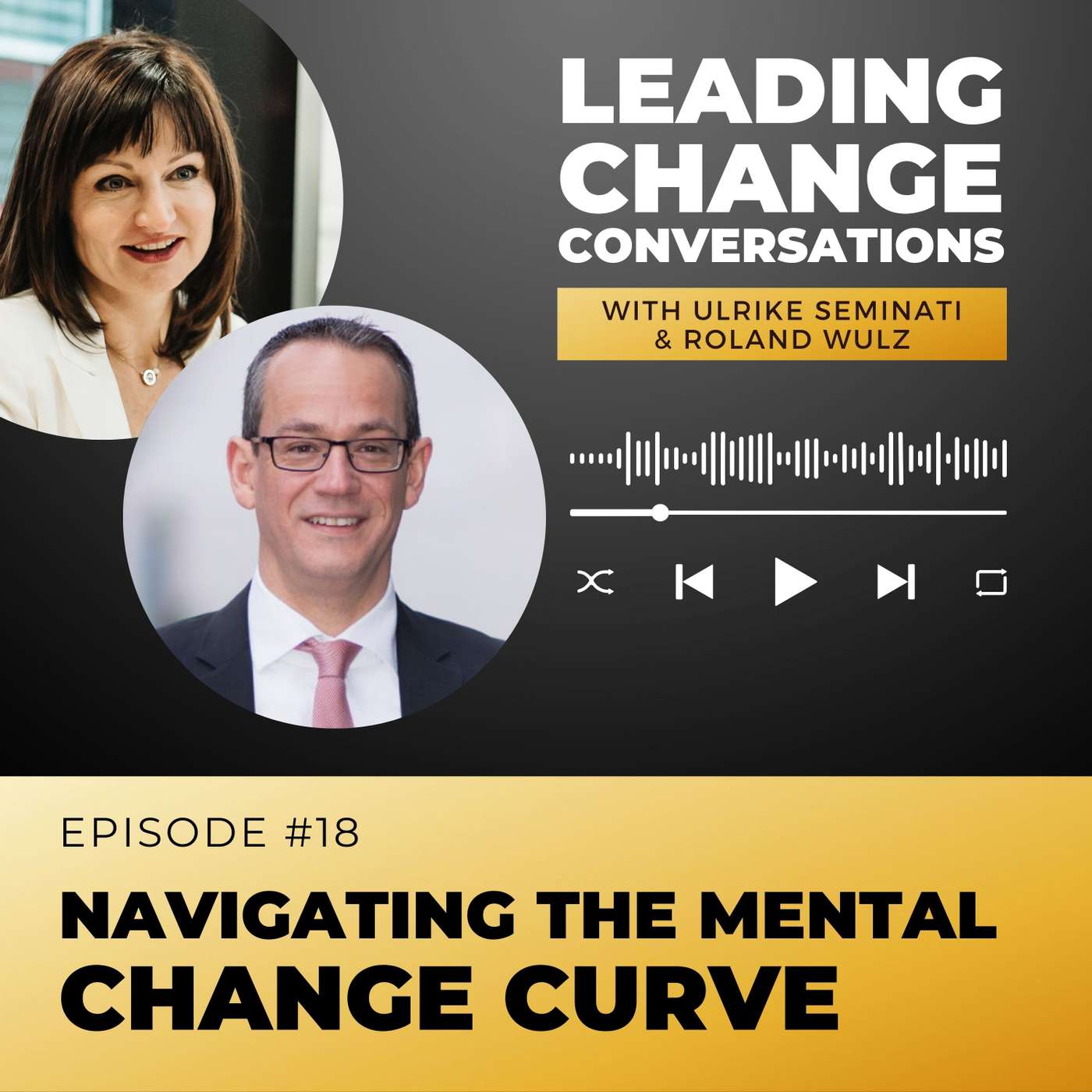
EPISODE · Jun 25, 2024 · 28 MIN
Navigating the mental change curve
from Leading Change Conversations · host Ulrike Seminati
Navigating the Change Curve - your own and the one of your team membersIn this episode, Ulrike sits down with Roland Wulz to explore the varying interpretations of change among employees across different cultures and organizational types. They discuss how to navigate the emotional journey of change, the importance of transparent communication, and the necessity of adapting leadership styles to meet the diverse needs of team members.Understanding the Change Curve: Change is a process that typically follows a change curve: shock, anger/frustration, denial, depression, and acceptance. Leaders often move through this curve faster due to early access to information, which can create a disconnect with team members still processing initial reactionsIndividual Variation in Change ResponseEach person's journey through the change curve varies, and leaders must recognize these differences to support their teams effectively.Meeting team members where they are in their change journey is crucial for fostering a positive transition.The Role of Communication and TransparencyEffective communication involves transparency about the change process, including admitting personal challenges and mistakes.Incorporating the individual needs of team members can help them understand and adapt to change more quickly.Cultural Considerations in Change ManagementCultural differences affect how feedback and communication are perceived. For example, direct feedback may be well-received in Germany but might be offensive in cultures with more indirect communication styles, such as some Asian cultures.Leaders must be mindful of these cultural differences to manage change effectively in international teams.Proactive Change PreparationRather than waiting for change to happen, organizations should prepare in advance by involving employees in the planning process.This involvement helps create a sense of ownership and understanding among team members, making the transition smoother.Strategic Planning and Soft SkillsChange management should be integrated into the organization's strategy and business plan, considering external factors (e.g., market changes, regulations) and internal dynamics.Investing in communication and soft skills is crucial, as they steer people more effectively than quantitative targets like deadlines or budgets.People as Enablers of ChangeEmployees are not obstacles to change; they are enablers. Recognizing their role in co-creating and implementing change can transform the organizational culture and improve outcomes.Key TakeawaysLeaders must navigate their own change curve while being empathetic to where their team members are in the process.Transparent and honest communication builds trust and facilitates smoother transitions.Cultural awareness is essential in managing change within diverse teams.The proactive involvement of employees in change planning fosters a positive and collaborative environment.Soft skills and strategic communication are vital tools in effective change management.In this insightful episode, Ulrike and Roland explore the complexities of change management across cultures and organizational types. By understanding the emotional journey of change, fostering transparent communication, and recognizing the unique contributions of each team member, leaders can navigate change more effectively and create a positive, collaborative environment.Tune in next time for more insights on leadership and organizational dynamics. If you want to improve you own skills on leading change or communicating more effectively check out Ulrike’s online live courses for individuals here.Thanks for tuning into 'Leading Change Conversations'! We hope you found our discussion inspiring and informative. If you enjoyed it, remember to subscribe, rate, and leave a review. Plus, sign up for our Newsletter to access our practical transformation roadmaps on a regular basis. Until next time, keep leading, keep learning, and making a difference!About Roland WulzRoland has more than 30 years of experience in financial services. He is an experienced program manager with cross-cultural social competencies and a successful track record in shaping and implementing strategic international projects. He is an accredited specialist managing global trading areas with responsibilities over several leadership hierarchies and has led teams of up to 300 employees across regions.https://www.linkedin.com/in/roland-wulz/ About Ulrike SeminatiUlrike is a globally operating coach, trainer, and consultant who brings a wealth of experience as a former C-level executive to her expertise in authentic leadership and impactful communication. By blending the latest self-development methodologies with her extensive practical experience in leading across all levels of hierarchy, she enables leaders to establish trust and lead change through effective communication. Ulrike's clients benefit from her pragmatic and user-friendly tools that enable them to make lasting improvements.Connect with Ulrike!Website: https://ulrikeseminati.com LinkedIn: https://www.linkedin.com/in/ulrikeseminati/Email: [email protected]
What this episode covers
Navigating the Change Curve - your own and the one of your team membersIn this episode, Ulrike sits down with Roland Wulz to explore the varying interpretations of change among employees across different cultures and organizational types. They discuss how to navigate the emotional journey of change, the importance of transparent communication, and the necessity of adapting leadership styles to meet the diverse needs of team members.Understanding the Change Curve: Change is a process that typically follows a change curve: shock, anger/frustration, denial, depression, and acceptance. Leaders often move through this curve faster due to early access to information, which can create a disconnect with team members still processing initial reactionsIndividual Variation in Change ResponseEach person's journey through the change curve varies, and leaders must recognize these differences to support their teams effectively.Meeting team members where they are in their change journey is crucial for fostering a positive transition.The Role of Communication and TransparencyEffective communication involves transparency about the change process, including admitting personal challenges and mistakes.Incorporating the individual needs of team members can help them understand and adapt to change more quickly.Cultural Considerations in Change ManagementCultural differences affect how feedback and communication are perceived. For example, direct feedback may be well-received in Germany but might be offensive in cultures with more indirect communication styles, such as some Asian cultures.Leaders must be mindful of these cultural differences to manage change effectively in international teams.Proactive Change PreparationRather than waiting for change to happen, organizations should prepare in advance by involving employees in the planning process.This involvement helps create a sense of ownership and understanding among team members, making the transition smoother.Strategic Planning and Soft SkillsChange management should be integrated into the organization's strategy and business plan, considering external factors (e.g., market changes, regulations) and internal dynamics.Investing in communication and soft skills is crucial, as they steer people more effectively than quantitative targets like deadlines or budgets.People as Enablers of ChangeEmployees are not obstacles to change; they are enablers. Recognizing their role in co-creating and implementing change can transform the organizational culture and improve outcomes.Key TakeawaysLeaders must navigate their own change curve while being empathetic to where their team members are in the process.Transparent and honest communication builds trust and facilitates smoother transitions.Cultural awareness is essential in managing change within diverse teams.The proactive involvement of employees in change planning fosters a positive and collaborative environment.Soft skills and strategic communication are vital tools in effective change management.In this insightful episode, Ulrike and Roland explore the complexities of change management across cultures and organizational types. By understanding the emotional journey of change, fostering transparent communication, and recognizing the unique contributions of each team member, leaders can navigate change more effectively and create a positive, collaborative environment.Tune in next time for more insights on leadership and organizational dynamics. If you want to improve you own skills on leading change or communicating more effectively check out Ulrike’s online live courses for individuals here.Thanks for tuning into 'Leading Change Conversations'! We hope you found our discussion inspiring and informative. If you enjoyed it, remember to subscribe, rate, and leave a review. Plus, sign up for our Newsletter to access our practical transformation roadmaps on a regular basis. Until next time, keep leading, keep learning, and making a difference!About Roland WulzRoland has more than 30 years of experience in financial services. He is an experienced program manager with cross-cultural social competencies and a successful track record in shaping and implementing strategic international projects. He is an accredited specialist managing global trading areas with responsibilities over several leadership hierarchies and has led teams of up to 300 employees across regions.https://www.linkedin.com/in/roland-wulz/ About Ulrike SeminatiUlrike is a globally operating coach, trainer, and consultant who brings a wealth of experience as a former C-level executive to her expertise in authentic leadership and impactful communication. By blending the latest self-development methodologies with her extensive practical experience in leading across all levels of hierarchy, she enables leaders to establish trust and lead change through effective communication. Ulrike's clients benefit from her pragmatic and user-friendly tools that enable them to make lasting improvements.Connect with Ulrike!Website: https://ulrikeseminati.com LinkedIn: https://www.linkedin.com/in/ulrikeseminati/Email: [email protected]
NOW PLAYING
Navigating the mental change curve
No transcript for this episode yet
Similar Episodes
Mar 31, 2026 ·54m
Mar 27, 2026 ·14m
Mar 24, 2026 ·42m
Mar 20, 2026 ·42m
Mar 19, 2026 ·34m
Mar 17, 2026 ·41m