PodParley PodParley

Nebraska

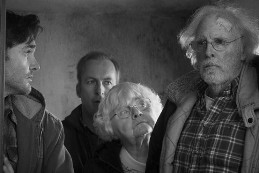
The difficulty of dealing with aging parents, and all the problems of growing old oneself—these can be painful subjects, and mainstream commercial movies generally don’t want to bring such things up. Alexander Payne, however, has chosen to do that in his new film Nebraska, and he deftly avoids sentimentality or wallowing in misery or on the other hand, going too far in the direction of humor. It’s a delicate balance that pays off in unexpected ways. Bruce Dern is outstanding as Woody Grant, a retiree in his late 70s living in Billings, Montana. Receiving one of those deceptive sounding sweepstakes letters announcing that he can pick up a million dollar prize, he sets off on foot to get to Lincoln, Nebraska, where the sweepstakes headquarters is, and of course he’s picked up the police as he trudges along the highway. His adult son David, played by Will Forte, is called up to fetch his dad and bring him home to Woody’s exasperated wife Kate, played by June Squibb. We find that Woody hasn’t been much of a father—an alcoholic who neglected his family and never could show much affection, he now seems increasingly out of touch, without meaning or purpose in his life. After more attempts by Woody to leave, David finally agrees to drive him to Lincoln, just for a change of scenery. A series of mishaps leads them to Woody’s old home town in Nebraska, where family and old acquaintances are delighted to hear that he’s a millionaire (David’s attempts to tell them otherwise are to no avail) and they would like a piece of the fortune for themselves. Eventually Kate and David’s older brother show up and it becomes a kind of reunion. Payne is from Nebraska, and the screenplay is by Bob Nelson, another Midwesterner. They have a good grasp of the laconic, deadpan manner of these small-town working class folks. The stoicism and country hick qualities are even exaggerated a little for humorous effect. The film is quite funny, not in a jokey way, but with the laughs earned through recognition of the stubbornness, delusion, and denial of Woody, the main character. Squibb almost steals the picture as Woody’s brutally frank, foul-mouthed wife. She shows him no mercy, but in certain situations we see the love and care coming through. I haven’t been a big fan of Payne’s before. His last two films, Sideways and The Descendants, I thought were overrated. This, however, is his best work so far. The master stroke was deciding to shoot the film in black and white. This accentuates the flat, completely unglamorous quality of the settings—from Billings all the way to Lincoln, monotony is expressed in precise visual terms. With a pace that deliberately takes its time along with its elderly protagonist, the often melancholy fiddle music by Mark Orton, and the taciturn dialogue, the picture exudes a sense of sadness, even depression. This is an essential background that keeps the humor from becoming too much the point—Payne is expressing a view of life, not merely trying to divert or entertain. At times when a lesser director would push for a bigger laugh, he pulls back and lets us see confusion and vulnerability instead, and that’s a brave and a wise strategy. The plot device of the sweepstakes letter is perhaps the weak link in the movie, but only because Bruce Dern’s performance is so strong and believable that I couldn’t see him being such a fool. Forte, whom up to now I knew only as a comedian, skillfully portrays the helplessness and compassion of Woody’s son. Overall, Nebraska works splendidly. It’s a work of integrity, a story of plain old people, a film that chooses to dispel illusions rather than foster them.

An episode of the Flicks with The Film Snob podcast, hosted by Chris Dashiell, titled "Nebraska" was published on April 3, 2014.

April 3, 2014 · Flicks with The Film Snob

0:00 / 0:00

The difficulty of dealing with aging parents, and all the problems of growing old oneself—these can be painful subjects, and mainstream commercial movies generally don’t want to bring such things up. Alexander Payne, however, has chosen to do that in his new film Nebraska, and he deftly avoids sentimentality or wallowing in misery or on the other hand, going too far in the direction of humor. It’s a delicate balance that pays off in unexpected ways. Bruce Dern is outstanding as Woody Grant, a retiree in his late 70s living in Billings, Montana. Receiving one of those deceptive sounding sweepstakes letters announcing that he can pick up a million dollar prize, he sets off on foot to get to Lincoln, Nebraska, where the sweepstakes headquarters is, and of course he’s picked up the police as he trudges along the highway. His adult son David, played by Will Forte, is called up to fetch his dad and bring him home to Woody’s exasperated wife Kate, played by June Squibb. We find that Woody hasn’t been much of a father—an alcoholic who neglected his family and never could show much affection, he now seems increasingly out of touch, without meaning or purpose in his life. After more attempts by Woody to leave, David finally agrees to drive him to Lincoln, just for a change of scenery. A series of mishaps leads them to Woody’s old home town in Nebraska, where family and old acquaintances are delighted to hear that he’s a millionaire (David’s attempts to tell them otherwise are to no avail) and they would like a piece of the fortune for themselves. Eventually Kate and David’s older brother show up and it becomes a kind of reunion. Payne is from Nebraska, and the screenplay is by Bob Nelson, another Midwesterner. They have a good grasp of the laconic, deadpan manner of these small-town working class folks. The stoicism and country hick qualities are even exaggerated a little for humorous effect. The film is quite funny, not in a jokey way, but with the laughs earned through recognition of the stubbornness, delusion, and denial of Woody, the main character. Squibb almost steals the picture as Woody’s brutally frank, foul-mouthed wife. She shows him no mercy, but in certain situations we see the love and care coming through. I haven’t been a big fan of Payne’s before. His last two films, Sideways and The Descendants, I thought were overrated. This, however, is his best work so far. The master stroke was deciding to shoot the film in black and white. This accentuates the flat, completely unglamorous quality of the settings—from Billings all the way to Lincoln, monotony is expressed in precise visual terms. With a pace that deliberately takes its time along with its elderly protagonist, the often melancholy fiddle music by Mark Orton, and the taciturn dialogue, the picture exudes a sense of sadness, even depression. This is an essential background that keeps the humor from becoming too much the point—Payne is expressing a view of life, not merely trying to divert or entertain. At times when a lesser director would push for a bigger laugh, he pulls back and lets us see confusion and vulnerability instead, and that’s a brave and a wise strategy. The plot device of the sweepstakes letter is perhaps the weak link in the movie, but only because Bruce Dern’s performance is so strong and believable that I couldn’t see him being such a fool. Forte, whom up to now I knew only as a comedian, skillfully portrays the helplessness and compassion of Woody’s son. Overall, Nebraska works splendidly. It’s a work of integrity, a story of plain old people, a film that chooses to dispel illusions rather than foster them.

nebraska The difficulty of dealing with aging parents, and all the problems of growing old oneself—these can be painful subjects, and mainstream commercial movies generally don’t want to bring such things up. Alexander Payne, however, has chosen to do that in his new film Nebraska, and he deftly avoids sentimentality or wallowing in misery or on the other hand, going too far in the direction of humor. It’s a delicate balance that pays off in unexpected ways.

Bruce Dern is outstanding as Woody Grant, a retiree in his late 70s living in Billings, Montana. Receiving one of those deceptive sounding sweepstakes letters announcing that he can pick up a million dollar prize, he sets off on foot to get to Lincoln, Nebraska, where the sweepstakes headquarters is, and of course he’s picked up the police as he trudges along the highway. His adult son David, played by Will Forte, is called up to fetch his dad and bring him home to Woody’s exasperated wife Kate, played by June Squibb. We find that Woody hasn’t been much of a father—an alcoholic who neglected his family and never could show much affection, he now seems increasingly out of touch, without meaning or purpose in his life. After more attempts by Woody to leave, David finally agrees to drive him to Lincoln, just for a change of scenery. A series of mishaps leads them to Woody’s old home town in Nebraska, where family and old acquaintances are delighted to hear that he’s a millionaire (David’s attempts to tell them otherwise are to no avail) and they would like a piece of the fortune for themselves. Eventually Kate and David’s older brother show up and it becomes a kind of reunion.

Payne is from Nebraska, and the screenplay is by Bob Nelson, another Midwesterner. They have a good grasp of the laconic, deadpan manner of these small-town working class folks. The stoicism and country hick qualities are even exaggerated a little for humorous effect. The film is quite funny, not in a jokey way, but with the laughs earned through recognition of the stubbornness, delusion, and denial of Woody, the main character. Squibb almost steals the picture as Woody’s brutally frank, foul-mouthed wife. She shows him no mercy, but in certain situations we see the love and care coming through.

I haven’t been a big fan of Payne’s before. His last two films, Sideways and The Descendants, I thought were overrated. This, however, is his best work so far. The master stroke was deciding to shoot the film in black and white. This accentuates the flat, completely unglamorous quality of the settings—from Billings all the way to Lincoln, monotony is expressed in precise visual terms. With a pace that deliberately takes its time along with its elderly protagonist, the often melancholy fiddle music by Mark Orton, and the taciturn dialogue, the picture exudes a sense of sadness, even depression. This is an essential background that keeps the humor from becoming too much the point—Payne is expressing a view of life, not merely trying to divert or entertain. At times when a lesser director would push for a bigger laugh, he pulls back and lets us see confusion and vulnerability instead, and that’s a brave and a wise strategy. The plot device of the sweepstakes letter is perhaps the weak link in the movie, but only because Bruce Dern’s performance is so strong and believable that I couldn’t see him being such a fool. Forte, whom up to now I knew only as a comedian, skillfully portrays the helplessness and compassion of Woody’s son. Overall, Nebraska works splendidly. It’s a work of integrity, a story of plain old people, a film that chooses to dispel illusions rather than foster them.

Future Flicks with Billiam The SomewhatNerdy Podcast Network Future Flicks is a podcast about flicks that come out, wait for it, in the future! In this podcast your host Billiam from SomewhatNerdy.com will go over all the movies coming out during the week, tell you his pick, and throw in his thoughts and occasionally trivia and news. He’ll also throw in a movie review every podcast or two for a suggestion on what to watch during a night in. So check out Future Flicks because why use Google to tell you what movies are coming out when you can have an opinionated Nerd do it for you. Box Office Premiere Podcasts Box Office is a weekly film show on Virgin Media Two, which takes a look at the pick of the flicks in cinemas, along with a host of fun film features. Flick Switch Flickswitch Flick Switch is far more than a rigging rental company. We have built our business on delivering high quality solutions with years of experience in a wide variety of markets, including film, television, live events, international touring and theatre.With our years of experience in audio, lighting, screens, sets, (and the list goes on) we can go further than just the support rigging. We are also able to rig the equipment too. Planning and installing the power and data distribution, fixtures, fly systems and other equipment, fine tuning, focusing and operating.When you engage Flick Switch yo Mark Fricks - The Road Less Traveled Mark Fricks Federal Employees - The Retirement Road Less Traveled with Financial Adviser and Federal Employee Advocate Mark Fricks. Mark Shares the mission behind the 2nd edition of The Book "The Road Less Traveled." This is a Financial Roadmap for Federal Employees seeking a secure retirement.
URL copied to clipboard!