
EPISODE · Jul 18, 2023 · 1H 8M
Neurorights and the Consequences of Brain Implant Removal
from Future Tech And Foresight · host Marc Verbenkov
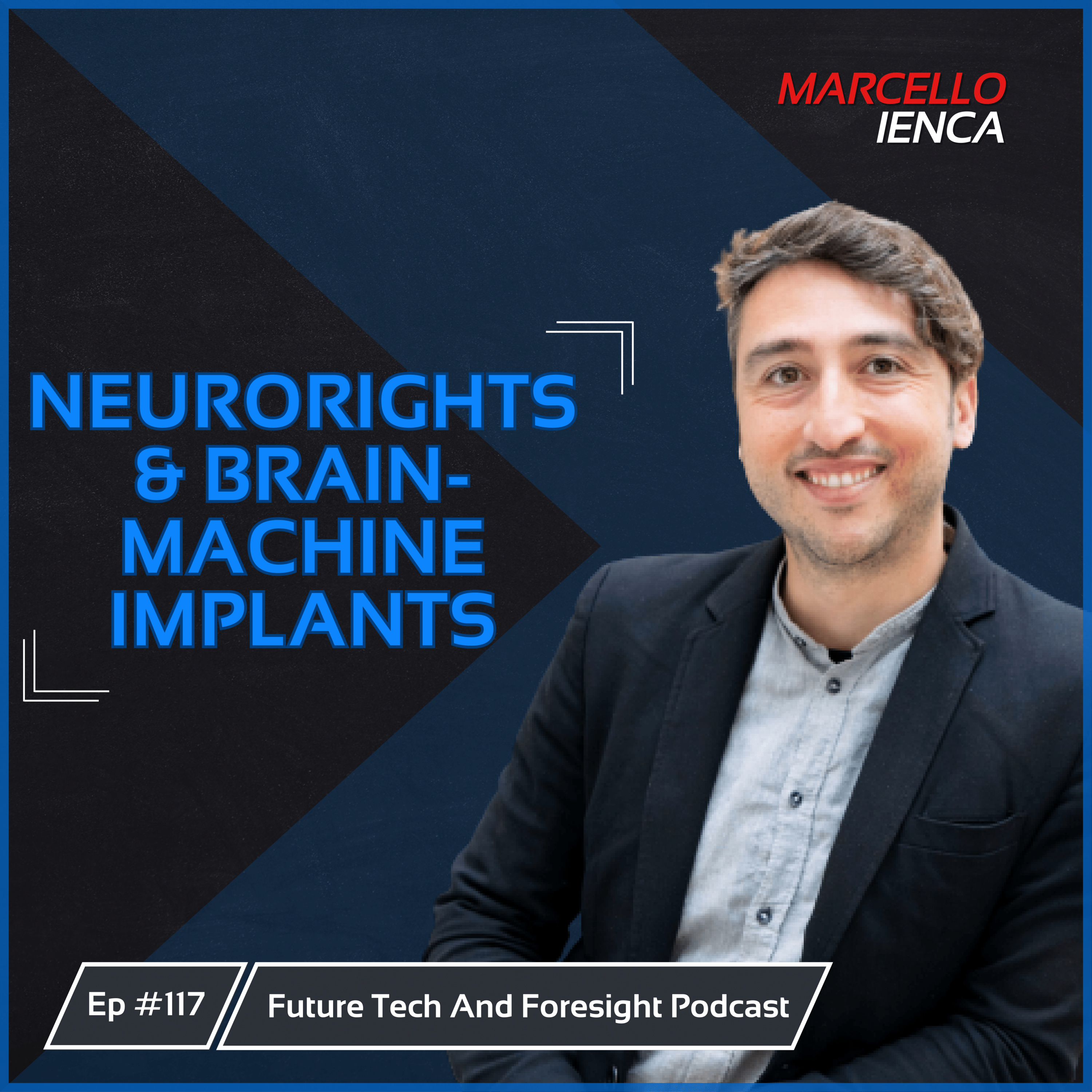
Today we explore the emotional fallout and ethical quandaries triggered by the unwanted removal of a brain-machine implant. As Brain-Computer Interfaces become commonplace, the imperative to establish clear neurorights intensifies. About The Episode: The exponential growth of technologies will continue to give us a plethora new tools and disruptions. For any of you trying to keep track with the explosion of AI tools and uses I’m sure you can agree it is beyond the capabilities of any single human. This is one of the reasons that Brain Computer Interface technologies have been so interesting lately as they offer the somewhat distant vision of being able to churn through more information faster than what we are capable of doing today, enabling us to keep up with the latest developments, tools, and opportunities that the future will bring us. As it is one of the more fascinating emerging technologies of our day The topic of brain machine interfaces has been either fully covered or come up in conversation on the podcast a number of times, and today we’ll look at another aspect of it. I read a really interesting article that looked at the issues that a patient experienced when her implant was removed, against her desire, after using it for some time. She had negative psychological repercussions, and even felt like a part of her ‘self’ was missing. Because of this, more questions around ethics and human rights bubble to the surface with this technology, especially as we move forward into a time where BCI’s are likely to be used by ever greater parts of the population. Luckily my guest today Marcello Ienca was one of the authors of the article, and has been at the tip of the spear of the emerging field of Neurorights, which we’ll get into during our discussion today. About The Guest: Dr. Marcello Ienca is a Professor of Ethics of Artificial Intelligence and Neuroscience at the Technical University of Munich and a Principal Investigator at the Swiss Federal Institute of Technology in Lausanne. He was an appointed member of the Organisation for Economic Co-operation and Development’s (OECD) Steering Committee on Neurotechnology that drafted the OECD Recommendation on Responsible Innovation in Neurotechnology. Dr Ienca is the Neuroethics Lead of the International Brain Initiative and an expert advisor to the UN and the Council of Europe. Marcello's research focuses on the ethical, legal, social and policy implications of emerging technologies. In particular he conducts research on the ethically sustainable development of AI systems and neurotechnologies. He uses theoretical and empirical methods to investigate the ethical, social and political implications of these technologies focusing on topics such as the brain-machine interface, the relationship between AI and human cognition, and the ethical processing of Big Data. TUM Website: https://www.professoren.tum.de/en/ienca-marcelloTwitter: https://twitter.com/MarcelloIenca Article: https://www.brainstimjrnl.com/article/S1935-861X(23)01760-6/fulltext#%20 TimeCodes: 00:04:59 - Why did Marcello initially become interested in Neurorights and BCI?00:06:46 - The Case Study of Patient R's implant00:09:42 - What is the Hybrid Mind?00:11:01 - What benefits did Patient R experience from her BCI?00:14:45 - What notification system did patient R have?00:15:58 - What psychological issues did patient R have after her BCI was removed?00:23:46 - Studies looking at cell phone removal and the psychological impact00:27:56 - More psychological issues with removing BCIs00:32:32 - What are Neurorights?00:40:14 - Are governments and institutions accepting or rejecting Neurorights?00:44:20 - How important are global organizations like the UN, OECD for Neurorights?00:49:37 - Will Neurorights be desired by the masses?00:57:42 - Neurorights and the future01:05:09 - Conclusion and where to find Marcello
What this episode covers
Today we explore the emotional fallout and ethical quandaries triggered by the unwanted removal of a brain-machine implant. As Brain-Computer Interfaces become commonplace, the imperative to establish clear neurorights intensifies. About The Episode: The exponential growth of technologies will continue to give us a plethora new tools and disruptions. For any of you trying to keep track with the explosion of AI tools and uses I’m sure you can agree it is beyond the capabilities of any single human. This is one of the reasons that Brain Computer Interface technologies have been so interesting lately as they offer the somewhat distant vision of being able to churn through more information faster than what we are capable of doing today, enabling us to keep up with the latest developments, tools, and opportunities that the future will bring us. As it is one of the more fascinating emerging technologies of our day The topic of brain machine interfaces has been either fully covered or come up in conversation on the podcast a number of times, and today we’ll look at another aspect of it. I read a really interesting article that looked at the issues that a patient experienced when her implant was removed, against her desire, after using it for some time. She had negative psychological repercussions, and even felt like a part of her ‘self’ was missing. Because of this, more questions around ethics and human rights bubble to the surface with this technology, especially as we move forward into a time where BCI’s are likely to be used by ever greater parts of the population. Luckily my guest today Marcello Ienca was one of the authors of the article, and has been at the tip of the spear of the emerging field of Neurorights, which we’ll get into during our discussion today. About The Guest: Dr. Marcello Ienca is a Professor of Ethics of Artificial Intelligence and Neuroscience at the Technical University of Munich and a Principal Investigator at the Swiss Federal Institute of Technology in Lausanne. He was an appointed member of the Organisation for Economic Co-operation and Development’s (OECD) Steering Committee on Neurotechnology that drafted the OECD Recommendation on Responsible Innovation in Neurotechnology. Dr Ienca is the Neuroethics Lead of the International Brain Initiative and an expert advisor to the UN and the Council of Europe. Marcello's research focuses on the ethical, legal, social and policy implications of emerging technologies. In particular he conducts research on the ethically sustainable development of AI systems and neurotechnologies. He uses theoretical and empirical methods to investigate the ethical, social and political implications of these technologies focusing on topics such as the brain-machine interface, the relationship between AI and human cognition, and the ethical processing of Big Data. TUM Website: https://www.professoren.tum.de/en/ienca-marcelloTwitter: https://twitter.com/MarcelloIenca Article: https://www.brainstimjrnl.com/article/S1935-861X(23)01760-6/fulltext#%20 TimeCodes: 00:04:59 - Why did Marcello initially become interested in Neurorights and BCI?00:06:46 - The Case Study of Patient R's implant00:09:42 - What is the Hybrid Mind?00:11:01 - What benefits did Patient R experience from her BCI?00:14:45 - What notification system did patient R have?00:15:58 - What psychological issues did patient R have after her BCI was removed?00:23:46 - Studies looking at cell phone removal and the psychological impact00:27:56 - More psychological issues with removing BCIs00:32:32 - What are Neurorights?00:40:14 - Are governments and institutions accepting or rejecting Neurorights?00:44:20 - How important are global organizations like the UN, OECD for Neurorights?00:49:37 - Will Neurorights be desired by the masses?00:57:42 - Neurorights and the future01:05:09 - Conclusion and where to find Marcello
NOW PLAYING
Neurorights and the Consequences of Brain Implant Removal
No transcript for this episode yet
Similar Episodes
Mar 26, 2026 ·1m
Mar 19, 2026 ·34m
Feb 18, 2026 ·11m
Feb 11, 2026 ·45m