
EPISODE · Jun 20, 2026 · 3 MIN
New Orleans is Serving Fine Dining with a Side of Drama and We're Here for Every Bite
from Food Scene New Orleans · host Inception Point AI
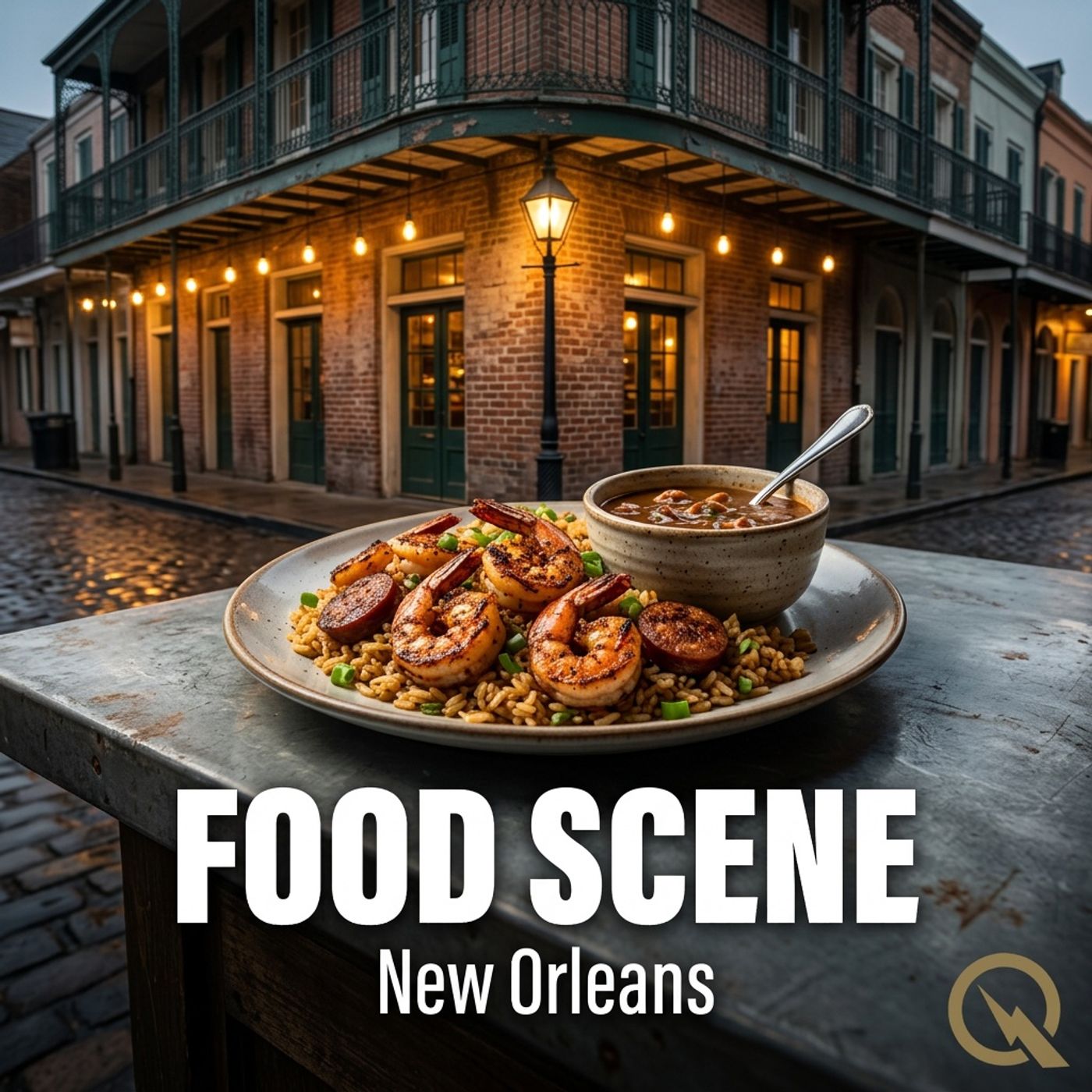
Food Scene New Orleans New Orleans is having a delicious little identity crisis, and listeners are the lucky ones caught in the middle. The city that built its reputation on gumbo, po’boys, and beignets is now flirting shamelessly with tasting menus, global mash‑ups, and chef‑driven counter spots—without abandoning the soul of Creole and Cajun cooking. At the center of the buzz is Miss River at the Four Seasons Hotel New Orleans, where chef Alon Shaya leans into what he calls “elevated celebratory dining.” According to the Four Seasons Hotel New Orleans, Miss River’s grand whole fried chicken, carved tableside, has become a signature spectacle, pairing Southern comfort with white‑tablecloth theater. Nearby, the hotel’s Chemin à la Mer showcases Donald Link’s surf‑and‑steak vision, with Gulf seafood and rich sauces nodding to French technique and Louisiana bounty. In the Warehouse District, contemporary tasting menus are rewriting expectations. Saint-Germain, described by local outlets such as New Orleans Magazine as one of the city’s most exciting restaurants, offers a small, ever‑changing menu that might pair local fish with preserved citrus or serve venison alongside foraged herbs. The vibe is intimate, the plating modern, but the backbone is still the Gulf, the bayou, and the seasons. The cross‑cultural energy is unmistakable. Morrow’s in Faubourg Marigny blends Korean and New Orleans influences—think crispy seafood, bold sauces, and a crowd that treats dinner like an event. Bywater American Bistro, from chef Nina Compton, folds Caribbean flavors into Louisiana ingredients; local press note dishes such as house‑made pastas with Gulf shrimp or jerk‑spiced meats layered over heirloom grains, illustrating how diaspora cooking is now part of the city’s dining language. New Orleans’ markets and waters quietly script many of these menus. Gulf oysters, Louisiana blue crab, and bycatch fish are turning up in crudos and refined small plates. Local farms supply greens, rice, and citrus that let chefs chase lighter, brighter flavors alongside the city’s beloved roux and rice. Festivals remain the city’s dining calendar heartbeat. The New Orleans Wine & Food Experience brings together chefs, winemakers, and eager tasters across the city, while the Oak Street Po‑Boy Festival and the Tremé Creole Gumbo Festival celebrate the classics that still define everyday eating. What makes New Orleans impossible to ignore is this balance: chefs experiment with tasting menus, global influences, and polished hotel dining, yet everything still tastes unmistakably of the Mississippi delta, brass bands, and second lines. For food lovers paying attention, New Orleans is not just preserving its culinary heritage—it is remixing it, one bold, beautiful plate at a time. Get the best deals https://amzn.to/3ODvOta
Embed this episode
NOW PLAYING
New Orleans is Serving Fine Dining with a Side of Drama and We're Here for Every Bite
No transcript for this episode yet
Similar Episodes
No similar episodes found.
Similar Podcasts
No similar podcasts found.