
EPISODE · Apr 24, 2026 · 12 MIN
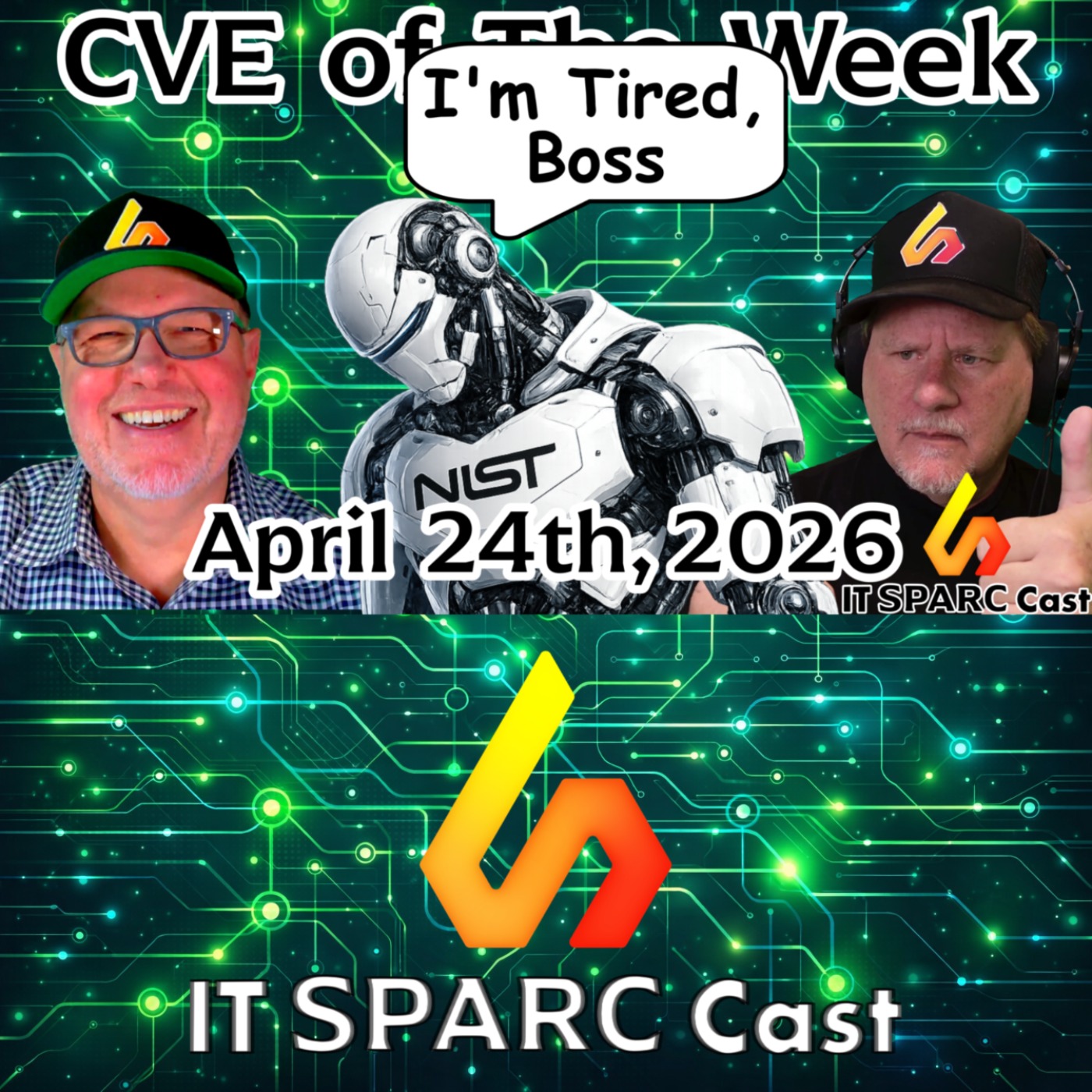
NIST Is Falling Behind? CVE Overload, AI, and the Future of Vulnerability Tracking
from IT SPARC Cast
NIST is changing how it handles CVEs after a massive surge in vulnerability submissions—and it could reshape how enterprise IT teams manage risk. In this episode of IT SPARC Cast – CVE of the Week, John and Lou break down what this shift means, the risks of incomplete vulnerability data, and how AI-driven attacks are forcing a new security reality.⸻📄 Show Notes🚨 CVE of the Week (Special Edition): NIST Scaling Back CVE EnrichmentThis week, instead of a single CVE, we’re covering a major shift in how vulnerabilities are tracked and analyzed.The National Institute of Standards and Technology (NIST) is scaling back its enrichment of CVEs due to a massive surge in vulnerability submissions—up 263% since 2020.⸻🔍 What’s ChangingNIST will no longer fully analyze every CVE submitted to the National Vulnerability Database (NVD).Instead, they will prioritize:Known exploited vulnerabilitiesCritical/high-impact vulnerabilitiesSoftware used by government systemsLower-priority CVEs will still be listed—but:❌ No CVSS score❌ Limited or no analysis❌ Minimal context on impact or exploitability⸻⚠️ Why This MattersCVE “enrichment” is what makes vulnerability data actionable. Without it, security teams lose:Severity scoring (CVSS)Attack vectors and exploit detailsAffected systems and productsContext for prioritization👉 In short: more noise, less signal⸻🔗 The Hidden Risk: Chained ExploitsThis shift introduces a major blind spot:Lower-severity vulnerabilities (CVSS 6–7) may not be enrichedAttackers can chain multiple low-severity flawsResult: full compromise equivalent to a critical vulnerability👉 Two “7s” can still equal a “10” in real-world attacks⸻🤖 AI Is Driving the ExplosionThe root cause is scale—and AI is accelerating it:Automated tools can discover vulnerabilities at massive scaleAttackers don’t need advanced intelligence—just volumeThousands of bots probing systems = exponential growth in CVEsThis is pushing NIST—and the entire vulnerability ecosystem—to its limits.⸻🧠 What This Means for Enterprise ITYou can no longer rely solely on NIST/NVD as your source of truth.New reality:CVE databases will be incompletePrioritization gaps will increaseAttackers will target overlooked vulnerabilities⸻🛠️ Recommended StrategyImmediate Adjustments:Monitor third-party threat intelligence sourcesInvest in security subscriptions (threat intel platforms)Track research from vendors (e.g., Unit 42, etc.)Operational Changes:Move beyond “patch Tuesday” mentalityImplement continuous vulnerability assessmentUse AI/automation for:Threat detectionPrioritizationPatch validation⸻⚖️ Auto-Patching: Risk vs RewardListener feedback raised a key point:Auto-updates can introduce supply chain riskBut delaying patches increases exposure to exploits👉 The answer is not binary:Enable auto-updates where safeMaintain robust backup and rollback strategiesAssess risk per system—not globally⸻🔄 Key TakeawayWe are entering a transitional phase in cybersecurity:Vulnerability volume is explodingTraditional scoring systems are breaking downAI will eventually help defend—but not yet👉 Until then: speed, visibility, and adaptability are your best defenses⸻💬 Listener FeedbackThanks to listener Miruxa for highlighting the risks of auto-updating in light of recent supply chain attacks.Key takeaway:You’re exposed if you update too fastYou’re exposed if you update too slowSecurity now requires constant assessment, not fixed policies⸻📣 Wrap UpWhat do you think—Is NIST making the right call, or does this create more risk than it solves?📧 Email: [email protected]🐦 X: @itsparccast💬 YouTube: Drop a comment—we read them all⸻🔗 Social LinksIT SPARC Cast@ITSPARCCast on Xhttps://www.linkedin.com/company/sparc-sales/ on LinkedInJohn Barger@john_Video on Xhttps://www.linkedin.com/in/johnbarger/ on LinkedInLou Schmidt@loudoggeek on Xhttps://www.linkedin.com/in/louis-schmidt-b102446/ on LinkedIn Hosted on Acast. See acast.com/privacy for more information.
Embed this episode
Ready to play
NIST Is Falling Behind? CVE Overload, AI, and the Future of Vulnerability Tracking
No transcript for this episode yet
Similar Episodes
No similar episodes found.
Similar Podcasts
No similar podcasts found.