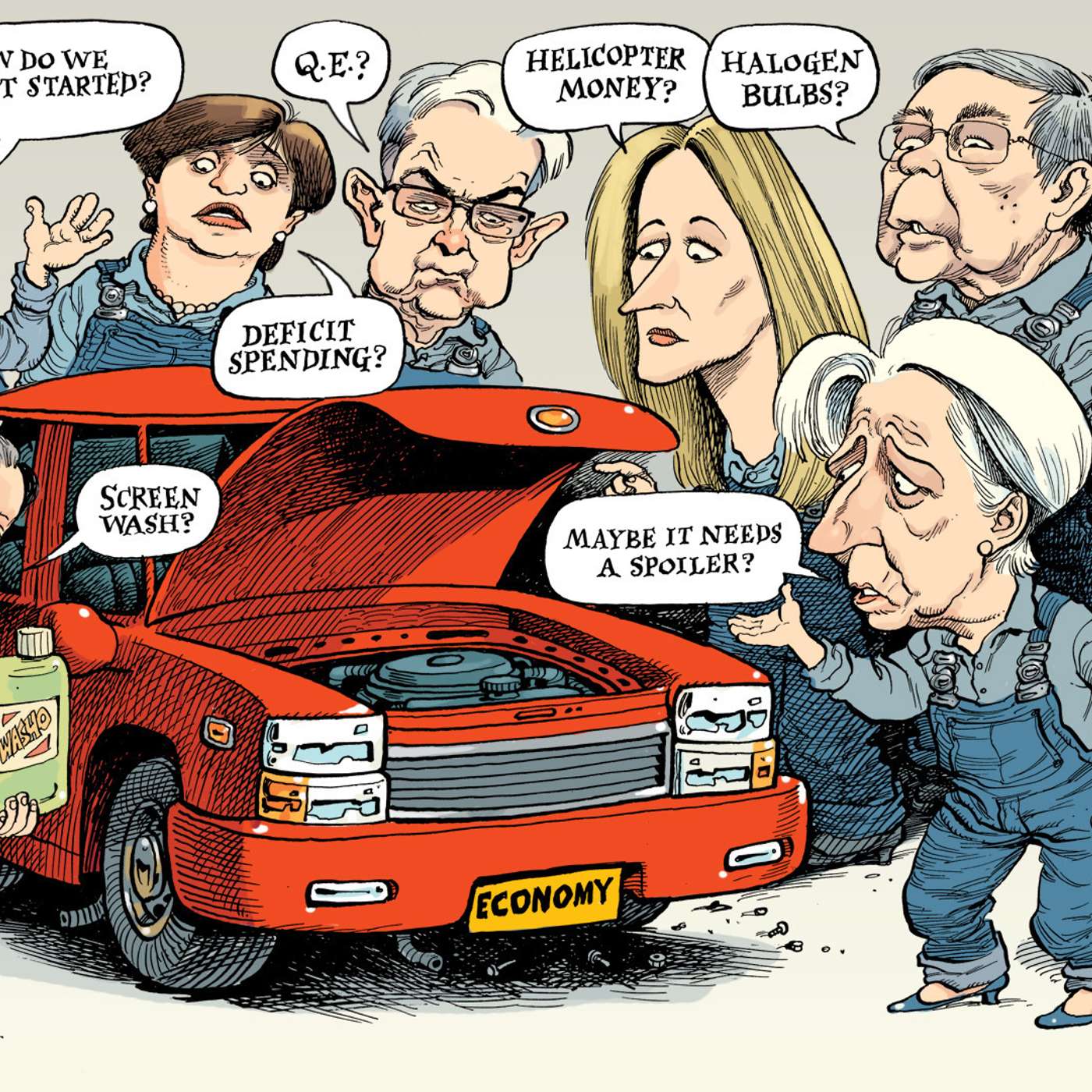
No Modern Weimar Republic Here episode artwork

EPISODE · May 8, 2020 · 40 MIN

No Modern Weimar Republic Here

from Eurodollar University · host Jeff Snider

Quantitative easing, like foie gras, is controversial.  The gavage-based production of duck and goose livers is considered cruel to the animal, gorged helplessly as it is in a pen.  Central banks likewise perform a force-feeding, a monetary gavage of reserves forced onto the private bank balance sheet.  What makes it a peculiar practice is that the monetary farmer expects this gorged banking goose to then dance around carefree - honking out credit at every passing leaf or tussled blade of grass.  Since 2001 this 'monetary husbandry' has failed.  In Japan, the United States, Britain and Europe.  (Worse still, the result isn't a rich, buttery and delicate specialty that could be enjoyed with some mustard seeds and green beans in duck jus.)  In this episode we review three articles that delve even farther back in history, to the Great Depression, to show that similar sounding solutions didn't work then either.  The fear of unchecked inflation - "Weimar", for short - now that fiscal authorities and central banks are both encouraging the leaden economy to flap its wings is therefore misplaced.  At least, not until wholesale reform of process and procedures within the modern central bank.  Not until credibility and competence is prioritized over its credentials.WHERE@JeffSnider_AIP@EmilKalinowskiWHATWeimar Ben Didn’t Happen, So Now Weimar Jay?Weimar Thirties Didn’t Happen Because It’s What You Don’t See Everyone Knows The Gov’t Wants A ‘Controlled’ WeimarChicago Fed's Monetary Policy in a Lower Interest Rate EnvironmentWHOJeff Snider, Head of Global Research at Alhambra Investments with Emil Kalinowski, one of several people - along with Archibald Leach, Bernard Schwartz and Lucille LeSueur - who've never been in your kitchen.  Artwork by the Brunelleschi of our day, David Parkins.

The monetary system is missing of money. Expectation of its return is no longer enough; actual recreation of modern money is needed. That job belongs to the private sector, the banks. It was true of the 1930s, and true of present day.

NOW PLAYING

No Modern Weimar Republic Here

0:00 40:17

No transcript for this episode yet

We transcribe on demand. Request one and we'll notify you when it's ready — usually under 10 minutes.

Third Eye Edify Podcast Jorge Mesa Get my new book:Paperback: https://a.co/d/httI0daEbook: https://books2read.com/u/mBAx6OCheck out my website: http://thirdeyeedify.com/Join my Bass Player University:https://jorgemesamusic.com/bassplayeruniversityThis podcast is on a relentless quest for truth, no matter what dark corner it is hiding in. Hosted on Acast. See acast.com/privacy for more information. What Works? Sophie Scott, UCL PALS Prof Sophie Scott, Director of the Institute of Cognitive Neuroscience at University College London, discusses life and science and careers with her colleagues from the Division of Psychology and Language Sciences at UCL, and beyond. The aim of the show is to highlight some amazing scientists, and explore their journeys through science and life, and find out what works for them. MomDocs St. Louis Childrens Hospital - MomDocs A monthly podcast from Washington University pediatric specialists at St. Louis Children’s HospitalThe MomDocs are pediatricians at St. Louis Children’s Hospital. They work in a variety of specialties and share their advice and expertise on the questions we all face as parents. WW2 - the Key Questions, answered by Laurence Rees. Laurence Rees A former Head of BBC TV History programmes, Laurence has specialized in writing books and making television documentaries about World War Two, the Nazis and Stalinism for thirty years. He won a BAFTA and a Peabody for his TV series 'The Nazis: A Warning from History' and a British Book Award for his book on Auschwitz, which is also the world's best selling book on this notorious camp. His book 'the Holocaust: A New History' was described by the Times as 'exemplary' and by the Daily Telegraph as 'the best single volume account of the atrocity ever written'. Educated at Oxford University, for several years he was a visiting senior fellow at the London School of Economics, London University. He holds honorary doctorates from the University of Sheffield and the Open University. Professor Robert Service, of Oxford University, described Rees as 'one of the world's experts on the Second World War'. Sir Max Hastings wrote in the Sunday Times, in a review of Laurence Rees' 'World War Two: Behi

Frequently Asked Questions

How long is this episode of Eurodollar University?

This episode is 40 minutes long.

When was this Eurodollar University episode published?

This episode was published on May 8, 2020.

What is this episode about?

Quantitative easing, like foie gras, is controversial.  The gavage-based production of duck and goose livers is considered cruel to the animal, gorged helplessly as it is in a pen.  Central banks likewise perform a force-feeding, a monetary gavage...

Can I download this Eurodollar University episode?

Yes, you can download this episode by clicking the download button on the episode player, or subscribe to the podcast in your preferred podcast app for automatic downloads.
URL copied to clipboard!