
EPISODE · Mar 20, 2026 · 18 MIN
Nova Shockwaves: VLBI observations of the 2019 Eruption of V3890 Sgr
from Multi-messenger astrophysics · host Astro-COLIBRI
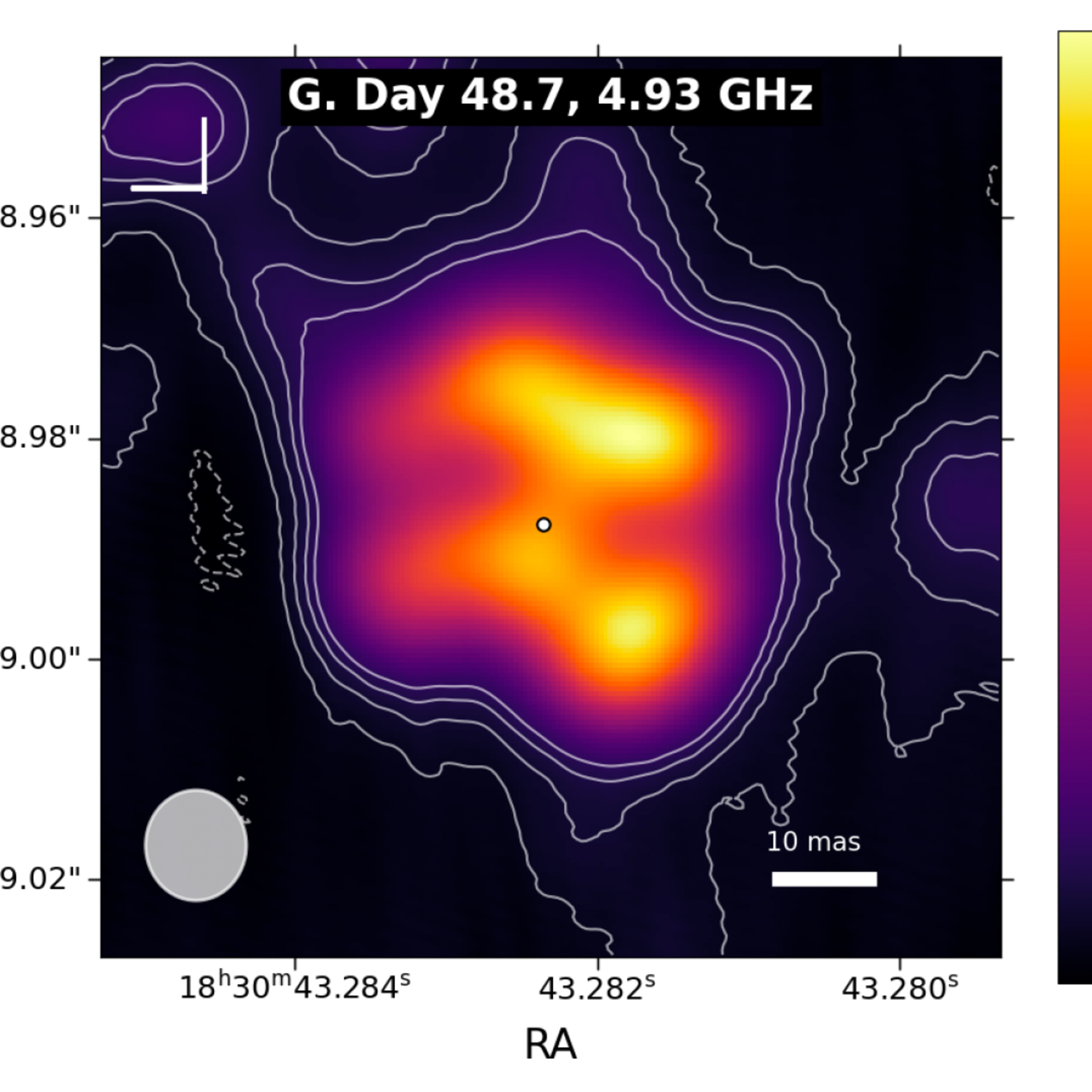
In this episode, we dive deep into the cosmos to explore the dramatic 2019 thermonuclear eruption of V3890 Sgr, a symbiotic recurrent nova located 6.8 kiloparsecs away. A recurrent nova occurs when a white dwarf accumulates enough hydrogen-rich material from its massive companion star—in this case, an M-class red giant—to trigger a massive surface explosion without destroying the binary system. Join us as we explore how astronomers mapped the anatomy of this blast using high-resolution radio imaging from Very Long Baseline Interferometry (VLBI) and gamma-ray data from the Fermi Space Telescope. We discuss:The Shape of the Blast: How the nova's ejecta collided with the red giant's stellar winds, morphing from an asymmetrical blast into a glowing, expanding shell.A Tale of Two Signals: Why the explosion's gamma-rays and radio waves originate from entirely different regions of the shockwave. We explain how gamma-rays are produced in the dense equatorial plane of the star system, while the radio waves emanate from interactions with a more spherical stellar wind. The Mysterious "Second Bump": We unpack the puzzling reappearance of radio and gamma-ray signals nearly 50 to 60 days after the initial explosion. Discover how this late-stage resurgence is driven by a massive "synchrotron halo" of relativistic particles leaking out of the primary shockwave into the surrounding space.Whether you are an astrophysics veteran or a casual space enthusiast, this episode will give you a front-row seat to one of the most fascinating stellar eruptions of the last decade! Featured Reference:Molina, I., Craig, P., Diesing, R., Chomiuk, L., Linford, J. D., Metzger, B. D., ... & Williams, M. N. (2026). Shocks in the Symbiotic Recurrent Nova V3890 Sgr: VLBI Radio Imaging and Fermi GeV Gamma-Rays.Acknowledements: Podcast prepared with Google/NotebookLM. Illustration credits: I. Molina et al.
Embed this episode
Ready to play
Nova Shockwaves: VLBI observations of the 2019 Eruption of V3890 Sgr
No transcript for this episode yet
Similar Episodes
No similar episodes found.
Similar Podcasts
No similar podcasts found.