
EPISODE · Jan 10, 2026 · 32 MIN
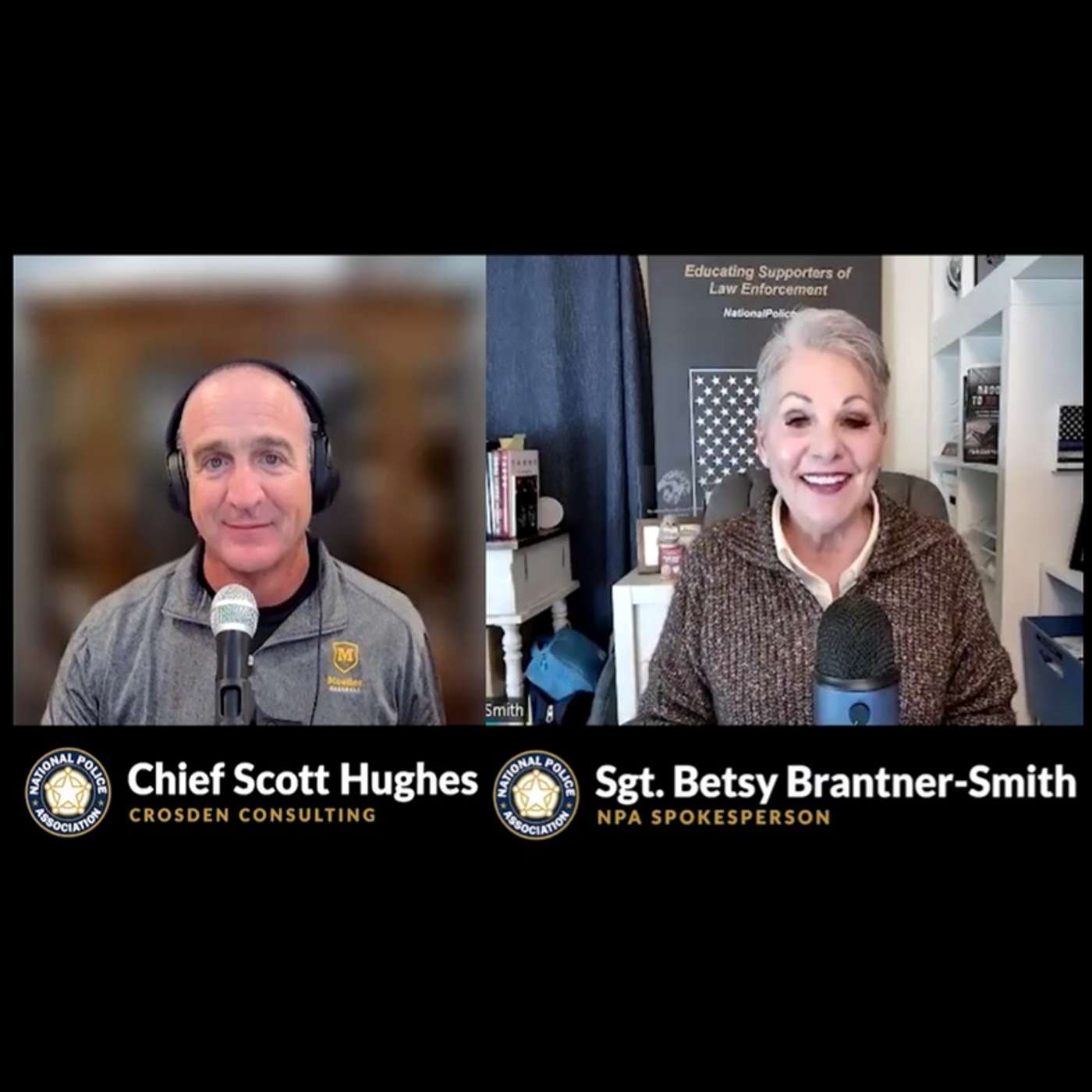
NPA Report with Guest, Scott Hughes, Chief of Police, Instructor, Expert, Consultant
from National Police Association Podcast · host NationalPolice.org
Sgt. Betsy Smith welcomes back Chief Scott Hughes for a wide-ranging conversation on officer safety. Together, they unpack the risks that are rising (including ambushes) and why fundamentals like seatbelts, vests, and continuous training still matter, especially in an era of short staffing, reduced proactive policing, and heightened scrutiny of law enforcement.What they cover1) “Fundamentals win”: the basics that save livesChief Hughes and Sgt. Smith return to simple fundamentals:Seatbelts (always, not just “on the way to a hot call”)Speed discipline and response-mode decision-makingBody armor/vestsTactical repetition: handcuffing, self-defense, and scenario training that reflects reality2) Cars, crashes, and survivabilityThey discuss how modern vehicle technology may contribute to better survivability:Collision alerts and lane-drift warningsAirbags and improved vehicle safety features At the same time, they warn that driving “lights-and-sirens” too fast to calls that don’t warrant it can create dangerous habits over time.3) Tactical medicine: tourniquets, kits, and new expectationsSgt. Smith contrasts earlier generations of policing—when officers were discouraged from using tourniquets—with today’s norm:Tourniquets commonly carried on beltsPatrol medical kits becoming standardA more urgent mindset: render aid immediately, and in some cases transport a wounded officer directly rather than waiting for EMS4) Training from the internet: body cam footage as a “rolling classroom”They talk about how modern officers learn from:Body camera, dash cam, and surveillance videoYouTube/Rumble as informal training librariesRoll call discussions: “What would I do? What would I do differently?”5) A key mindset change: “Getting shot doesn’t end the fight”Sgt. Smith notes older scenario training often stopped once someone was “shot,” unintentionally teaching shot = dead. Chief Hughes describes the updated mindset he teaches: if you’re still alive, keep moving, keep thinking, keep fighting, keep saving lives.6) Using body cams to coach, not just to punishChief Hughes describes an internal practice he supports:Supervisors regularly reviewing body cam footageUsing clips to reinforce good tactics (safe approaches, positioning, keeping the weapon hand free, etc.)Avoiding “gotcha-only” body cam culture, which undermines learning and trust7) Proactive policing: uneven recovery and the staffing crisisThey discuss how demonization of police and political pressure contributed to reduced proactive policing and how recovery depends heavily on jurisdiction:Some areas remain reluctant due to perceived lack of support (political, administrative, or community)Big-city staffing shortages continue to reshape policingThe downstream impact on communities when proactive policing declines8) Ambush attacks and “routine” moments that aren’t routineThey discuss a rise in ambush-style attacks and how some tragedies are nearly impossible to “train away,” including being attacked while:Eating lunch in a patrol carWorking traffic details Their point: some threats don’t come with warning, which makes fundamentals and habits even more important.9) The training gap: funding, staffing, and personal responsibilityThey address a tough reality: agencies often can’t spare officers for training due to staffing and overtime constraints. Their shared message to officers:You may need to invest in yourself (range time, defensive tactics, grappling, continuing education)If you haven’t practiced critical skills since the academy, those skills may fail you when it countsMemorable lines“If you don’t make it there, you’re no good to anybody.”“Your people are the most important thing you’ve got. Without them, you’ve got nothing.”“If you’re feeling pain, you’re still alive—so let’s go.” (in the context of fighting through injury) Links & guest infohttps://www.crosdenconsulting.comhttps://twitter.com/ChiefShugheshttps://www.linkedin.com/in/scott-hughes-clee-0a978929
Embed this episode
NOW PLAYING
NPA Report with Guest, Scott Hughes, Chief of Police, Instructor, Expert, Consultant
No transcript for this episode yet
Similar Episodes
No similar episodes found.
Similar Podcasts
No similar podcasts found.