
EPISODE · Oct 4, 2024 · 28 MIN
Oak Island Road Soundwalk
from Soundwalk · host Chad Crouch
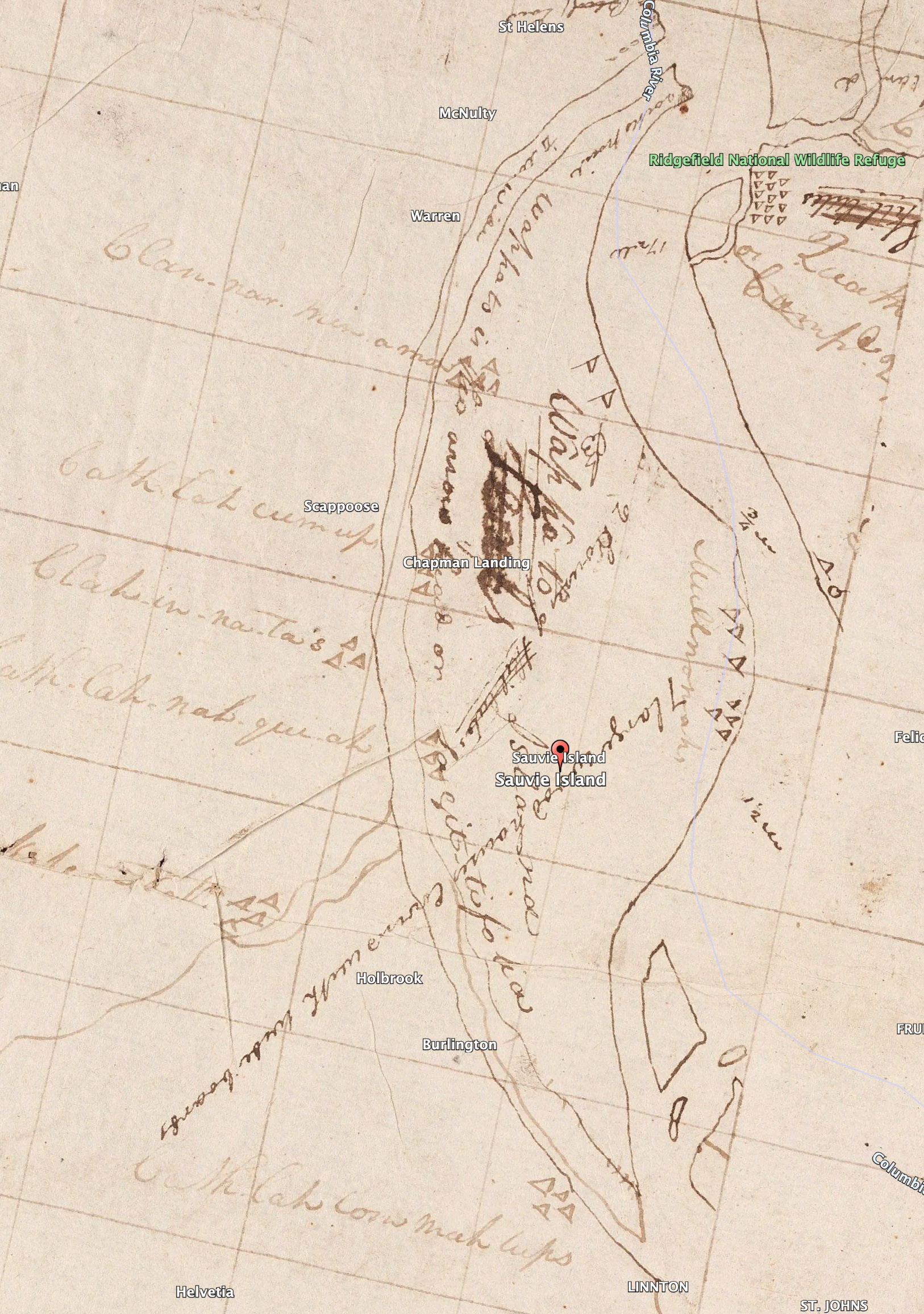
It’s Oct 2nd as I write. The Oak Island area on Sauvie Island, near Portland, Or., closed to recreational use for the season yesterday. For the coming fall and winter, it will serve as a haven for the birds, save for the occasional hunters. Last winter, when I brought my Soundwalk podcast to Substack, I embarked on a series touching down at certain points in the greater area I referred to as the Columbia Lowlands. I’m pleased to say I’m taking us back there, covering some spots that I didn’t get to last time through. Lewis and Clark called this area the Wappato Valley, after the edible tuber, Wapato, that the Native Americans harvested here on Sauvie Island. The island was also named Wappato Island, the geographical center of Wappato Valley. (Both the double P spelling and the geographic names didn’t really take.) Today, this area is also referred to as the Portland Basin.Oak Island in the early 1800s would have looked pretty similar to what it looks like now—only without pastures—and the name would have made more sense than it does today, because the land mass used to be surrounded by shallow lakes. Today it more resembles a peninsula. Like the lakes of the Columbia Bayou (slough) on north side of Portland, many lakes on Sauvie Island were drained in the early 1900’s, and dikes were built, hardening the river bank. Now, as far as I know, the only marker honoring the stewardship of this land by Native Americans is found a few steps into the Oak Island Nature Trail. There you will see wood post with a line drawing of a two people in a canoe with a QR code underneath. Focusing on that QR code with a smartphone will pull up a page, offering the following:Two hundred years ago, Native Americans walked on this very spot. Each year, just before winter, tribes from up and down the Columbia and Willamette rivers gathered on Oak Island for a trading fair which included dancing and festivities.I want to know more about that. I want to imagine what that looked like, what that sounded like. Of the environmental sound, Capt. William Clark leaves only this description on November 5th, 1805, from the vicinity of Sauvie Island:I could not sleep for the noise kept by the Swans, Geese, white & black brant, Ducks etc. on a opposit base, & Sand hill Crane, they were emensely numerous and their noise horrid. Immensely numerous and horrid. Ha! We will hear numerous birds soon enough in our extended soundwalk survey. For now, on our Oak Island Road Soundwalk, we hear just a handful of bugling Sandhill Cranes, small flocks of geese, wintering songbirds, Pacific tree frogs and light rain showers. Anything but horrid to my ears. Dig a little deeper and you’ll discover 200 years ago is just the tip of the iceberg. Native Americans lived in various village sites on the island dating back 2500 years; one thousand generations! (Archeological sites upriver near The Dalles increase that time horizon to human occupation of the area going back well over 10,000 years ago). And all they got was a QR code.How do we know Native Americans lived on Sauvie Island so long? Well, less than a mile south of Oak Island is Merrybelle Farm. Several archeological digs occurred here, beginning in 1958. Analyzing the projectile points and found here with others found on the island and throughout the region, Richard Pettigrew points to an estimated timeline of village occupation at the Merrybelle site from 600 BCE to 200 CE. There were 16 known village sites on Sauvie Island. Several have been the subject of formal archeological excavation. Many were picked over by amateur artifact collectors. Some were buried or partially buried under tons of dike soil. One was “sunken”, preserving woven baskets in the mud for up to 700 years. Today there’s no physical reminder of the civilization that existed here before Euro-American settlers; no formal mention or marker, save for a recently renamed bridge. Wapato Bridge. It’s a start. Scholars believe the Wapato Valley once sustained the highest population density north of Mexico in aboriginal times. Isn’t this a story that should be told?In fourth grade we had a “Pioneer Day”. We came to school in costume: bonnets for the girls. Cowboy hats for boys. Did some boys bring toy guns? Did anyone dress up as an Indian? Seems plausible. We rolled out pasta from scratch, cutting broad noodles for chicken noodle soup “like the pioneers did”. We pledged allegiance to the flag every morning. We did not learn we were inhabiting what was once the cradle of the largest Native American population center, in the Portland Basin, in the United States. When I walk around on Sauvie Island, I try to picture the long house villages, and the multitude of dugout canoes. When I went paddleboarding on Sturgeon Lake a month ago my feet sank up to my calves in mud as I clumsily launched my craft. I imagined Wapato growing there, plentifully. I imagined Native Americans loosening the root bulbs with their toes, harvesting them in floating baskets. The land of plenty. People of the river.This soundwalk was recorded on mild December evening last year, on Oak Island Road, adjacent the Wildlife Area. There are half a dozen farm houses on this quiet spur road. It was very relaxing, and nourishing. I totally recommend this to anyone in the area. Like last time, the composition is almost entirely solo performances strung together. Four voices: piano, a clean Wurlitzer electric piano, a modified Wurlitzer electric piano, and a piano with heavy tape effects. All taking turns. It won’t always be like this, though. In fact, next week I have a whole new direction I’m excited to unveil! Til then, thanks for reading, for listening, for joining me here.Oak Island Road Soundwalk is available on all streaming platforms (Spotify, Apple, Tidal, Amazon, YouTube…) today, Friday, October 4th. This is a public episode. If you'd like to discuss this with other subscribers or get access to bonus episodes, visit chadcrouch.substack.com/subscribe
NOW PLAYING
Oak Island Road Soundwalk
No transcript for this episode yet
Similar Episodes
Mar 27, 2026 ·46m
Nov 28, 2025 ·25m
Nov 28, 2025 ·20m
Nov 28, 2025 ·23m
Nov 28, 2025 ·22m
Sep 9, 2025 ·28m