
EPISODE · Sep 18, 2024 · 12 MIN
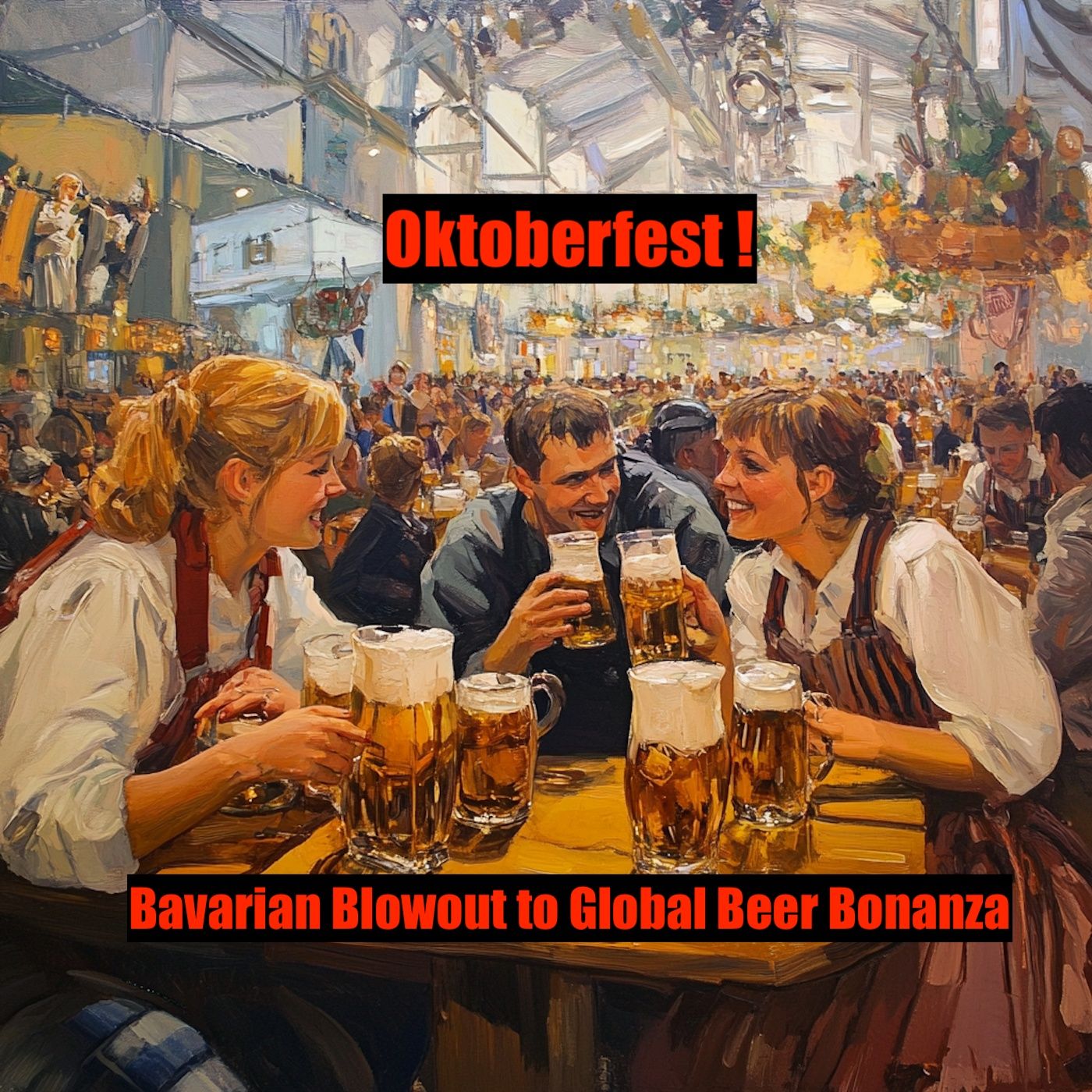
Oktoberfest- Bavarian Blowout to Global Beer Bonanza
from Oktoberfest! · host Inception Point AI
Oktoberfest: Bavarian Blowout to Global Beer Bonanza Lederhosen, dirndls, massive beer steins, and the intoxicating aroma of pretzels and sausages wafting through the air – welcome to Oktoberfest, the world's most epic beer bash! But how did a Bavarian wedding party transform into an international phenomenon that has people from Tokyo to Toronto donning fake mustaches and attempting to yodel? Grab your favorite brew, settle in, and let's embark on a foamy journey through the history of Oktoberfest! A Royal Bash That Sparked a Beer Revolution Our sudsy saga begins on a sunny October 12th, 1810, in Munich, Bavaria. Crown Prince Ludwig (later King Ludwig I) was tying the knot with Princess Therese of Saxe-Hildburghausen. Now, royal weddings were a big deal back then (okay, they still are – looking at you, British monarchy), but Ludwig and Therese decided to kick it up a notch. Instead of a stuffy, nobles-only affair, they invited the citizens of Munich to join the party. The celebration was held in the fields in front of the city gates, dubbed "Theresienwiese" (Therese's meadow) in honor of the bride. Little did they know that this meadow would become hallowed ground for beer lovers for centuries to come. The festivities lasted for days and included horse races, music, food, and, of course, plenty of drinking. It was such a hit that the Bavarians thought, "Hey, why not do this every year?" And voilà, Oktoberfest was born. Talk about a wedding gift that keeps on giving! From Horsing Around to Hoisting Steins In its early years, Oktoberfest was more about agricultural shows and horse races than beer. Imagine that – Oktoberfest without beer is like a pretzel without salt – just not right. Thankfully, someone eventually realized that watching horses run in circles gets a lot more interesting with a brew in hand. Beer stands started popping up in the 1880s, and by 1896, the small tents and booths were replaced with gargantuan beer halls sponsored by Munich's breweries. These massive tents, which could hold thousands of thirsty revelers, became the iconic image of Oktoberfest we know and love today. Fun fact: The horse races continued until 1960 when they were discontinued. Apparently, someone finally figured out that mixing large animals and large quantities of beer wasn't the brightest idea. Who knew? Prost! The Rise of Liquid Gold As beer took center stage, Oktoberfest began to evolve into the sudsy spectacle we know and love. The festival grew bigger and boozier with each passing year. By the late 19th century, it had become a crucial part of Bavarian culture and a significant economic boost for Munich. But what makes Oktoberfest beer so special? Well, it's not just any old lager. Oktoberfest beer, or Märzen, is a specific style brewed according to the Reinheitsgebot (German Beer Purity Law). This law, dating back to 1516, stipulates that beer can only be made with water, barley, and hops (yeast was added to the list later when they figured out what i This content was created in partnership and with the help of Artificial Intelligence AI.
What this episode covers
Oktoberfest: Bavarian Blowout to Global Beer Bonanza Lederhosen, dirndls, massive beer steins, and the intoxicating aroma of pretzels and sausages wafting through the air – welcome to Oktoberfest, the world's most epic beer bash! But how did a Bavarian wedding party transform into an international phenomenon that has people from Tokyo to Toronto donning fake mustaches and attempting to yodel? Grab your favorite brew, settle in, and let's embark on a foamy journey through the history of Oktoberfest! A Royal Bash That Sparked a Beer Revolution Our sudsy saga begins on a sunny October 12th, 1810, in Munich, Bavaria. Crown Prince Ludwig (later King Ludwig I) was tying the knot with Princess Therese of Saxe-Hildburghausen. Now, royal weddings were a big deal back then (okay, they still are – looking at you, British monarchy), but Ludwig and Therese decided to kick it up a notch. Instead of a stuffy, nobles-only affair, they invited the citizens of Munich to join the party. The celebration was held in the fields in front of the city gates, dubbed "Theresienwiese" (Therese's meadow) in honor of the bride. Little did they know that this meadow would become hallowed ground for beer lovers for centuries to come. The festivities lasted for days and included horse races, music, food, and, of course, plenty of drinking. It was such a hit that the Bavarians thought, "Hey, why not do this every year?" And voilà, Oktoberfest was born. Talk about a wedding gift that keeps on giving! From Horsing Around to Hoisting Steins In its early years, Oktoberfest was more about agricultural shows and horse races than beer. Imagine that – Oktoberfest without beer is like a pretzel without salt – just not right. Thankfully, someone eventually realized that watching horses run in circles gets a lot more interesting with a brew in hand. Beer stands started popping up in the 1880s, and by 1896, the small tents and booths were replaced with gargantuan beer halls sponsored by Munich's breweries. These massive tents, which could hold thousands of thirsty revelers, became the iconic image of Oktoberfest we know and love today. Fun fact: The horse races continued until 1960 when they were discontinued. Apparently, someone finally figured out that mixing large animals and large quantities of beer wasn't the brightest idea. Who knew? Prost! The Rise of Liquid Gold As beer took center stage, Oktoberfest began to evolve into the sudsy spectacle we know and love. The festival grew bigger and boozier with each passing year. By the late 19th century, it had become a crucial part of Bavarian culture and a significant economic boost for Munich. But what makes Oktoberfest beer so special? Well, it's not just any old lager. Oktoberfest beer, or Märzen, is a specific style brewed according to the Reinheitsgebot (German Beer Purity Law). This law, dating back to 1516, stipulates that beer can only be made with water, barley, and hops (yeast was added to the list later when they figured out what i This content was created in partnership and with the help of Artificial Intelligence AI.
NOW PLAYING
Oktoberfest- Bavarian Blowout to Global Beer Bonanza
No transcript for this episode yet
Similar Episodes
Jun 25, 2026 ·3m
Jun 24, 2026 ·3m
Jun 23, 2026 ·3m
Jun 22, 2026 ·3m
Jun 21, 2026 ·3m
Jun 18, 2026 ·3m