
EPISODE · Nov 9, 2023 · 1 MIN
Olive Oil Wars!
from Olive Oil Wars! How Climate Change and Surging Markets Invite Chainsaw-Wielding Thieves. Olive Oil · host Inception Point Ai
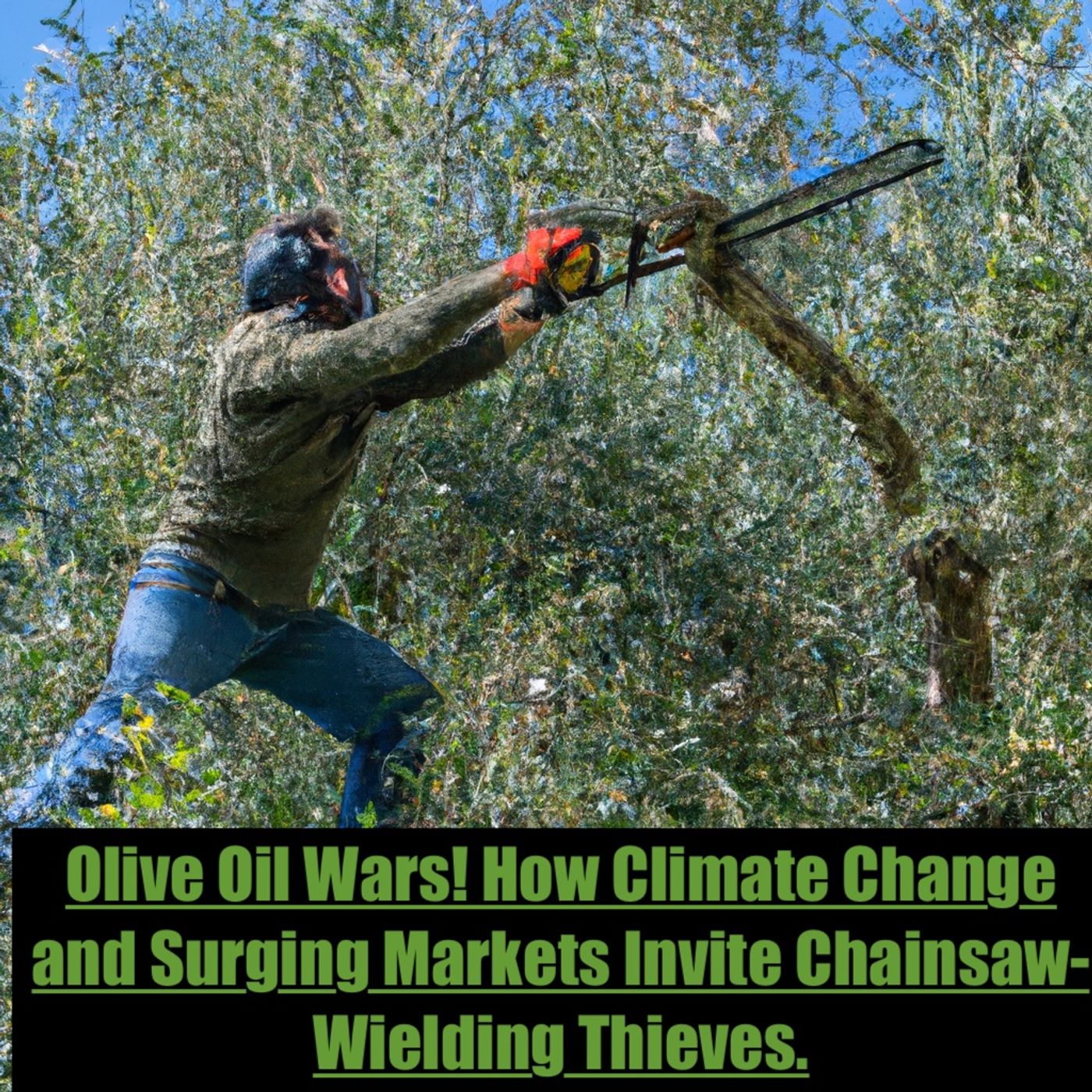
Olive Oil Wars! How Climate Change and Surging Markets Invite Chainsaw-Wielding Thieves. Olive Oil Thefts Threaten Growers and Consumers Olive oil thefts are on the rise in Greece, Spain, and Italy, driven by surging olive oil prices caused by a two-year drought in Spain. Thieves are targeting olive groves and warehouses, stealing branches, trees, and even entire harvests. This is having a devastating impact on olive growers, who are already dealing with high production costs and climate change. Farmers are pleading with police to take action, and some are taking matters into their own hands by harvesting their olives early to avoid theft. However, this results in lower yields and higher costs for consumers. The olive groves outside Athens are part of a centuries-old tradition, and the thefts are a threat to this tradition and to the livelihoods of olive growers. Some of These Thieves have taken to cutting down heavily laden tree branches and in some cases entire trees with chainsaws. They load the branches on trucks and after removing the olives, sell the centuries-old wood. Police have recovered 91 tons of stolen olives in recent weeks. What can be done to stop the olive oil thefts? There are a number of things that can be done to stop the olive oil thefts, including:Increased police patrols of olive groves and warehousesUse of technology, such as tracking devices and drones, to monitor olive groves and catch thievesHarsher penalties for olive oil theftPublic awareness campaigns to educate people about the problem of olive oil theft and encourage them to report suspicious activityIt is important to take action to stop the olive oil thefts, not only to protect olive growers and consumers but also to preserve the centuries-old tradition of olive oil production in the Mediterranean region. Thanks for listening to Quiet Please. Remember to like and share wherever you get your podcasts.This content was created in partnership and with the help of Artificial Intelligence AIThis episode includes AI-generated content.
What this episode covers
Olive Oil Wars! How Climate Change and Surging Markets Invite Chainsaw-Wielding Thieves. Olive Oil Thefts Threaten Growers and Consumers Olive oil thefts are on the rise in Greece, Spain, and Italy, driven by surging olive oil prices caused by a two-year drought in Spain. Thieves are targeting olive groves and warehouses, stealing branches, trees, and even entire harvests. This is having a devastating impact on olive growers, who are already dealing with high production costs and climate change. Farmers are pleading with police to take action, and some are taking matters into their own hands by harvesting their olives early to avoid theft. However, this results in lower yields and higher costs for consumers. The olive groves outside Athens are part of a centuries-old tradition, and the thefts are a threat to this tradition and to the livelihoods of olive growers. Some of These Thieves have taken to cutting down heavily laden tree branches and in some cases entire trees with chainsaws. They load the branches on trucks and after removing the olives, sell the centuries-old wood. Police have recovered 91 tons of stolen olives in recent weeks. What can be done to stop the olive oil thefts? There are a number of things that can be done to stop the olive oil thefts, including:Increased police patrols of olive groves and warehousesUse of technology, such as tracking devices and drones, to monitor olive groves and catch thievesHarsher penalties for olive oil theftPublic awareness campaigns to educate people about the problem of olive oil theft and encourage them to report suspicious activityIt is important to take action to stop the olive oil thefts, not only to protect olive growers and consumers but also to preserve the centuries-old tradition of olive oil production in the Mediterranean region. Thanks for listening to Quiet Please. Remember to like and share wherever you get your podcasts.This content was created in partnership and with the help of Artificial Intelligence AIThis episode includes AI-generated content.
NOW PLAYING
Olive Oil Wars!
No transcript for this episode yet
Similar Episodes
Mar 26, 2026 ·1m
Mar 19, 2026 ·34m
Feb 18, 2026 ·11m
Feb 11, 2026 ·45m