
EPISODE · May 22, 2025 · 5 MIN
On Creative Work
from Soundwalk · host Chad Crouch
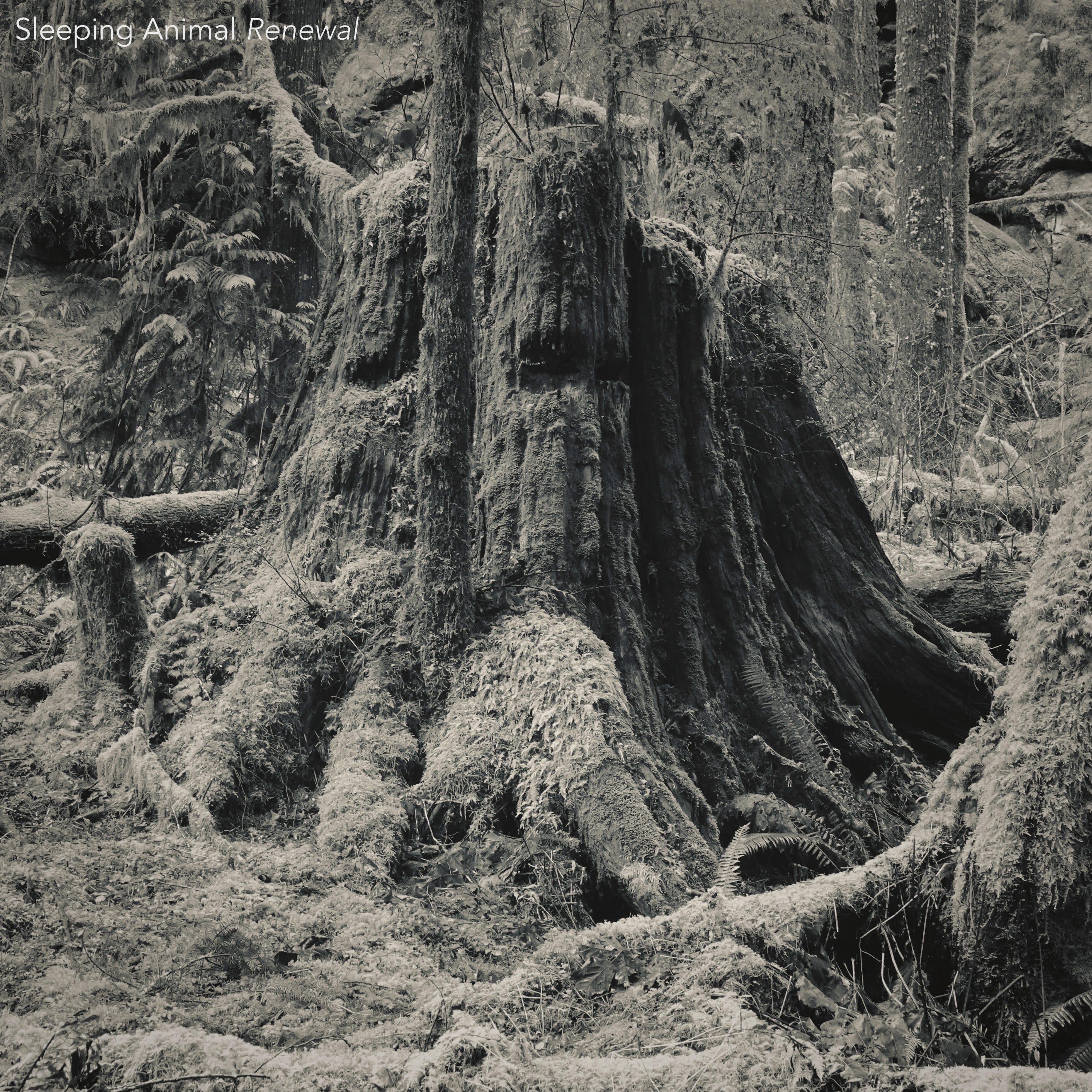
This is a free preview of a paid episode. To hear more, visit chadcrouch.substack.com Renewal Sometimes my brain wakes up before my body wants to these days. And sometimes, when this occurs, I reach for my earbuds to feed my brain a gentle signal while my body transitions from asleep to awake. A couple days ago, when this happened, I instinctively decided to cue up the oldest, least recognizable opus in my trove of draft audio files: #2046. (You’re invited to tap that play button at the top if you haven’t already to listen in.) The tones of a familiar Pianet electric piano trickled into my ears, followed by a tape-delayed synth, an unrecognized electrified piano, then brighter, more kaleidoscopic voices. I had forgotten this piece. I listened, charmed by many things, annoyed by numerous details as well. Later that day I pulled up the session, noting it was created a year ago, to the day. I massaged it, sanded its rough sonic edges, and came away with something I was happy with. Indeed, I’m eager to share this rediscovered piece. I’ve titled it Renewal. Beyond the preview above, I’m making this another Substack Exclusive. This is the only place you can hear it. Soundwalk is a reader-supported publication. Paid subscriptions start at less the $3/month. Free subscribers are valued too! Looking back, it is perhaps one of the earliest harbingers of a new direction that would become my Sleeping Animal oeuvre. Which is to say, it’s the first of a string of impressionistic and atmospheric instrumental suite pieces that do not use environmental recordings to lend atmospheric overtones. Speaking of which, another planned Sleeping Animal release arrives tomorrow, May 22 on all streaming services. Look for Rays, wherever you get your music. Human Dust, or 50 Times Dumber than a Starfish This morning I did it again. This time, at 5:30 am I chose to cue up the debut album by Eliana Glass: E. I formed a favorable first impression watching a video clip, so I was hopeful the album would prove out my hunch. Long story short, after a couple listens it largely did. I do like Glass’ unique voice, which according to her blurb, “blends sonorous, androgynous poise with fluttering delicacy.” One track, “Human Dust” piqued my interest as I tried to parse out the lyrics in the dawn light of the bedroom. The first line grabbed me: “He was an artist. He died of a heart attack. He was born fifty years ago, which means he lived a half century, or 2/3 of his expected lifespan.” Well that could be me, I thought. Go on. The nearly eight minute song then lists a number of statistical observations—both private and quotidian—in an attempt to eulogize this man with objective candor, as if from an omniscient point of view. But the tone, if objective, was not empathetic or charitable: “He was unhappy and lonely more often than not, achieved 1/10,000 of his dreams…” The line that really grabbed me was this: His work was good but not great, and the last 10 years of his life he resigned himself to this fact. Could that also be me? I wondered. In the ranks of all those who self-identify as artists, what percentage are great? And these “great” artists; do they know it, like without a doubt? Padding down the stairs to make the morning coffee I felt a mix of introspection, intrigue and a touch of resentment as I strained to decode all the lyrics. Later that morning I discovered that the lyrics are a reading from the text of Agnes Denes’ 1969 art installation piece, Human Dust, which features a shallow bowl of cremains on a pedestal, and the text on the wall. The interesting moments in the song come from misreads. While describing the man’s future offspring, instead of “1 will have an unusual talent, 1 will be a politician, 1 will collect garbage,” Glass sings, “I will have an unusual talent, I will be a politician, I will collect garbage,” forcing a lurch in narrative framing. Instead of “[He consumed] 140 gallons of wine,” Glass murmurs, “4000-and gallons of wine”. Rather than “moved his bowels 18,548 times,” a mouthful, she abbreviates “384 times” with a cool nonchalance. Lastly, instead of “his brain contained 1010 neurons and it received 109 electrical impulses,” she deadpans “His brain contained 10 neurons and 10 electrical impulses.” Poor soul. No wonder he never achieved greatness. He was a constipated drunk; 50 times dumber than a starfish! But, comic reading aside, the heft of the work survives—despite the specifics lost in translation—and one could argue it possesses an impact that the stark bones, dust and text in a museum do not convey. I ruminated on it all morning. I could not find the text quoted on the internet. I zoomed in on the gallery photo to read it. ( In all fairness, the “1” in the typeface is mistakable for an “I”.) His work was good but not great. It struck a nerve. It’s a much more potent insult to an artist, than say, a tradesperson. Good but not great is often too much to hope for, for say, a politician, but will do fine for a garbage collector, waiter, coder, etc… We hold artists to a higher standard, don’t we? It’s a trap. It’s a wine snob type of thing, I defensively thought. “Great” is just marketing. An illusion. Shoot, even good-but-not-great wine is an order of magnitude more tolerable than good-but-not-great art. That brings me back to work #2046 / Renewal slumbering a year in digital obscurity. Just yesterday I started in on #2114. In the past year I’ve taken 70 stabs at making audio art. It’s fair to say they can’t all be great. Maybe none can. Fair enough. Whatever. I’ve always subscribed to the idea that art is not so different from other work. It’s just something you keep doing, especially if you want to do it for a living. There is no one correct way of working as an artist. It takes all kinds. It’s more of a use it or lose it proposition, as far as I’m concerned. In 1977 Woody Allen offered, “80% of life is showing up.” He went on to say, “Sometimes it’s easier to hide home in bed. I’ve done both,” but that part got lost. So it goes with creative work. You show up. You put in the time. You practice. Hopefully you find ways to evolve and grow. Eventually you revisit old work, and it might inform a new direction. Shoot, some part of the creative process can even happen in bed. But, boil it all down, it’s mostly just showing up, just like any other job. If someone says you’re great, well that’s just a bonus. Thanks for reading. Thanks for showing up here. I don’t take it for granted.
Embed this episode
Ready to play
On Creative Work
No transcript for this episode yet
Similar Episodes
No similar episodes found.