
EPISODE · Jun 11, 2026 · 3 MIN
Pacific Costa Rica Green Season: Tide is King for Central Coast Action
from Costa Rica, Pacific Coast Fishing Report Today · host Inception Point AI
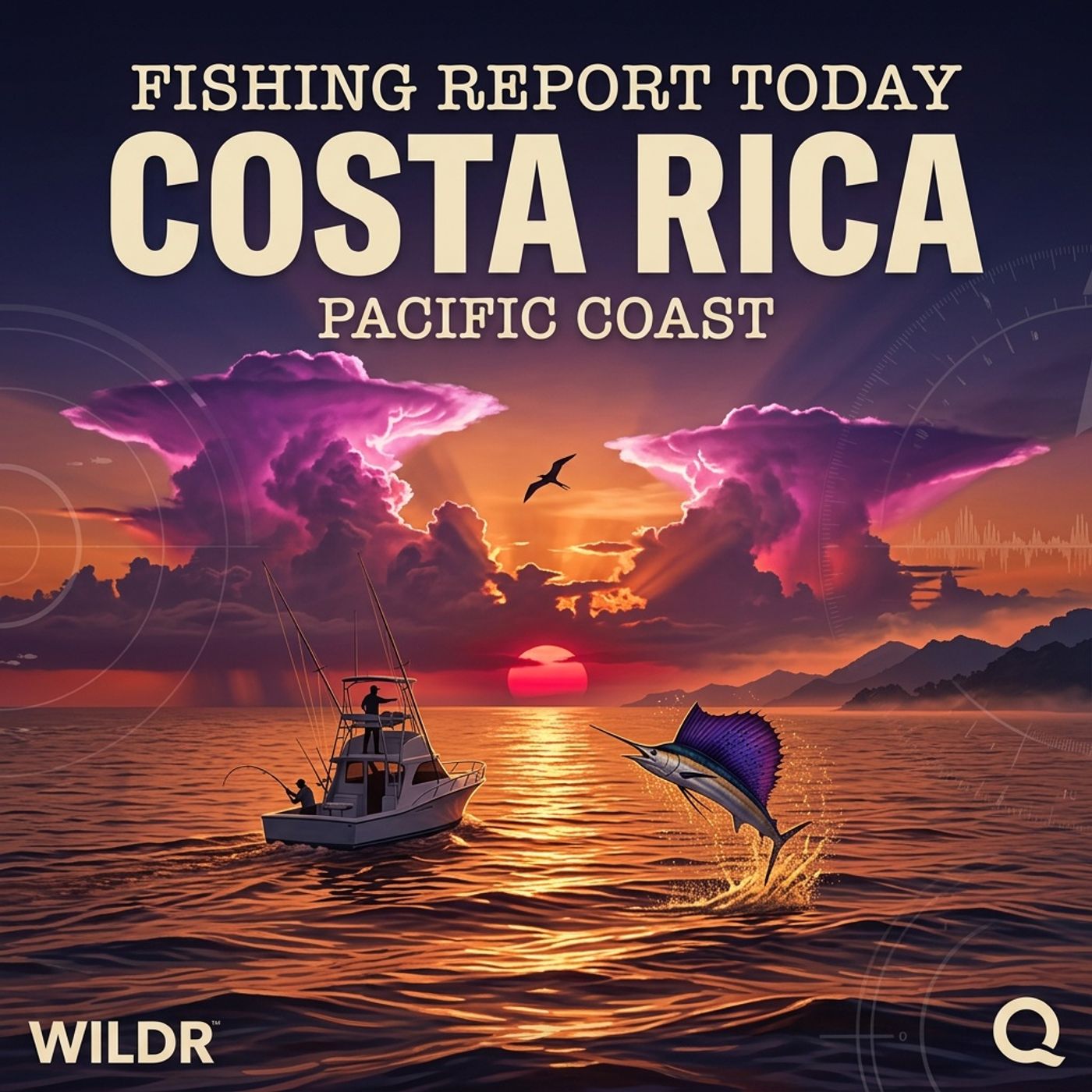
This is Artificial Lure with your Pacific Costa Rica fishing report. On the central Pacific—Jacó, Herradura, and Quepos—the ocean started the morning with a mid tide pushing in, swinging to a higher tide by late morning and easing back out through the afternoon. That moving water has been key; when it’s slack, the bite drops off fast, but as soon as you see current on the color lines, lines start popping. Weather along the coast is classic green season: warm and humid, light offshore breeze at first light, building onshore by midday, then scattered showers and a good chance of hard rain late afternoon. Skies have been partly cloudy at dawn, giving way to more clouds as the day goes on. Sunrise hit just after five, with sunset just after six, giving plenty of low‑light prime time at both ends of the day. Offshore, boats working 20–35 miles out of Los Sueños and Quepos have been finding blue water and solid life. Crews have been reporting steady sailfish action with a mix of blue marlin shots, plus big mahi still hanging around the current edges and floating debris. Yellowfin tuna have been showing in good schools under spinner dolphins; most of the nicer fish have been 40–80 pounds, with a few bigger ones when the schools stay up and the birds stay tight. Best offshore spread has been classic: medium ballyhoo on skirted circle‑hook rigs in pink‑white and blue‑white, plus a couple of naked ballyhoo down the middle. A chugger‑style teaser or a big black‑purple lure way back has been raising the marlin. For the tuna, guys chunking or fly‑lining live sardines and small bonito have out‑fished the artificials, but when they’re foaming, small metal jigs and stickbaits in natural baitfish patterns are getting crushed. Inshore around Punta Leona, the rocks off Herradura, and the points near Manuel Antonio, roosterfish and snook have been the main story. The incoming tide around river mouths and rocky points has been best. Roosters have been chewing on live goggle‑eyes and sardines slow‑trolled along the beach breaks, and also on poppers and big walking plugs in bone, blue‑back, and mullet patterns. Snook have been taken early and late on live shrimp, small croakers, and soft plastics in pearl and root‑beer colors slow‑rolled along the current seams. Bottom fishing on the reefs off Jacó and down toward Dominical has been producing decent numbers of snapper and grouper. Fresh cut bait—squid, bonito strips, or chunks of sardine—on simple dropper rigs has been putting meat in the box. When the current isn’t too strong, slow‑pitch jigs in red, orange, and glow have been hot, especially worked close to the bottom during the stronger portions of the tide. Two hot spots to keep an eye on: the offshore drop and FAD zone west‑southwest of Quepos for billfish and tuna, and the inshore stretch from the Herradura river mouth down past the rocky points toward Playa Escondida for roosters and snook, especially on a rising tide at first light. If you’re heading out, think early start, light leaders for pressured fish inshore, and don’t be afraid to move until you find clean water, bait, and birds. When you do, the Pacific here still lights up in a hurry. Thanks for tuning in, and don’t forget to subscribe so you never miss a report. This has been a quiet please production, for more check out quiet please dot ai. Great deals on fishing gear https://amzn.to/44gt1Pn
Embed this episode
NOW PLAYING
Pacific Costa Rica Green Season: Tide is King for Central Coast Action
No transcript for this episode yet
Similar Episodes
No similar episodes found.
Similar Podcasts
No similar podcasts found.