
EPISODE · Nov 21, 2024 · 19 MIN
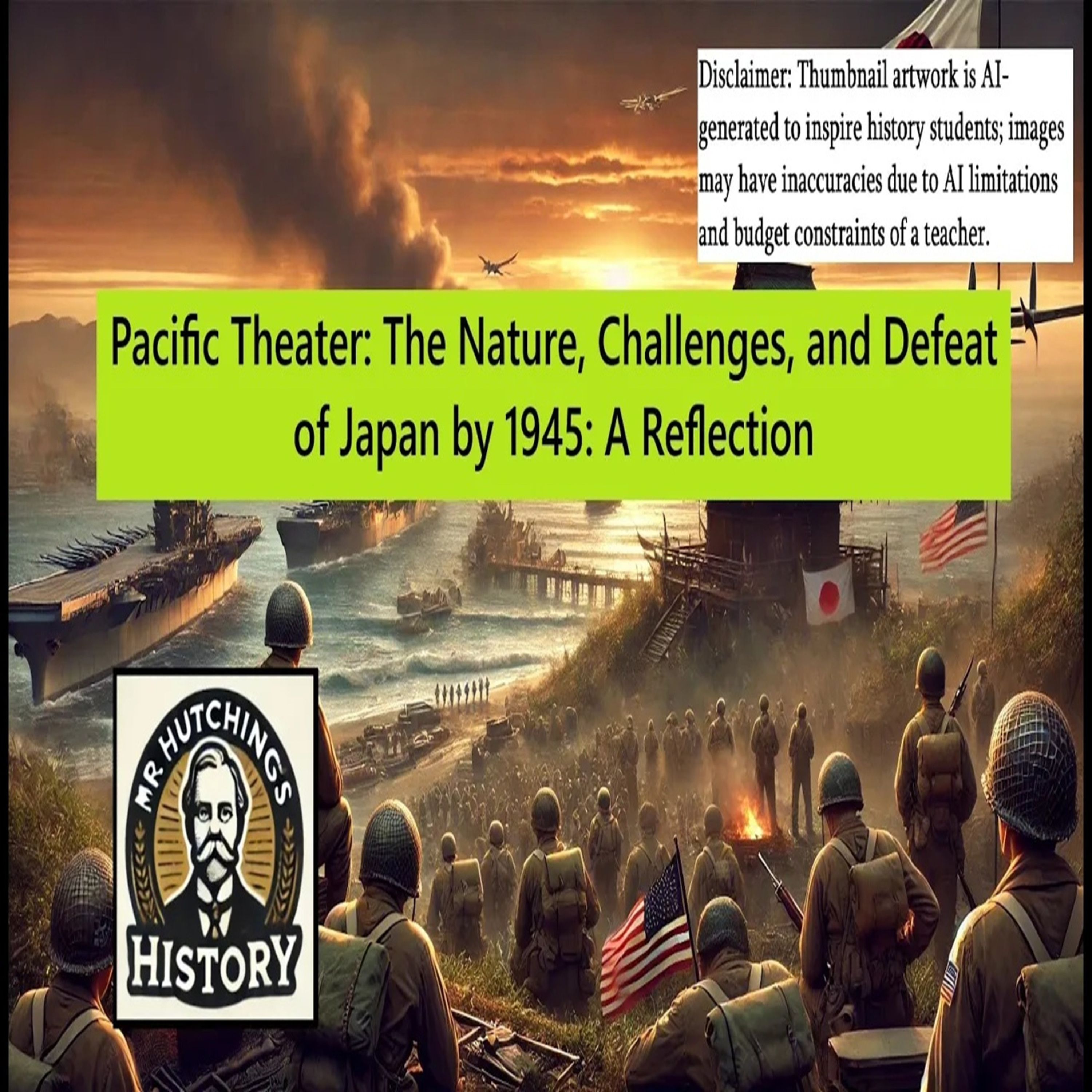
Pacific Theater: The Nature, Challenges, and Defeat of Japan by 1945: A Reflection
from Mr. Hutchings History · host Produced, created, and written by Harold M. Hutchings
Welcome to Mr. Hutchings History! This episode reflects on the Pacific War's brutal nature, the immense challenges faced by the U.S., and Japan’s eventual military defeat by July 1945. We’ll explore the intense island-hopping campaigns at Guadalcanal, Iwo Jima, and Okinawa; key naval battles like Midway and Leyte Gulf; and the devastating aerial bombardments, including the firebombing of Tokyo and the atomic strikes on Hiroshima and Nagasaki. Using primary sources and insights from historians like Samuel Eliot Morison and Richard B. Frank, we examine the no-surrender ethos of Japanese forces, the U.S.’s logistical and tactical innovations, and the transformative role of airpower and naval dominance. This analysis reveals how the combination of strategy, technology, and industrial might led to Japan's unconditional surrender in August 1945. #PacificWar #WWIIHistory #IslandHopping #NavalWarfare #Kamikaze #IwoJima #Okinawa #AtomicBomb #USHistory #IBHistory Works Cited Alperovitz, Gar. The Decision to Use the Atomic Bomb. Knopf, 1995.Frank, Richard B. Downfall: The End of the Imperial Japanese Empire. Random House, 1999.Morison, Samuel Eliot. History of United States Naval Operations in World War II. Little, Brown and Co., 1947.Spector, Ronald H. Eagle Against the Sun: The American War With Japan. Vintage, 1985.
Embed this episode
NOW PLAYING
Pacific Theater: The Nature, Challenges, and Defeat of Japan by 1945: A Reflection
No transcript for this episode yet
Similar Episodes
No similar episodes found.
Similar Podcasts
No similar podcasts found.